The coffee was part of the plan. Elizabeth Eastland, the founder of iAccelerate, once described concentrating coffee facilities on one floor so entrepreneurs would bump into one another. A conversation could begin while someone waited for a drink. For a startup trying to find a useful contact, that small interruption might be the point of coming to work.
“They had to go to one floor for their coffee and accidentally engage,” she told InnovationAus in 2016. It is a pleasingly physical answer to an abstract problem. How do you make an entrepreneurial community? Give people reasons to cross paths, then make sure there is something worth discussing.
At the University of Wollongong's iAccelerate, those conversations sit alongside courses, mentors, offices and access to investment. The ambition reaches beyond individual companies. In her July 2026 anniversary reflection, director Tamantha Stutchbury recalled a region whose graduates often left or commuted to Sydney. The original proposition was to let people build local and global businesses from Wollongong. Staying put could become a career decision, rather than a compromise. Her account makes the institution's geography central to its purpose.
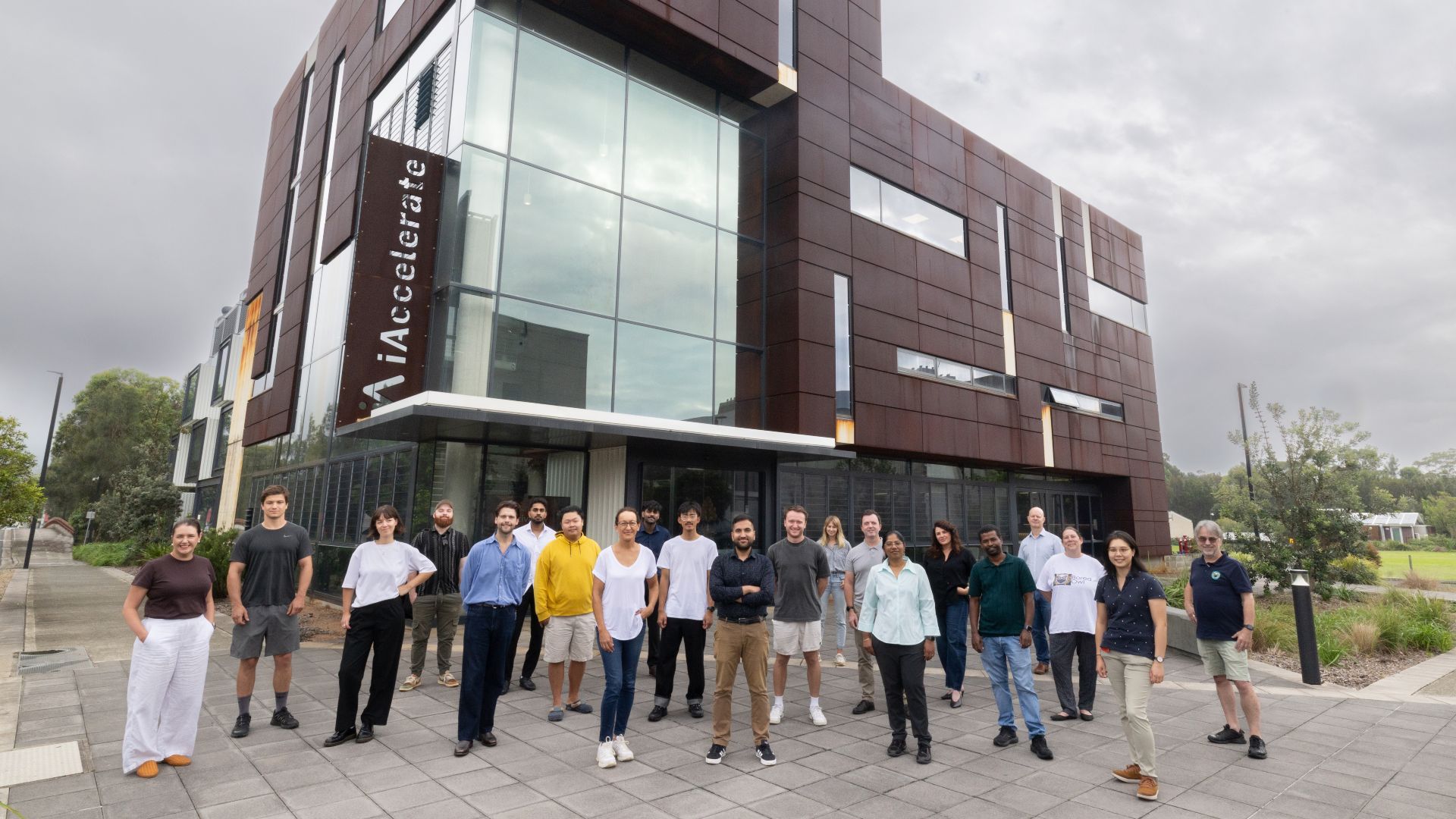
First, give the idea an address
iAccelerate dates to 2011, five years before its purpose-built Centre opened. Eastland, a former UOW innovation and commercial research leader, helped turn the proposition into an institution. The early Start Pad incubator provided a proof of concept, with Wollongong City Council supplying office space. That sequence matters: the community experiment preceded the permanent building.
The Centre officially opened in July 2016. UOW's capital-works reporting puts its cost at A$18.5 million, comprising A$16.5 million from the NSW Government and A$2 million from the university. The three-storey, 4,000-square-metre facility gave the program room for more than 280 entrepreneurs. Its meeting rooms were designed to resemble shipping containers, a nod to the region's export heritage. Even the interior had a local accent. UOW's building account describes the design and investment.
Today's facilities include 39 furnished offices, two open coworking areas and ten meeting rooms. There is also a parents room. These details tell prospective residents more than another promise of innovation: teams need somewhere to take a customer call, add a colleague and manage the ordinary logistics of showing up. University researchers and students are part of the surrounding community. The building supplies proximity; founders still have to turn it into a working relationship. The facilities listing makes that offer tangible.
A$990, and some uncomfortable questions
For someone with an idea, the front door is Activate, a three-month pre-accelerator. Its curriculum moves through customer discovery, validation, business models, prototypes and pitching. Branding, competitor analysis and wellbeing also appear on the syllabus. The useful question running underneath is plain: who needs this enough to use it?
The application page lists A$990 including GST. The FAQ says the fee covers up to three founders and describes a minimum commitment of approximately one day a week. Scholarships are available. This is a purchase of structured learning and support, with a substantial demand on the founder's time alongside the cash price.
Validate the idea.
Three-month program.
Prepare for market.
Enter residency.
Build the business.
Connect with investors.
Accelerate serves startups preparing to enter the market, while Advance supports companies looking to expand. Their subjects become more operational: selling, product management, leadership, finance, valuation and due diligence. The current application page advertises residency at A$120 a week including GST. Established companies can apply throughout the year; early-stage Activate intakes follow a cohort schedule. The program descriptions show a progression from testing an idea to running an organisation.
Residency can last years. The FAQ describes a typical span of one to three, depending on growth. That offers a different rhythm from a short course ending at a pitch night. It also makes fit important. A founder who only wants an occasional desk may use little of the education. Someone who cannot commit time to customer work will struggle to extract its value. Those are practical implications of the offer, rather than promises about results.
The cheque has a separate door
iAccelerate also provides access to an A$10 million seed fund. The fund makes seed and follow-on investments in resident startups and is delivered through independent external investment manager Artesian. Its listed investments include ExSitu, Binary Tech and Me3D. Admission to a program does not amount to an investment commitment. The classroom, the desk and the capital decision are distinct parts of the arrangement. The fund description spells out its resident-startup focus.
That distinction helps explain the business model. Participants pay program or residency fees; the university supplies institutional backing; government-supported projects and philanthropy extend access. UOW's Founders First Fund, for example, says a A$990 donation funds an Activate scholarship. A founder can therefore receive subsidised education without confusing that support with venture investment. The scholarship fund gives donors a concrete unit of support.
Australian founders have alternatives, including Startmate and UNSW Founders. UNSW's 10x program explicitly packages seed investment into its accelerator offer. iAccelerate's distinctive combination is a regional university base, paid education, potentially lengthy residency and a separate investment route. For a team choosing between programs, the useful comparison is the work each arrangement makes possible, its eligibility rules and its capital terms. UNSW's published offer illustrates why “accelerator” alone is an incomplete description.
The invitation needed work
One of iAccelerate's more instructive early difficulties concerned participation. In entrepreneurship-education material hosted by the Australian Parliament, Eastland described years of trying to engage women. An equity commitment was already in the mission. The response improved when the program changed its actions.
“we saw real change once we took specific actions”
Elizabeth Eastland, on engaging women founders
The measures included gender-balanced pitching panels, women and men speaking at events, and an entrepreneurial breakfast series for women. Eastland identified the breakfasts as particularly effective. After the first, women made up 30 percent of applicants, and half the accepted companies had female founders. These were results from a particular early intake, rather than a current participation rate. The published account captures the change in approach.
The lesson is available to anyone organising a founder community: inspect the invitation, the event and the people doing the judging. A declaration of welcome leaves much of the actual experience untouched. iAccelerate's experience suggests that changing those particulars can influence who considers applying. It does not establish that breakfast alone will reproduce the same numbers elsewhere.
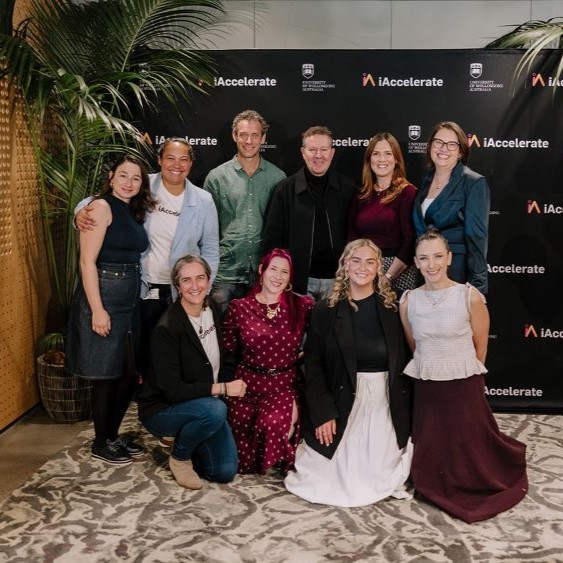
A researcher changes her destination
Noor Jarbou entered Activate hoping to become better at pitching her skills in academia. A neuroscience PhD student, she described leaving with a broader view of where those skills could take her, including business. She also reported becoming more willing to speak up in English, her second language. The change was personal before it was commercial.
Her experience, recounted in a July 2025 profile, explains one role of entrepreneurship education inside a university. Researchers may have expertise without a clear route to a customer. Mentoring and practice can help them explore that route. A new career possibility is a meaningful outcome even before a venture has sales.
The customers for that education extend well beyond academic spinouts. The March 2026 cohort included Itineco, addressing the inconvenience of organising group travel across multiple apps; Bored Owl, developing modular computing; and Kapow Seasonings, working on a functional spice range. These are venture descriptions, not endorsements of their products. Together they make the industry-agnostic policy rather more vivid than the phrase itself. The cohort announcement reads like several different business worlds sharing a timetable.
Count the companies. Keep the units straight.
iAccelerate reports supporting 86 startups and scaleups in 2025. Its resident companies raised A$21.8 million across equity, debt and grants that year and employed 245 people as of December, including 45 new roles. These are measures of the businesses it supports. The capital figure is neither the incubator's revenue nor a tally of venture equity alone.
Its impact reporting also attributes A$186.5 million in regional economic contribution to resident companies since 2016, including A$24.8 million in 2025. Such figures describe activity around the program; they do not isolate how much would have happened without it. Keeping that distinction intact makes the story more useful to another city considering an incubator of its own.
The work also travels. A 2023 Bega Valley summit brought regional entrepreneurs into the RISE program's orbit, while today's offerings include online delivery. The regional argument becomes more credible when access can extend beyond one building. The Bega initiative shows that ambition in practice.
For a prospective founder, the next move can be modest: take a tour, identify the business question that needs testing and choose the appropriate program. The larger Wollongong experiment rests on the same discipline. Give people somewhere to start, put useful expertise within reach, and see what they can build from home.