Emma Bates had a business that was difficult to explain briefly. Cachai, the company she founded in January 2023, worked on distributed systems: infrastructure intended to make enterprise technology more reliable. Its possible uses sprawled across customers and industries. That breadth was part of the attraction. It was also a communication problem. An investor listening to a pitch needs to know where the business begins.
- Women-led pre-seed and seed businesses get structured fundraising preparation.
- Free pitch clinics offer an entry point before a paid programme.
- The accelerator charges upfront and deferred fees, without taking equity.
In Hive Founders’ account of its work with Cachai, the consequential change was a narrowing. A proposition for many kinds of customer became a particular solution to an urgent problem. Mentoring addressed the deck, financial projections and route to market. The technical ambition remained. The commercial story acquired a starting point.
The problem inside the problem
That distinction explains Hive better than the word “accelerator” does. A founder can understand her technology and still struggle to describe why someone will buy it. She can have a plausible market and an implausibly broad first customer. Fundraising exposes those ambiguities, often at the least convenient moment.
Hive is a startup consultancy and network built around women entrepreneurs. Its current homepage reports more than 5,500 founders across the US, UK, Europe and APAC, and says members have raised over $250 million. Those are Hive’s own network figures. They describe founders’ fundraising, rather than money invested in Hive or revenue earned by the consultancy.
founders in the network, according to Hive’s current homepage
The company’s stated mission is to share the knowledge, contacts and support its founders wished they had received. It is a recognisable consulting proposition with a specific constituency: women building businesses who need help making the next commercial decision.
A rehearsal you can attend for free
The inexpensive way to investigate that proposition is to watch. Hive’s advertised free virtual pitch clinics let founders join as attendees before volunteering to present. Its Eventbrite listing describes a group for women and female-identifying founders. Listening to someone else receive feedback makes the expectations visible without immediately putting your own business on trial.
A newer Womankind Ventures clinic listing calls the session the former Hive Founders Pitch Clinic. Its format is concrete: three founders, up to ten minutes to present and ten minutes of feedback each. The listing says nearly 100 clinics have been run. An observer can borrow the questions, then ask them of her own deck.
Co-founder Caroline Hughes also brought live pitch feedback to a Businettes workshop advertised for September 2025. The event’s premise was commercial clarity: a deck must explain the opportunity well enough to earn a meeting. Pretty slides have a rather limited negotiating range.
Eight weeks, with an invoice attached
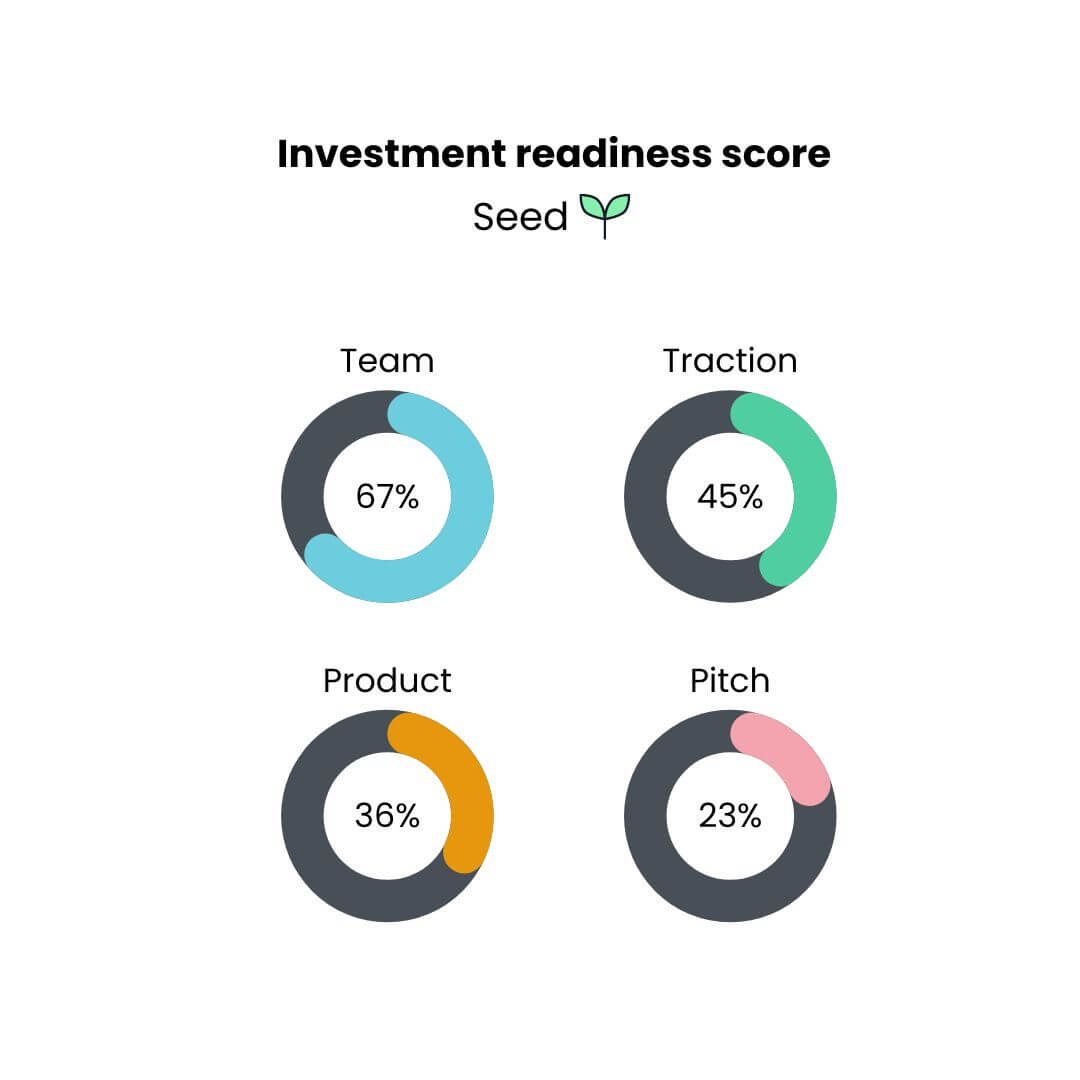
Hive’s flagship Investment Readiness Accelerator serves pre-seed and seed businesses. The programme combines weekly individual mentoring, expert sessions, deck and script work, pitch practice and a demo day. Its Cohort 14 page advertises a Warwick Business School partnership and early access to a research-backed funding toolkit.
For non-US businesses, the published price is £1,000 plus VAT, followed by 3% of the money raised, also plus VAT. Hive says it takes no equity. Consider a hypothetical £1 million round: the percentage fee alone would be £30,000. The modest entry price is only the first number in the decision.
£31,000 total before VAT. A calculation, not a reported client bill.
This positions Hive between a course and a fundraising adviser. Founders pay for preparation and continuing support rather than surrendering an accelerator ownership stake. The model makes the cost of success a budgeting question as well as the cost of joining.
The edit that matters
Cachai’s reported results include angel and SAFE-based pre-seed funding and five customer memorandums of understanding. Hive’s October 2024 case study also describes an offer to lead a planned $3 million seed round. An offer is not a closed round; an MOU is not a paid contract. The useful evidence is specific enough without inflating it.
The lesson a reader can copy is equally specific. Choose the customer whose problem is urgent, explain the first use case and connect the financial model to a credible route to that buyer. Broad possibility can come later. The pitch must establish why this particular business deserves attention now.
“When it comes to pitch decks, less is more!”Andrea Sommer / Hive Founders team page
Another Hive case study reports that legal-tech startup Deeligence raised AUD $1 million less than four months after completing the programme. Its preparation involved sharpening strategy, financial projections and investor presentation. The account suggests a useful mechanism: critical review helps founders remove material that distracts from the investment case. It does not establish that an accelerator alone caused the funding.

Before the deck, test the idea
A concept-stage founder has a different job. Hive’s nine-week Zero to Launch Incubator, developed with The Entrepreneur’s BattleBook, begins with the problem and customer, moves through a tested value proposition and finishes with MVP experiments. Its published fee is £1,500 plus VAT or $2,000, in three instalments.
That sequence supplies a practical boundary. A fundraising programme cannot substitute for discovering whether customers want the product. For someone still deciding what to build, interviewing buyers and testing a proposition may be a better use of time than rehearsing an investor script.
Now educate the person writing the cheque
Hive also teaches aspiring angels. Its seven-week Angel Investing Academy, endorsed by Alma Angels, covers investment instruments, unit economics, diligence, term sheets and bias. The published seat price is £2,500 plus VAT. Practice includes mock investments and discussion of women-led startups.
Womankind Ventures supplies another connection to the investor side: it says it selects startups that have completed Hive programmes. Selection remains a decision, rather than a graduation prize. Hive’s separate advisory service matches founders with specialists for scoped work, including product development, pricing, market expansion and board matters.
These different doors into the business matter. A founder may need an experiment, a sharp edit, a financial model or an introduction. Hive’s most useful promise is to make that need concrete. Before asking someone to fund the next chapter, decide which sentence your business can already prove.