The revealing number at FoundersBoost is eight. That is approximately how many hours a founder is expected to spend each week in its six-week program: three in focus sessions, five on deliverables. The application advertises no fees and no equity taken. The calendar tells the rest of the story. A founder keeps the company’s shares, but must find room for the work.
- Six weeks of mentorship, workshops and pitch coaching for early-traction tech startups.
- No participation fee; no equity surrendered for admission.
- Small cohorts, local demo days and a wider investor showcase.
- Funding benefits depend on the specific program.
The bill arrives in your calendar
That arrangement matters because the program sits at an awkward point in a company’s life. A small team has begun finding customers, yet still needs to test its business model, explain its market and decide what comes next. Paying for advice competes with paying for development. Giving away equity makes the advice expensive in a different currency.
FoundersBoost offers these teams one-on-one mentorship, expert speakers and a sequence of practical assignments. Its chapter pages describe cohorts of about ten companies, selected for cohesiveness. The customer is a founder building a scalable technology business with initial traction. A promising idea helps; a committed team and evidence from customers make the fit more convincing.
Approximate commitment calculated from published chapter expectations.
The boot before the rocket
The logo is a boot with a rocket flame, a pleasingly literal promise of assistance before takeoff. The organization launched as Startup Boost in 2017, with programs in Detroit, Dublin, Los Angeles and Toronto. Blake Caldwell, its CEO and co-founder, had already co-directed Startup Next Los Angeles, a Techstars program preparing startups for accelerators and seed investment. Co-founder Gene Murphy brought his own startup-community background.
In March 2018, a Techstars partnership placed Startup Boost between the weekend of entrepreneurial enthusiasm and the more demanding accelerator. The gap was specific: founders who needed resources and experienced people before they were ready for the next application. Volunteer city directors, entrepreneurs and investors supplied their time. The program’s free entry was part of the design from the beginning.
By June 2021, Startup Boost had become FoundersBoost. Its rebrand announcement described 14 chapters, 4,200 applications and $85 million raised by alumni. It also explained an operational choice: headquarters absorbed much of the administration and programming burden, allowing local ecosystem leaders to run chapters with support from the wider network.
Company-reported totals. Collective fundraising does not measure the program’s contribution to each company.
Today, FoundersBoost reports more than 600 alumni startups and over $400 million in their collective fundraising. Those figures describe companies that passed through the network. They give its work scale, while leaving an important question open: how much did the program change any individual outcome? The more instructive detail may be its reported 80% of startups with an underrepresented founder. Eliminating fees removes one concrete barrier to entry.
Six weeks to shorten a story
The curriculum begins with customer development and problem-solution fit. Founders work on identifying customers, collecting feedback and deciding which features deserve attention. Pitch coaching arrives in week two, including a three-minute presentation. Then come market entry, product-market fit, fundraising strategy and the choice of future funding or accelerator resources.
The sequence has a useful logic. A pitch can sound splendid while its customer assumptions remain vague. Asking founders to study the customer before polishing the presentation gives the subsequent story something to stand on. Three minutes is a small container; choosing what belongs in it forces a business to reveal its priorities.
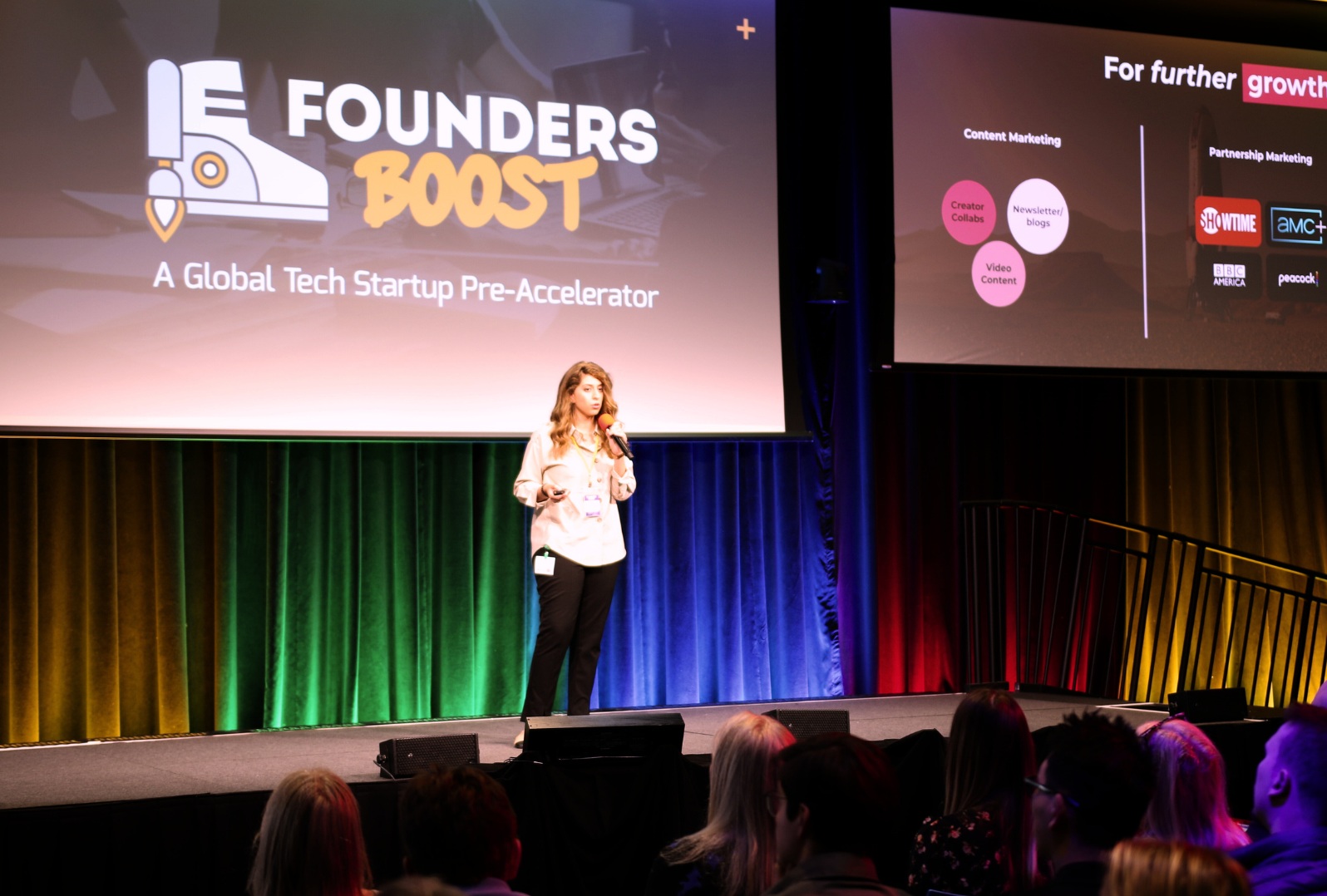
Sunny Day Fund CEO Sid Palia’s published testimonial recalls joining as the pandemic broke out in April 2020. He credits mentors, a tactical curriculum and “a laser focus on storytelling” with helping the team prepare for customers, funding, hiring and acceleration. It is a founder’s account of help received, rather than a controlled experiment. Its specificity is nevertheless useful: the pitch work served several business conversations.
“mentorship is what really pushes the needle forward for a company”Blake Caldwell, July 2025
A global network needs local reasons
Free participation requires support elsewhere. FoundersBoost uses volunteer effort, sponsors and ecosystem partnerships. Its Glendale Consumer CommerceTech program explicitly credits partner support and a state grant awarded through the city’s economic-development division. The Alliance for SoCal Innovation and Hacker Fund collaborate on delivery; qualified alumni can enter the Alliance’s Venture Pipeline for investor introductions.
The local incentive deserves attention. In July 2025, the Los Angeles Business Journal described accelerator closures and the strain on programs built around physical space. Glendale wanted growing technology companies to hire and develop nearby. Geography narrowed the pool of suitable applicants. A global network can supply connections, but a city funding a program has particular places and people in mind.
The Healthcare & Accessibility Accelerator adds another set of reasons to gather. Its October 2026 program pairs FoundersBoost with MVMT Ventures and MLK Community Healthcare. Participants are offered at least $25,000 in grants; additional CES-related funding and showcase places have conditions. MVMT’s stated intention to invest later in four companies is a separate opportunity. These benefits belong to that program, with its particular eligibility.
What a founder can take home
Beyond a cohort, FoundersBoostX offers an online community and more than 35 on-demand workshops. The broader offering includes startup perks and investor-facing showcases. FoundersBoost Fund is a partnered vehicle focused on alumni investment. This puts the company alongside incubators and founder-education programs, while also feeding startups toward accelerators such as Techstars and Y Combinator.
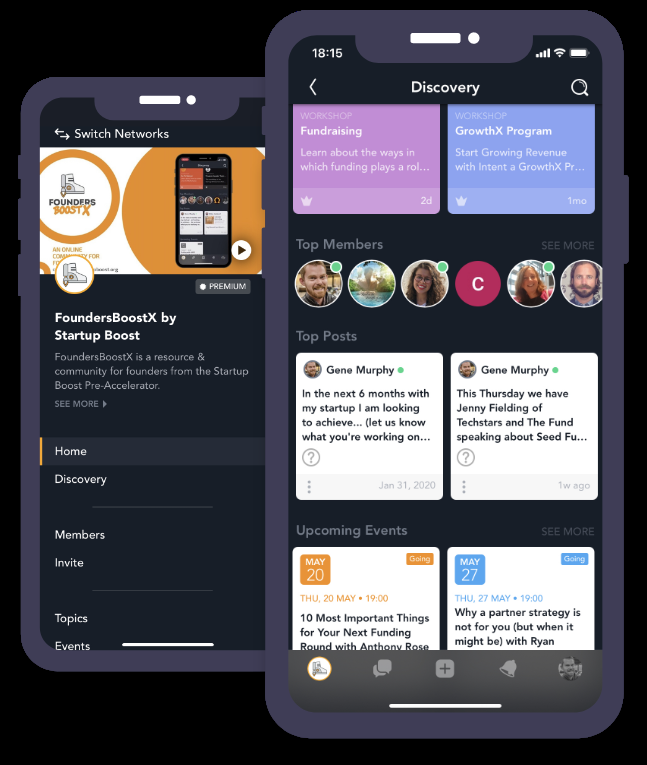
The method is copyable: schedule the customer work, let experienced people challenge the assumptions, compress the explanation, then choose the next financing step. A team needing immediate cash, unable to spare the weekly hours, or building outside a chapter’s remit should judge the offer accordingly. Six weeks can provide structure and introductions. Whether those become a business still depends on what the founder does between meetings.