In March 2022, ten startups travelled from the Balkans to the United States with Digital Den. Most were still at the prototype stage. A year later, the studio took nine companies on the same kind of journey. This time, co-founder Nenad Novović reported, they had funding, products and customers; some were profitable. The interesting detail is the interval between the flights. What turns an introduction into something a company can actually use?
- A venture studio for Balkan founders, with development support and overseas connections.
- Local investment facilitation sits alongside U.S. and European programs.
- The practical lesson: arrive with a product, a question and a reason to meet.
Digital Den operates from Podgorica, Montenegro. Its founders, Darko Ivanović and Nenad Novović, set out to connect the ingredients of a startup economy: technical people, businesses, institutions and investors. Calling it an IT services company is accurate enough for a directory. For a founder, the more revealing description is a place that helps the separate pieces of starting a business work together.
The missing middle
In a large startup centre, a founder might find a lawyer, an experienced operator and an investor through overlapping circles of acquaintances. Digital Den’s proposition is to assemble those circles deliberately. Its advertised support covers registration, early development, technology, financing and mentorship. The portfolio is industry-agnostic: hardware and gaming sit beside MedTech software, emotional intelligence applications and sustainability ideas. A promising business need not resemble its neighbour.
The studio describes a portfolio of more than 30 startups. These are the primary users of its support, rather than a customer base buying a single software subscription. For investors and established companies, the arrangement supplies another useful service: a way to encounter founders whose ideas have already received some attention, questioning and preparation.
Ivanović brings an unusual background to this work. He trained in film and television directing, built a career in journalism and was a Humphrey Fellow at Arizona State University. A person accustomed to explaining complicated subjects to an audience has a relevant skill when a founder must make a product understandable to someone encountering it for the first time. That is an editorial observation, but the career is real.
Money needed a route in
Digital Den’s early story involves a distinctly local instrument. In June 2022, its investment conference brought government, businesses and startups together to discuss Montenegro’s research and innovation incentives. The point was practical: explain how the framework could connect business capital with young companies, and address questions about implementation. An investment policy still needs people willing to use it.
By December, eight portfolio startups had received a reported €1.87 million in pre-seed funding. Public accounts describe 12 investments. Another reported €1.05 million reached 11 startups in December 2023. These figures measure money reaching portfolio companies. They should be read separately from a reported €300,000 investment received by Digital Den through the same incentive framework.
Separate annual snapshots, not total studio funding or a measure of startup returns.
There is a useful distinction here for anyone copying the approach. Digital Den paired preparation with a financing route available in its home market. Another ecosystem would need its own source of willing early-stage capital. The sequence is portable; the underlying incentives depend on local rules. A policy can open a door, but somebody still has to introduce the people on either side.
The badge that travelled
Badger makes the studio’s work less abstract. It is a wearable digital badge for business networking, with contact exchange and event applications. In December 2022, Digital Den announced an investment from Glosarij. Its account describes a progression through idea development, prototyping, evaluation, a business model and entry into Montenegro’s Register of Innovative Activities. The glamorous part came later.
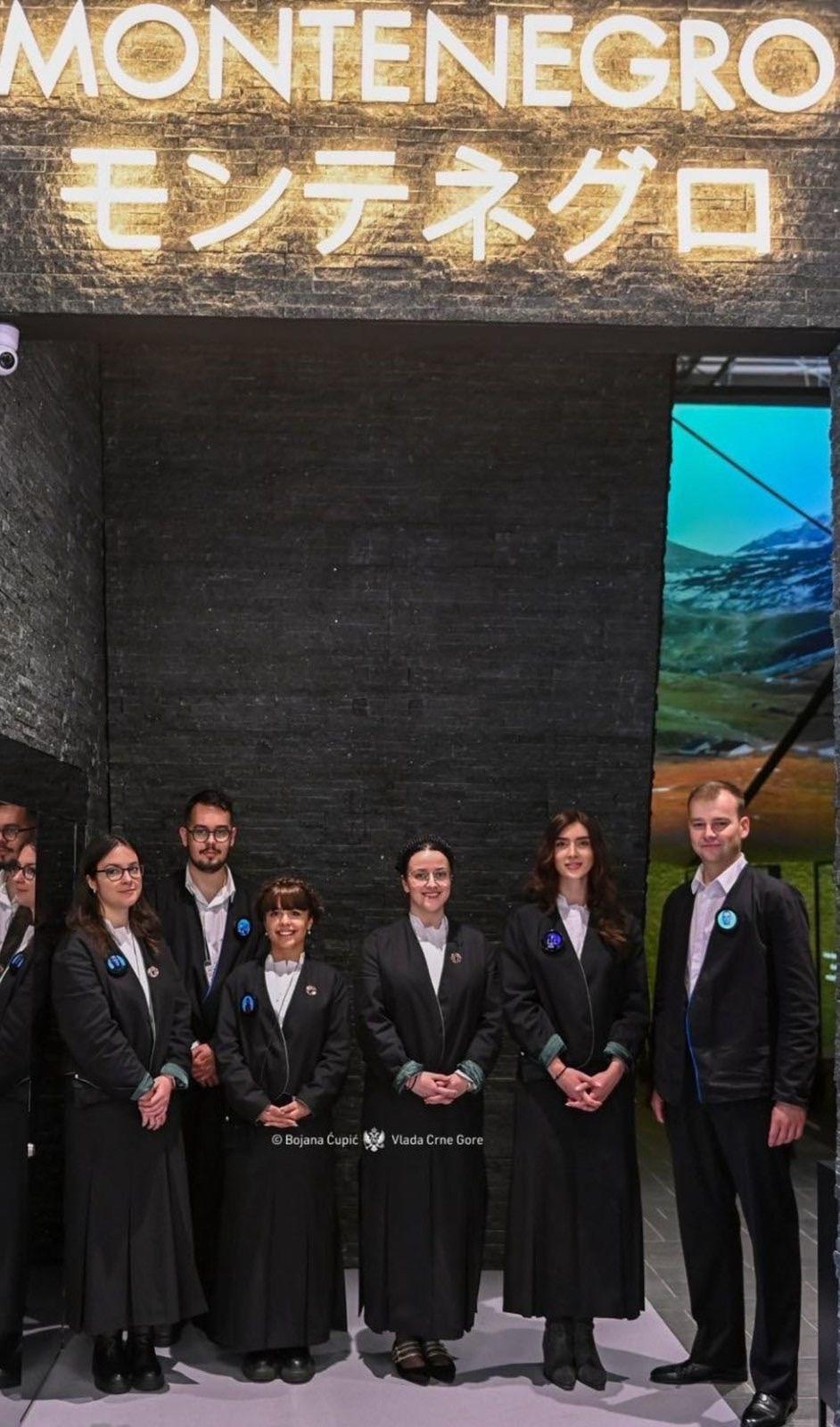
In April 2025, the studio reported Badger’s world premiere and first contract at Expo Osaka. Development had involved the United States, German design and manufacturing in Asia. Amplitudo supplied technology expertise; Digital Den supplied international reach. For a hardware startup, that geographical spread is a reminder that building a product and building the relationships needed to deliver it are intertwined jobs.
An introduction with homework attached
The Montenegro Technology and Startup Bridge, or MTSB, has U.S. Department of State support. Its network has connected founders with cities including Phoenix, Denver, Austin, Portland in Maine and New York. Advisory-board members also participate in “startup adoption,” working individually with founders on business models, market connections and investor access. The appeal is continuity: somebody remembers the last conversation.
By 2024, public descriptions of MTSB emphasised educational programs and one-to-one mentoring. Digital Den also reported that DigiGrow, Flourish and Badger had established U.S. entities in 2023. Registration alone does not establish commercial success, but it is a concrete step beyond attending an event. The studio’s place in the market lies in joining these stages together.
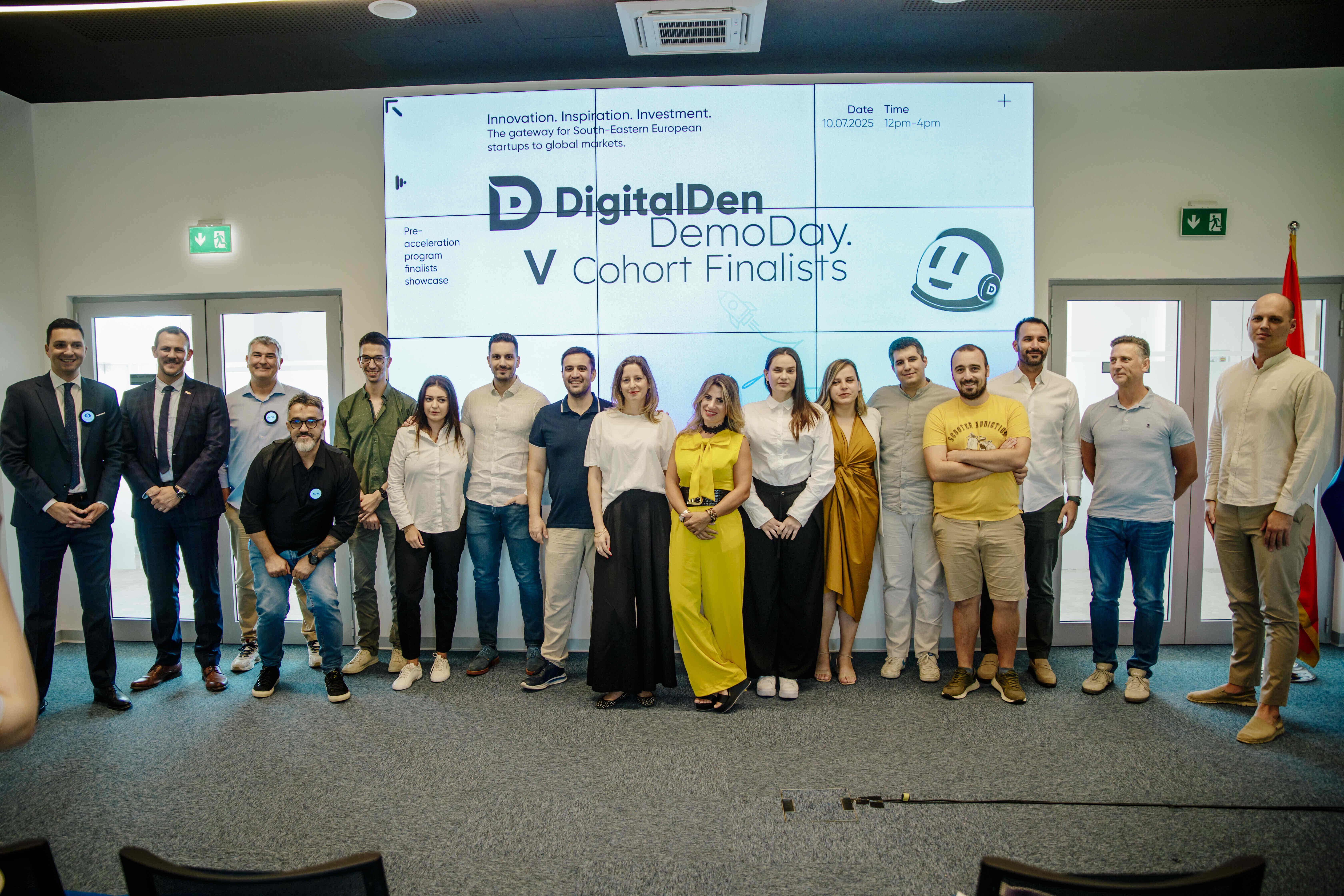
The European chapter followed. In July 2025, seven teams were selected for the fifth cohort after pre-acceleration supported by the EBRD. They included YachtHe, Benefiti, Pet Travel Advisor and WhereToPark. MTSB Europe, supported by Lovćen Bank, connected prepared teams with European innovation networks. Participation followed the work at home.
The network also extends into specific projects. Digital Den is a partner in SOFTMOVE with Italy’s aerospace district DTA and Albania’s geospatial authority ASIG. A 2025 training announcement offered selected participants accommodation, meals and training materials at no charge. That is a concrete example of supported participation, with a defined subject and limited places, rather than a promise that every studio service is free.
Bring a question worth answering
In September 2026, CEO Sandra Kordić described the offering neatly: “The product is readiness.” The studio reported more than €6 million in cumulative portfolio pre-seed investment and outlined planned sandbox testing. Its newer priorities include finance, health and hospitality technology. The direction is toward testing products with relevant industries before asking international exposure to do too much.
“The product is readiness”Sandra Kordić, CEO / September 2026
For a founder, the copyable habit is specific. Decide what the next meeting must resolve: a customer problem, a product test, a market question or an investment decision. Ask for the person who can help resolve it. Digital Den’s story suggests that a network earns its keep when founders arrive prepared to use it. The ticket gets you into the room. The work done beforehand gives the conversation somewhere to go.