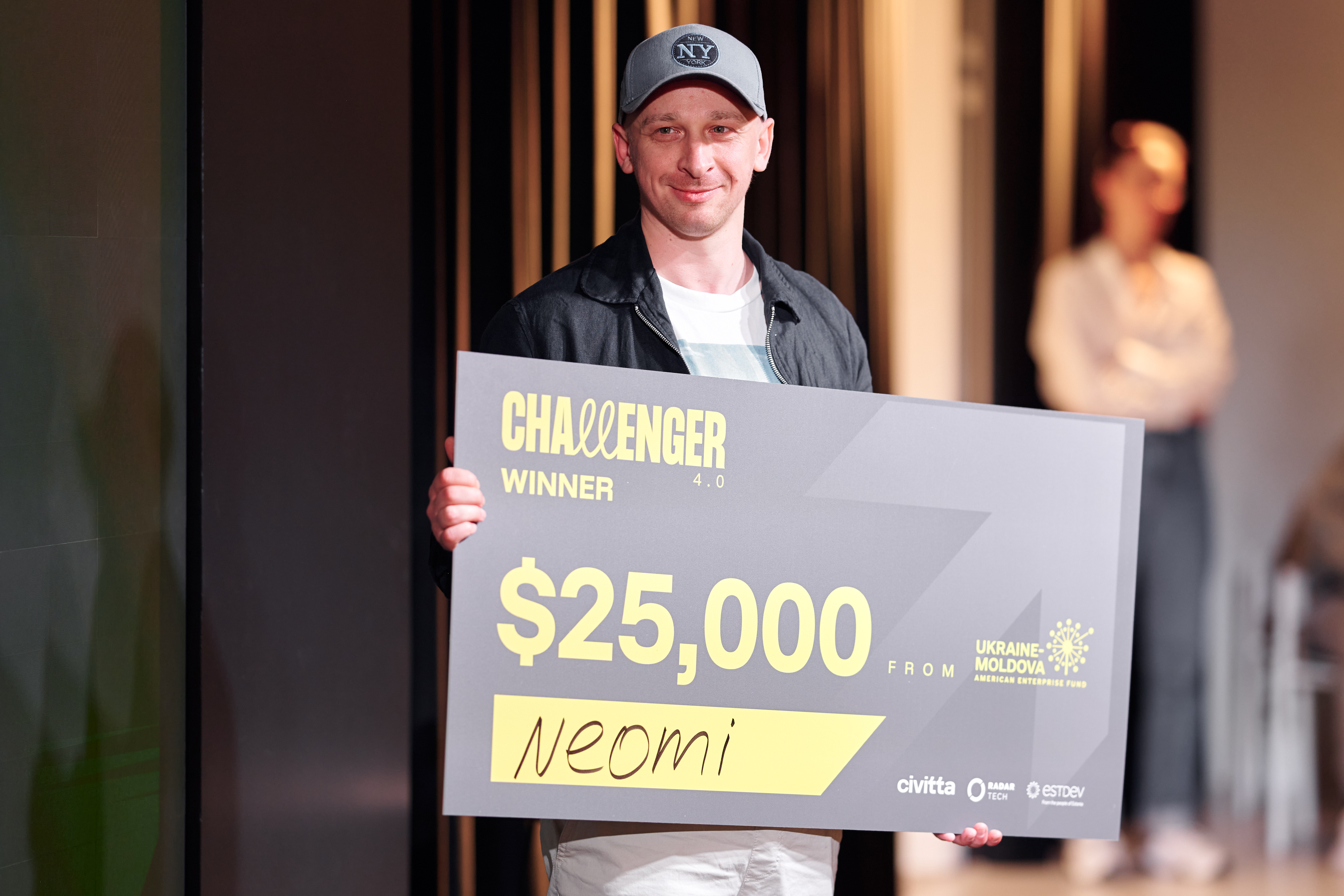
A grocery-shopping assistant is an unlikely mascot for startup ambition. Yet Neomi, which helps retailers turn shoppers’ requests into baskets, took the $25,000 grand prize at Challenger Accelerator’s April 2026 Demo Day. The mundane setting is rather the point. Somewhere between an impressive demonstration and a repeat customer, a technology company has to explain why anybody should pay.
Challenger works in that interval. Backed by innovation and management adviser Civitta, it brings founders into structured programs with business mentors, technical specialists, prospective customers and investors. Its brief reaches beyond presentation polish: find a market, improve the product and build a company capable of selling it. For a founder with working software and an unconvincing sales pipeline, that is a more useful assignment than another round of applause.
The invitation says equity-free
The offer has an obvious attraction: founders can receive support without handing over shares. But the details deserve the same attention as the application. Challenger’s September 2025 announcement for cohort 4.0 said there was no participation payment or equity transfer, while allowing a possible fee of 3-5% of investment raised during the program or within a year afterward.
Ownership and cash cost are separate questions. That distinction matters when comparing programs, especially for a team joining precisely because it expects to raise money. It also helps explain why “equity-free” should begin a founder’s reading, rather than finish it. Each program has its own terms.
The AI track targets Ukrainian-founded teams with an MVP and at least two members. An idea-only solo founder falls outside those published criteria. And a team needing guaranteed cash should distinguish an accelerator place from a prize: acceptance alone promises neither a grant nor an investment.
for participation
investment raised
Fundraising window: during the program and up to one year afterward, under the published announcement.
The other cost is time. The AI program’s FAQ suggests four to six hours a week. The curriculum includes individual mentoring and workshops; founders must still do the work those meetings uncover. An introduction produces a conversation. Turning it into a pilot, a purchase or an investment remains the team’s job.
A Bratislava idea with a passport
Challenger’s roots predate its Ukrainian AI cohorts. The Slovak-American Foundation dates the brand’s introduction to 2019, when Civitta established it as a successor to UPLIFT. That earlier program had worked on urban innovation. Between 2020 and 2022, the foundation supported Challenger with funding, mentoring, workshops and connections across programs involving 48 startups.
Civitta’s 2020 annual review describes the first Bratislava batch: 60 applications, 12 selected startups, a sustainability and green-technology focus, and four months of work. More than 40 mentors and connections to over 30 investors supplied the network around those teams. The idea was to create an accelerator brand that could operate across countries and sectors.
That history explains the current breadth. Challenger is a company-building service with multiple programs, audiences and partners. Civitta’s own case study describes three-month groups of roughly eight to 12 startups, with work on positioning, business models and product-market fit. The repeatable element is the program machinery; the commercial problem changes with the cohort.
Someone has to buy the clever thing
There are two customer groups in Challenger’s business. Founders want expertise, access and a clearer route to revenue. Established organizations want useful technologies, new products and people who can help their employees test ideas. Challenger’s corporate offering includes innovation audits, service design, hackathons, training and custom startup collaborations.
Those activities can reinforce one another. A consultant who understands corporate buying decisions can help a startup prepare for them. An adviser who knows young technology companies can help a corporate team find a workable solution. This is Challenger’s practical position in a crowded market of accelerators, incubators and innovation advisers: access to both sides of a prospective transaction.
HealthCare Lab makes the arrangement concrete. Working with Roche and EIT Health, Civitta designed a program around healthcare challenges and brought startups together with industry specialists. Its case study reports 24 startups, more than 30 Roche experts involved as mentors or speakers, and two startups signing investment term sheets during acceleration. A term sheet is a step toward a deal, not a completed financing.
The lessons also travel outside software. Challenger’s Urban:Creative programs formed part of the Košice 2.0 initiative, working with ventures relevant to city development. Graduates included parking-sensor company ParkingAround, autonomous-vehicle developer BringAuto and equipment-locker business YourLOX. A municipal customer brings a different buying process from an online retailer. That difference is precisely why specialist connections matter.
The work before the photograph
Challenger AI 3.0 shows how selection and support fit together. Civitta reports 127 applications, 29 teams invited into a selection bootcamp and 14 chosen for acceleration. Teams received business and technical mentoring. An investor “roast” put 12 startups in front of representatives from five funds for direct feedback. The point was to expose weak assumptions while there was still time to change them.
Object Control supplied a visible result. The company helps banks, insurers and leasing businesses inspect vehicles and property. It progressed from a 2024 hackathon through pre-acceleration into the AI program, eventually winning the 2025 grand prize. The published account reports monthly recurring revenue rising from $5,000 at selection to $50,000 during acceleration. That is a reported company result, not proof that every participant can repeat it.
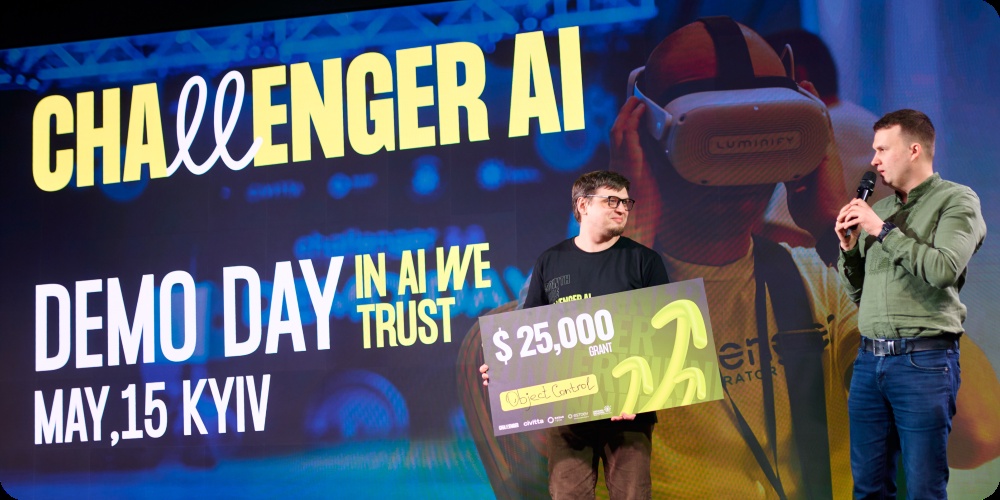
The prize is easier to photograph than the preceding conversations about sales. Yet those conversations are the part another founder can borrow. Separate the technical question from the commercial one. Decide what a useful pilot would demonstrate. Find someone who understands the buyer. Then return with evidence, rather than a larger collection of slides.
What changed when the advice became specific
Some participants arrived unconvinced. If.team co-founder Oleg Frolov described joining with a finished product but uncertainty about how AI could improve it. “Honestly I was skeptical about the program,” he said in the 2025 account. He credited the experience with helping the team understand that application. The useful intervention was attached to an existing business problem.
GIOS founder Natalia Limonova described a different obstacle in Challenger’s published alumni feedback: expanding abroad exposed the limits of applying the same approach in every country. The education company sought help with scaling and integrating AI. Its experience offers a sensible test for mentoring: does the adviser understand the market you are entering, or only the one you already know?
Sometimes the first failure is simply the pitch. Seeklab.ai’s Vadym Oshkalo described his first attempt as a failure; the 2026 Demo Day was only his second. He used the intervening program to prepare. It is a modest, repeatable lesson: presentation improves through rehearsal and feedback, even when the product itself already exists.
By 2026, the work extended into less glamorous details of company formation. Ukraine’s national intellectual-property office documented a Challenger webinar on identifying protectable assets, handling developer agreements and building an IP strategy. Those topics rarely get the loudest applause at Demo Day. They can nevertheless make a future commercial conversation much more concrete.
“And if we can’t help, we are straightforward about it.”Challenger’s published values
The company’s stated culture pairs experimentation with candor. That is a useful standard by which to judge the service. An accelerator earns its place in a founder’s calendar when it can identify a specific obstacle and connect the team with someone equipped to address it.
Research labs need a different starting line
Challenger does not require every participant to arrive with an investor-ready startup. Science, its three-month program for Slovak doctoral students and researchers, accepts individuals as well as teams. Activities are free, with physical workshops in Bratislava and a stated commitment of three to four hours weekly, plus individual work and networking. The objective is commercialization and knowledge transfer.
Challenger Ideator takes another route into entrepreneurship. Its case study describes students and corporate employees developing and testing ideas against real challenges, including young people’s financial habits. The program reports more than 110 participants and 17 teams presenting solutions. Design thinking becomes more demanding when a team has to test its answer with the people it hopes to serve.
For Slovak speakers exploring an earlier idea, Challenger Kit offers digital guidance through the steps toward forming a company. Space businesses have another option in the listed CASSINI Business Accelerator, a six-month program delivered by a consortium including Civitta. These are different entry points, with different eligibility and commitments. A founder should choose by the problem and stage, not simply by the shared branding.
The next market may be across a border
The latest expansion continues that approach. Challenger announced its Ukrainian Sustainability cohort in August 2026, with ventures including Releaf Paper, PRANA and Solar Plex. The program combines workshops and mentoring with planned meetings and events in Ukraine and Sweden. THINGS supplies a Swedish industry connection; the Swedish Institute funds the initiative.
Its African Digital & Green program reaches another set of markets. It targets ventures in South Africa, Namibia, Botswana, Kenya, Uganda and Ethiopia, with Civitta, mLab and GrowthAfrica implementing the work. The offer combines digital business development with sustainability, using regional partners alongside international mentors. Local knowledge is part of the design.
The 2026 AI winner supplies a useful closing example. Neomi’s founder Dmytro Lylyk had participated in Challenger’s first Ukrainian cohort with an earlier product, pausing that participation to explore other ideas. Returning with Neomi, he planned to use part of his prize for specialist conferences where the grocery and e-commerce industry gathers. The intended destination for the money was closer to buyers.
Not every useful meeting requires a stage. In August, Challenger advertised a Kyiv gathering where founders would cook burgers while discussing doubts and failed bets. Admission started with a UAH 100 donation for the UNBROKEN Centre. The format had a wink to it, but the underlying question was familiar: what did you try, what changed, and what will you do next? A founder who can answer that clearly is ready to make better use of the next introduction.