Consider the difference between buying a machine and knowing whether to buy it. The first problem has a price. The second has a dozen awkward questions: who will pay for the output, how quickly, and what happens while you wait? Virgin StartUp occupies the space between those two problems. It helps founders borrow money, then surrounds the borrowing decision with advice, mentoring and other founders. The cheque is the conspicuous part. The conversation may be the consequential one.
- £500-£25,000 per eligible founder through government-backed Start Up Loans.
- Personal borrowing, with business-plan support and up to a year of free mentoring.
- A UK founder community, plus programmes including the free Momentum accelerator for dyslexic entrepreneurs.
A famous surname, a practical assignment
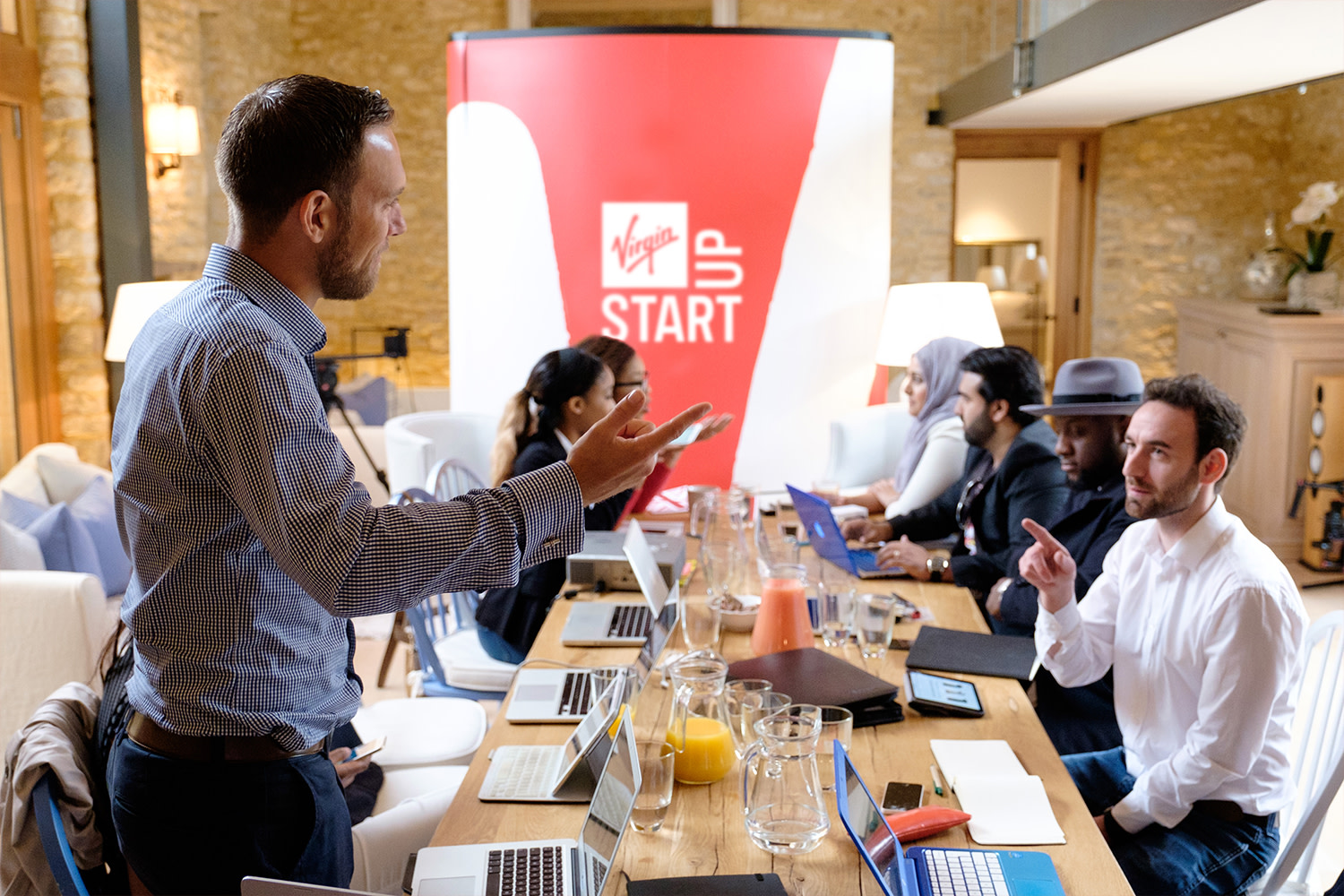
Richard Branson founded Virgin StartUp in 2013, following a north-east England pilot involving Virgin Unite, Virgin Money, the Northern Rock Foundation and Project North East. That origin matters. This was a support programme before it became a national proposition. Its stated mission remains concrete: help people turn ideas into businesses through advice, mentoring and funding.
Virgin StartUp is a not-for-profit company within the Virgin Group. Its customers are aspiring and early-stage UK entrepreneurs, rather than a narrow club of technology founders. DASH Water, Oddbox and UpCircle appear among the businesses it has supported. Drinks, rescued produce and skincare make a useful corrective to the notion that entrepreneurship must arrive wearing a software valuation.
In Start Up Loans distributed. More than 7,000 founders supported.
In March 2026, it announced £20 million in lending capital for the following financial year. These figures describe money made available to entrepreneurs. They are not Virgin StartUp’s revenue, nor a venture funding round for the organisation. Its business model combines delivery of a government-funded lending scheme, paid community membership alongside free access, and programmes supported by partners.
The debt has your name on it
The central product is a government-backed Start Up Loan: £500 to £25,000 per eligible person, repaid over one to five years. For new applications from 6 April 2026, the annual interest rate is fixed at 7.5%. There is no application fee or early repayment fee. Applicants must be UK residents aged at least 18, with a UK business that has been fully trading for less than five years, or plans to start one.
The important word is personal. You borrow the money, even when you spend it on your business. Government backing describes the programme’s funding; it does not transfer your repayment obligation to Westminster. Keeping your shares is attractive. Keeping responsibility for the debt deserves just as much attention.
Those repayments put the support into perspective. The scheme offers free help with a business plan and up to 12 months of mentoring for successful applicants. A founder can use the process to examine equipment costs, marketing assumptions and cashflow. Approval still requires a credit check and assessment. A tidy plan is a useful working document, not a promise that customers will behave themselves.
What the cheque cannot introduce
Managing director Andy Fishburn put the proposition neatly in the March 2026 announcement: “Funding gives founders momentum but support gives them staying power.” Virgin StartUp’s community extends that idea beyond the application. Membership offers connections, events and access to advice and mentoring. Paid options sit alongside free access; founders should check the live plan for the support they need.
“Funding gives founders momentum but support gives them staying power.”Andy Fishburn / Managing Director
The network is part of its competitive position. Other Start Up Loans partners operate within the same government framework. Virgin StartUp adds its founder community, Virgin connections and selected growth programmes. Its expertise centres on business planning, financial preparation, mentoring and investment readiness. Founders needing equity capital or specialist technical infrastructure will have different requirements; a personal loan cannot perform every job.
ReBorn founder Brian Walmsley gives that network a concrete shape. In a published Changemakers interview, he described an early student magazine as unsuccessful, and later frustration at trying to change large companies from within. Starting a sustainable homewares business seemed easier than re-engineering an existing one. He had design and scientific support, plus interest from John Lewis, but lacked significant funding. A friend recommended Virgin StartUp. Through its programme, he met Holly Branson, who invested directly in ReBorn; he said that helped attract other investors. That was equity investment into his company, distinct from the personal loan product.
Change the application, change who arrives
Momentum, launched in 2025 with Made By Dyslexia and Virgin Unite support, makes the inclusion argument unusually tangible. The free, eight-week online accelerator offers workshops, mentoring and resources for dyslexic founders. Published eligibility includes a UK business trading for at least three months and ambition to grow. A formal diagnosis is not required.
Its 2026 application accepts written answers, voice notes or video. “We’re not judging grammar or polish,” the form says. That is a small sentence with a large operational consequence. An organisation can praise different ways of thinking indefinitely. Accepting an answer in a different format changes something a founder actually has to do.
- 01 / ExplainWriting, voice or video
- 02 / PractiseEight weeks of workshops
- 03 / ApplyMentoring for your business
The curriculum covers business models, finances, sales and customer connection, with mentoring designed around neuroinclusion. It does not make dyslexia a guarantee of commercial success. It addresses a more immediate problem: conventional support can ask founders to demonstrate competence through a format that obscures it. The copyable lesson is to inspect your entrance requirements before lamenting the people who never enter.
A pledge needs a denominator
Virgin StartUp made its 50:50 funding pledge in 2019, committing to support equal numbers of women and men founders. In March 2026, it reported that women represented 46% of funded recipients over the preceding 12 months. The distinction between intention and delivery is useful. A pledge supplies direction; a measured share lets outsiders judge progress.
There are limits to the proposition. Debt needs affordable repayments. An accelerator needs time and a suitable cohort. A community needs participation. None supplies missing customer demand. The practical move is to arrive with one decision you need help making, a realistic cashflow forecast and a clear understanding of your personal exposure. Virgin StartUp can provide money and people. The founder still has to decide what is worth building.
Open a door
Explore Virgin StartUp, its loan support, founder community and Momentum.
Follow LinkedIn, X, Instagram, Facebook or TikTok. Listen to Brian Walmsley’s ReBorn interview, browse the official video and event links, or read the founder guide to purpose-led business.