Consider a detail from Foundervine’s first accelerator for disabled founders: 80% of the cohort had already raised angel or venture funding. These were entrepreneurs with evidence that somebody believed in their businesses. Yet they still sought a programme built around access. The interesting question is what remained difficult after the first investor had said yes.
- Foundervine pairs business training with mentoring, peer networks and investor introductions.
- Corporate and public partners support programmes for founders facing particular barriers.
- Choose by business stage: a working prototype, a funding round and a growing team need different help.
The London social enterprise works in the space between having potential and being able to use it. Its programmes bring founders into contact with operators, specialists and people who control resources. A workshop can explain a financial model. A mentor can challenge yours. An introduction can put it in front of somebody who might care.
The advice arrived too late
Before Foundervine, Izzy Obeng worked at KPMG. She coached young people, particularly women and people of colour, who wanted to start businesses. In a University of Bristol interview, she recalled finding plenty of resources for people who already had a business model, and much less for people still at the idea stage. The support system seemed to require a ticket before it would help you find the station.
Her account of startup events supplied another clue: she was frequently the only person of colour and among very few women. Foundervine launched in 2018, with Obeng now its chief executive and co-founder Cecil Adjalo its chief operating officer. Companies House records a community interest company, limited by guarantee without share capital. Its stated mission makes access to innovation a social objective.
The original observation still explains the company’s market position. General business education gives people information. Foundervine organises support around who struggles to reach that information, the network surrounding it and the stage at which it becomes useful.
A room designed for its occupants
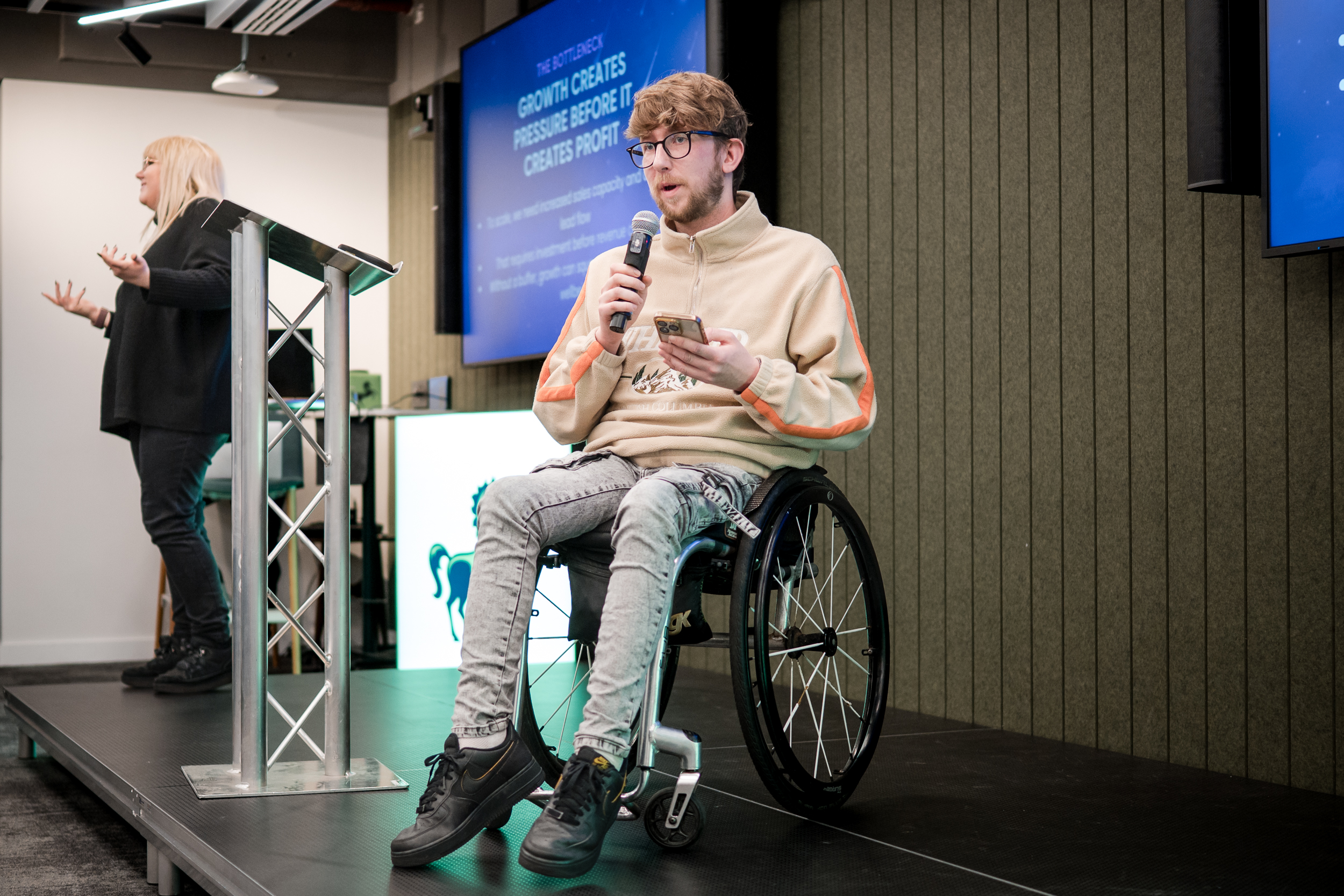
Breakthrough, delivered with Lloyds, makes that approach tangible. The eight-week hybrid accelerator combined masterclasses, individual mentoring, peer learning and a final showcase. Flexible participation and accessible materials were built into delivery. Foundervine reports supporting 29 founders after receiving more than 250 applications.
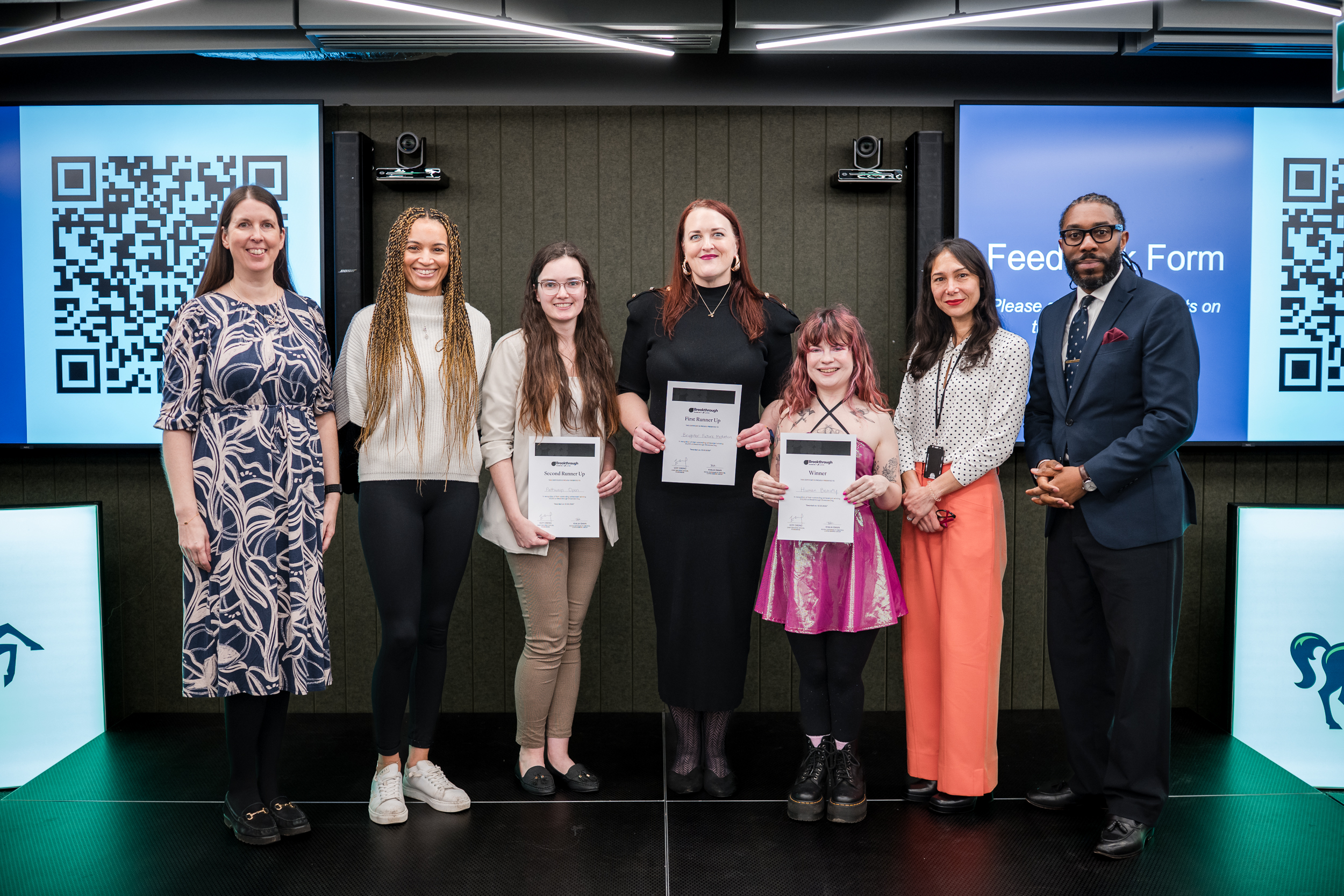
The programme distributed £21,000 in grants: £12,000 to Human Beauty, £6,000 to Brighter Future Mediation and £3,000 to Pathways Open. Those are awards to businesses, rather than the operating cost of the accelerator. They also give the showcase a practical consequence beyond applause.
“What stood out was feeling part of the programme structure rather than having to adapt everything to fit around my own barriers.”Linzi Sortain, A New Icon
Sortain’s observation offers a useful design test. If every participant must negotiate an exception before joining in, accessibility becomes another task on the founder’s list. Building it into the programme reduces that burden. The lesson is available to anyone running training, an industry event or a mentoring group.
The founder pays in attention
Foundervine serves two connected audiences. Entrepreneurs use its support; banks, foundations and public bodies collaborate on delivering it. Obeng described the model in an early interview as working with large, mission-driven companies on training programmes. Today, the partner list includes Barclays, Lloyds, NatWest, the London Stock Exchange and Southwark Council.
That structure can remove a cash barrier. The Barclays Black Venture Growth programme explicitly lists no participant fee and an approximate programme value of £10,000, supported by UK Government funding. The price a founder still pays is attention: sessions, preparation and the work of acting on advice.
The programmes have different jobs. The Barclays Black Founder Accelerator offers 12 weeks of growth support, business audits, coaching and pitch preparation. The Foundry, with Molten Ventures and Esprit Foundation, has 15 places for founders aged 18-30 who already have a minimum viable product. Its task begins where an idea becomes something users can test.
Refine an existing MVP
Prepare a funding round
Work through growth with peers
Ascend targets businesses preparing to raise within three months. NatWest-backed Scale Circle supports established, revenue-generating founders through peer engagement across eight UK hubs. These distinctions matter. A founder still exploring an idea will have different questions from an operator wondering how to manage a larger team.
Confidence has to survive Tuesday morning
Pulse, Foundervine’s AI programme, offers an instructive wrinkle. A £25,000 Esprit Foundation grant helped deliver training that admitted 314 learners; 173 graduated. Recruitment and completion deserve separate numbers. A crowded classroom and a completed course measure different things.
Graduates represented about 55% of admitted learners.
At a follow-up roundtable, founders described beginning with scepticism, overwhelm and ethical concerns. The ethics module emerged as a turning point: it gave them a way to discuss risks and recognise tools they already used. Practical experiments followed, including research, communication and workflow design.
The report also records concerns about bias and creative voice. That makes the account more useful than a conversion tale. Founders were learning where a tool belonged in their working day and where human judgement remained necessary. For other training providers, the transferable move is to make room for objections before asking people to change their habits.
Put the network within walking distance
Foundervine Spaces extends the proposition into Canada Water. Shared workspace memberships start at £249 a month; fixed-desk packages start at £399, and the £499 tier includes a monthly hour with an entrepreneur-in-residence. A day pass is listed at £40. Here, proximity becomes a paid service.
There are alternatives for founders: Colorintech’s tech community, UnLtd’s social-enterprise support, or programmes with different sector and investment criteria. Foundervine’s appeal lies in combining targeted access with practical business development. The sensible choice depends on the obstacle. Its Founders Connect partnership, for example, explores finance beyond venture capital, including grants and debt.
Introductions still require a business worth introducing. Selective cohorts, eligibility rules and attendance commitments constrain who can benefit. A founder who needs immediate customers must keep selling while learning. The useful thing to copy is straightforward: name the decision ahead, find people qualified to challenge it, and make it easier for those people to meet you.
Find your next introduction
Explore Foundervine · Browse programmes · Upcoming events · Visit Spaces
LinkedIn · Instagram · Twitter / X · News and founder stories
Watch: Welcome to Foundervine · Listen: Izzy Obeng on Workthrive