A basement is an economical place to begin a software company. The stairs are close, the rent is familiar, and the world outside has yet to acquire an opinion. In 1988, Annemarie Pucher and Max Pucher started their business in the basement of their home in Austria. Thirty years later, they welcomed customers and employees from around the world to a new headquarters in Brunn am Gebirge. The address had changed considerably. The business still concerned itself with how people keep in touch.
Pucher is the co-founder and CEO of ISIS Papyrus, whose software connects business communication with the processes behind it. Its territory includes statements, contracts, correspondence and the work that follows a customer’s request. These are ordinary things with demanding consequences. A letter can carry a promise. A missing piece of information can delay a decision. Somebody must make sure the conversation reaches the right person.
Her career offers a useful way into that machinery. Across decades of public talks and writing, she returns to the relationship between the people who understand a business and the systems through which they must conduct it. The vocabulary changes. The concern is recognizable.
A business downstairs
By the time Papyrus celebrated its thirtieth anniversary, the basement beginning belonged to a much larger geography. The company had grown into an international organization with development and competence centers. Pucher’s remarks at the opening of the new Austrian headquarters described a project whose idea had begun ten years earlier. She expected the building to support growth and software innovation for years to come.
Ten years is an interesting planning horizon in a software business. It allows enough time for a fashionable phrase to become embarrassing and then, with luck, fashionable again. A building has to accommodate people throughout the cycle. So does a company selling systems that customers rely on every working day.
- 1988Co-founds ISIS Papyrus in Austria
- 2008Stevie Lifetime Achievement finalist
- 2010OutputLinks Women of Distinction
- 201830th anniversary; new Austrian headquarters
- 2026Publishes “Curing The Migration Blues”
A teacher before a founder
Pucher studied law at the University of Vienna. Her early professional work took her into software training at IBM Austria, with assignments in the United Kingdom and Saudi Arabia. She subsequently managed product marketing in the Austrian electronics industry. The route into company leadership passed through teaching and explaining technology, as well as bringing products to market.
That background gives her later emphasis on understandable tools a particular resonance. Training puts a person close to the moment when a system either makes sense or fails to. Product marketing demands another translation: what the technology does, and why someone would want it. Her public arguments continue to occupy that territory between capability and use.
As CEO, she has managed worldwide sales and marketing for the Papyrus platform. She also speaks internationally about customer engagement, communications and digital transformation. These roles put her in the business of explaining software to organizations that have existing obligations, established habits and very little appetite for losing a day’s work to an elegant new idea.
The vintner and the software release
In the company’s 2009 Open House invitation, a bottle of red wine makes an appearance. The analogy concerns quality, with a vintner’s handshake offered as a way of knowing what one is getting. Software release notes do not routinely smell of a cellar. Here, the image fits a business that wants its customers to associate the product with the people standing behind it.
The invitation also describes caution before the downturn, cash reserves and the intention to grow during difficult conditions. Its argument favors consistent management over a sudden rush to cut costs. That is a company’s stated approach, rather than a balance sheet, but it provides a revealing glimpse of the way Papyrus addressed its customers.
“Good business management is conservative at all times and does not go into a cost reduction frenzy when times are bad.”
2009 Open House invitation
There is a practical connection between that business stance and the product. A customer buying a system for important communications is also making a decision about dependence. The next statement, the next request and the next employee who needs help will arrive after the sales conversation has ended. The handshake must cover more than the afternoon.
A room where customers can ask back
Public recognition came along the way. In 2008, Pucher was named a finalist in the Lifetime Achievement category of the Stevie Awards for Women in Business. In 2010, she became one of the OutputLinks Women of Distinction honorees, a program recognizing women working across print, document and high-volume transaction output industries.
The honors locate her work in a particular professional world. This is technology through which organizations conduct their daily dealings at scale. Its achievements can be hard to see from outside: the correspondence arrives, the records agree, the employee has the information required. A great deal of effort can disappear inside something that simply works.
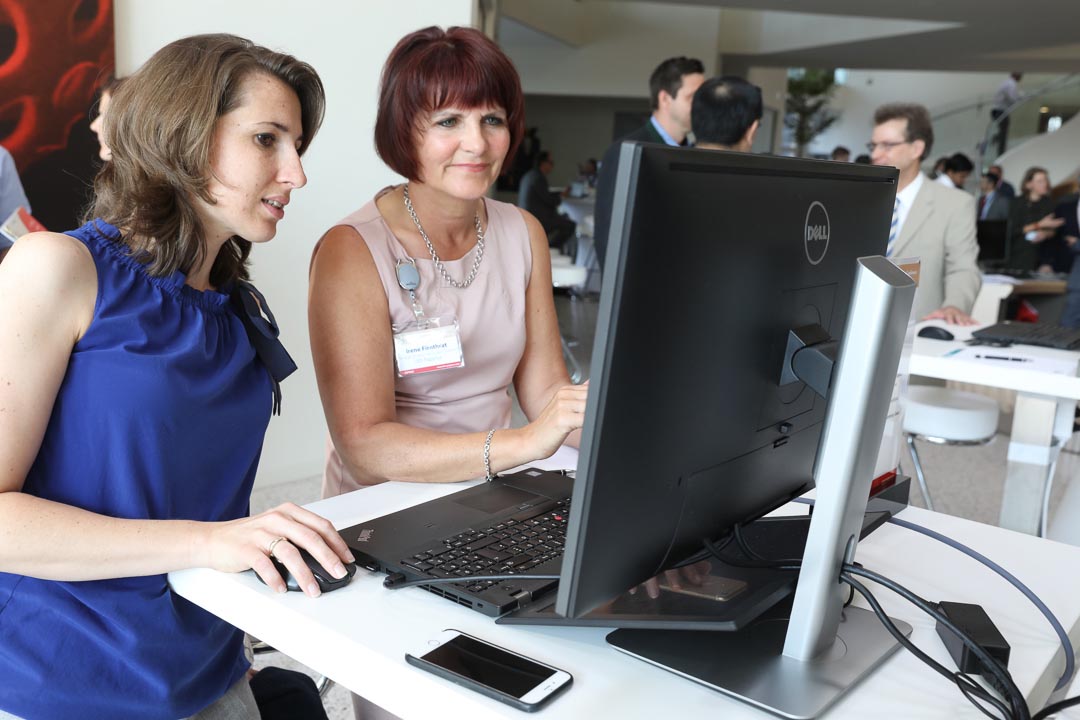
At Papyrus Open House events, the machinery becomes visible. Pucher’s description of these gatherings in 2018 emphasizes demonstrations, discussions, roundtables and technical workshops. Customers compare experience with other customers. Prospective users can ask questions. Experts from different countries meet in one place, alongside the company’s technical leadership.
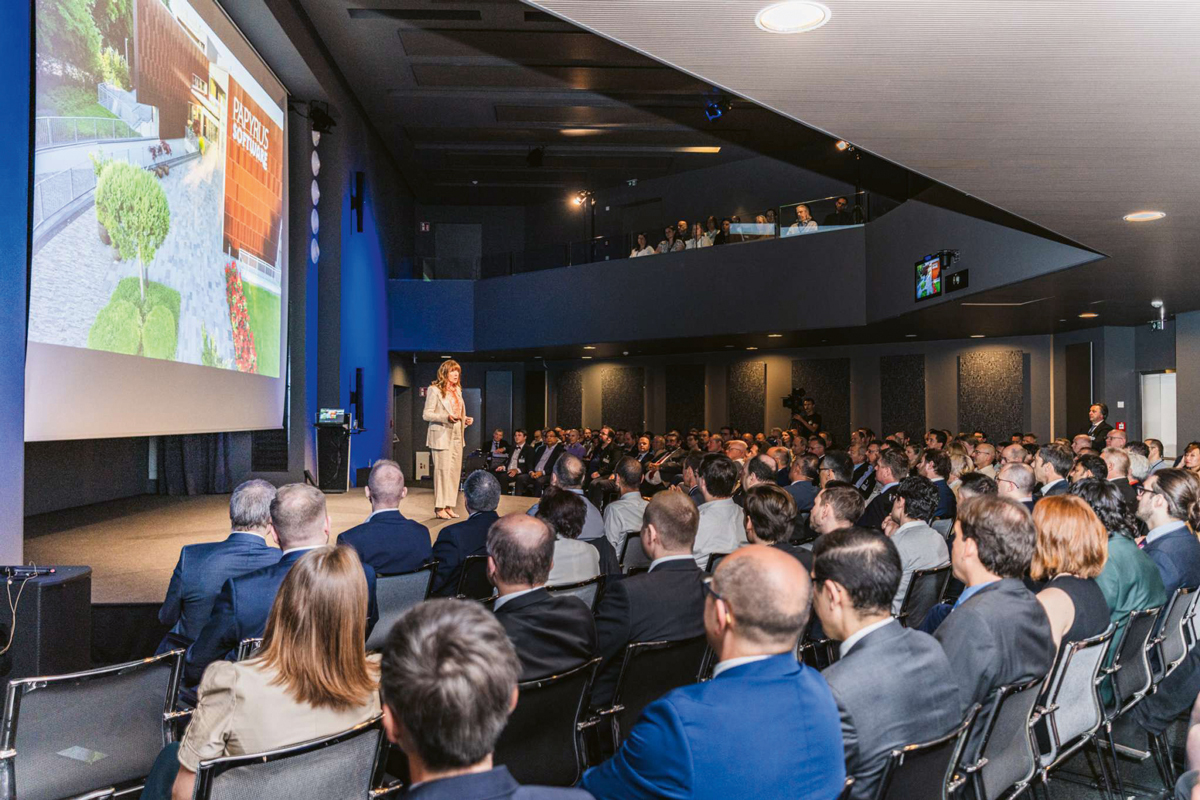
She also described the challenge of being early with an idea. Customers can struggle to understand technology they have not yet imagined using. Her account of chief architect Max Pucher sets out the commercial difficulty: the development team may be ready to build while the customer is still deciding what the proposition means. A live demonstration gives that conversation something concrete to work with.
The customer has already told somebody
In a 2009 interview, Pucher described the importance of prompt, relevant responses and personalized communication. The point was to connect incoming information with outgoing answers, bringing together the front end and back end of a business. Customer knowledge should remain useful when it crosses a department or a communication channel.
Consider the ordinary irritation behind that argument. A person contacts an organization, provides the requested detail, and later encounters someone who cannot see it. The conversation begins again. No villain is required. An arrangement of perfectly respectable systems can produce an impressively unhelpful result.
Pucher’s approach places the customer’s request within a wider set of documents, data and responsibilities. The job is to keep those elements connected so the response reflects what the business already knows. It makes a humble object, the business document, part of an ongoing relationship.
A conceptual view of the connected work Pucher describes. Each step needs the context of the others.
The same concern appeared in the invitation to Open House in 2012. Signed by Annemarie and Max Pucher, it described the changing relationship between front and back offices, using an Apple Store transaction as an example. Mobile devices were making the handoff between a purchase and its documentation visible to the customer in a new way. Papyrus framed adaptability as a business requirement.
Who gets to change the machinery?
By 2021, Pucher was writing about the puzzle created by quick individual technology fixes. Each application might serve its purpose, while the work of making everything cooperate became harder. Her argument for orchestration concerned a connecting layer over existing applications and infrastructure, with a shared view of activities and communications.
That is a useful distinction within her thinking: an organization already has systems, and its employees already have knowledge. The task involves coordinating both. The value of another tool depends partly on what it lets people do with the things they have.
In another 2021 article, she set out the case for a graphical Business Designer that allows business teams to create documents and define processes without programming. Her examples included forms for web and mobile, reusable templates and supervised machine learning for incoming material. The proposed user was a participant in building the workflow.
“Technology enables and facilitates creation, it is not a barrier to entry.”
Annemarie Pucher, 2021
The ambition puts a familiar office problem under a different light. The person who knows how the work should proceed often has to explain it to someone who can change the software. Every translation adds an opportunity for delay or misunderstanding. Pucher wants the experienced business user to have a direct part in shaping the result.
The next version has a past
Her 2023 argument for application development begins with the intended outcome. Business managers, she says, should help define it and work backward through the tasks required. She sees a gap between business needs and technical delivery, and argues for tools that use natural business language. It is an outcome-first approach to software design, with the people responsible for the work involved from the beginning.
The question remains practical when the conversation turns to newer technology. In a later interview discussing the company’s 37-year history, Pucher emphasized that customer contracts can last decades. Records must remain traceable, including documents older than Papyrus itself. New capabilities arrive inside obligations that have already been made.
She also described migration pressures when existing software products lose support, and the company’s work on automating conversion. Her growth plans included consulting and sales teams close to customers, supported by a partner network. The international reach of the business still needed a local human presence.
Her publicly listed writing continued into August 2026 with an article called “Curing The Migration Blues.” The title belongs comfortably to this career. Change brings work with it. Pucher’s recurring interest lies in making that work intelligible, connected and manageable for the people who have to carry it out.
The basement story is appealing because the distance traveled is visible. The more telling distance runs between an idea and somebody’s working day. Across the years, Pucher has kept asking how software can shorten it. Somewhere at the end of that journey, a customer is still waiting for an answer.