Justin Dillon likes to joke that he has a LinkedIn page but not a career. The page is certainly real: musician, filmmaker, nonprofit founder, author, software CEO. Yet read from top to bottom, it behaves less like a ladder than a set list. The instruments change. The refrain returns. Somewhere inside the things we buy, people and risks are hidden. Dillon has spent two decades trying to make them visible.
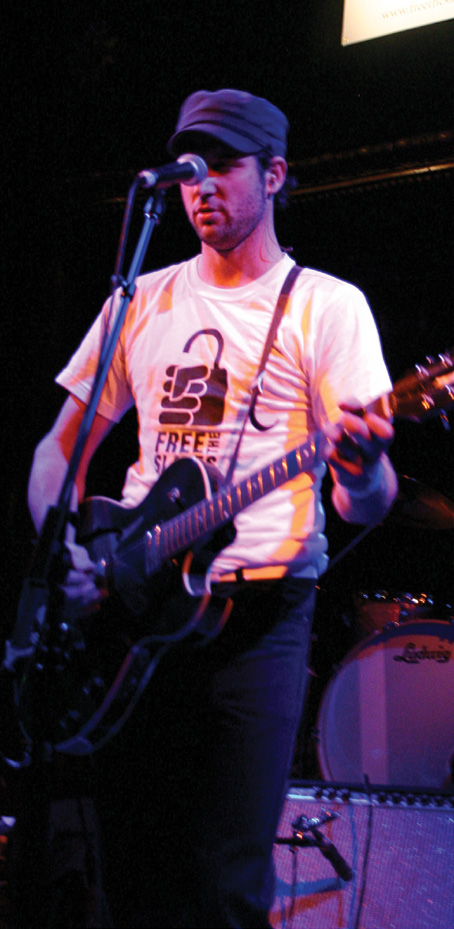
The story begins before the dashboards and trade records, when Dillon was a touring musician from California's East Bay. He had studied psychology at Cal State East Bay, then chose music, an industry famous for encouraging both grand feeling and modest bank balances. While touring in Russia, he met young women considering offers to work in the West as models or domestic workers. The offers resembled trafficking patterns he had recently encountered in an article. Recognition arrived before expertise. He knew enough to give the danger a name.
That encounter did not turn him instantly into a policy specialist. It turned him into a maker with a new subject. Dillon wrote songs about justice, organized benefit concerts and began a film despite having never directed one. Call + Response, released in 2008, mixed testimony from advocates and public figures with performances by artists including Moby, Matisyahu, Imogen Heap and Talib Kweli. He called it a rockumentary. The term was playful; the architecture was serious. Music carried information past the emotional firewalls that statistics often meet.
The Question That Crashed a Website
The film created an opening. The U.S. State Department saw it and approached Dillon about helping people understand their connection to modern slavery. The eventual product, Slavery Footprint, launched on September 22, 2011, with a question sharp enough to stop a thumb: “How many slaves work for you?” Users answered a visual survey about food, clothing, electronics, cars and household goods. A database behind the interface estimated the forced labor connected to those products.
Traffic overwhelmed the site on launch day. “We crashed slavery,” the project's own history dryly records. The phrase captures a Dillon habit: make a grave system legible without making the audience feel powerless. By 2016, the State Department reported that Slavery Footprint had drawn 25 million users in 190 countries. It did more than distribute information. Through its action tools and related campaigns, consumers asked companies what they were doing about forced labor in their products.
One story from those years contains his operating philosophy in miniature. Dillon's team wondered whether Steve Jobs knew if an iPhone contained tantalum mined with forced labor. Dillon later recalled sending a direct email. Jobs, he said, replied: “I have no idea. I'll look into it.” For Dillon, those seven words were more useful than a lacquered corporate statement. Honest uncertainty created the possibility of action.
“I tend to pursue ideas that both interest me and are hopefully meaningful to society.”Justin Dillon, Cal State East Bay Magazine
When a Movement Meets Procurement
Consumer pressure could open the door, but companies still needed to know where to look. Under Made In A Free World, Dillon's team spent years translating the issue into business software. The move sounds unlikely only if advocacy and procurement are treated as distant planets. Dillon saw the same transaction from opposite ends. A consumer buys a phone. A company buys thousands of components. Both participate in a supply chain, but the second buyer holds a much larger lever.
FRDM grew from that observation. The letters originally pointed to Forced Labor Risk Determination and Mitigation. The platform expanded beyond human-rights risk to include sanctions, geopolitical exposure, sustainability, cyber risk and other compliance obligations. It maps a supplier beyond the familiar first tier, where visibility tends to fade and the interesting trouble begins.
His language changed with the room. In a 2026 interview, Dillon noted that he does not spend his day job talking in “flowery language” about changing the world. He talks about threats to the business. Human-rights failures have become import restrictions, legal duties and supply disruptions. The moral case did not vanish. It acquired a budget owner.
This is the practical trick worth stealing from his path: preserve the conviction, translate the vocabulary. A campaign asks people to care. A product has to help them decide. The latter requires a clearer view of proximity, intensity and ownership. Which supplier introduces a risk? How close is it to the company? Who has the authority to respond?
Five Seconds Is the Easy Part
Dillon now says FRDM can map a supplier in five seconds. He treats the number almost as a setup to a correction. Speed is not the hard part. Once the network appears, someone must decide which signals merit oversight. Visibility without judgment can produce a handsome new species of paralysis.
He has little nostalgia for supplier surveys, calling them the fax machines of due diligence. A questionnaire records what a supplier says at one moment. Dillon's preferred model draws on trade data and other risk signals to keep looking. His lightning-round advice is wonderfully economical: map deeper, choose cleaner sourcing, put proof before policy and pay more attention to geopolitical risk.
See farther. Map beyond direct suppliers. Rank the signal. Measure intensity and proximity. Name the owner. Give someone authority to respond. Repeat. Resilience behaves more like fitness than a finish line.
There is a musician's ear in this approach. Songs depend on tension and release. Risk software does too. A platform reveals tension in the network; the user needs a credible route toward release. Dillon talks about giving people “treats along the way” during an endless improvement process. Procurement may rarely be described as melodic, but even a compliance team appreciates a chorus it can measure.
He is equally suspicious of AI as costume jewelry. FRDM uses artificial intelligence, but Dillon frames its value in workmanlike terms: understand the customer's problem, get several steps ahead and solve it faster. Turning a data platform into an intelligence platform matters only if it helps perform the responsible-sourcing job. Otherwise, he says, the industry is merely bloviating about AI. After years of moral grandstanding around corporate responsibility, he has earned an allergy to decorative language.
“I think supply chains are the greatest network the world has.”Justin Dillon, Resilient Supply Chain podcast
A Larger Stage for the Same Composition
In July 2026, WiseTech Global announced a binding agreement to acquire FRDM.ai. The terms called for $10 million upfront in cash and WiseTech shares, with up to $14.31 million in cash earn-outs. FRDM's mapping and risk intelligence are intended to combine with WiseTech products including BorderWise, Denied Party Screening and Global Knowledge to create VerifyWise.
The strategic attraction is reach. WiseTech described a network of more than 22,000 logistics providers and over 500,000 connected enterprises. FRDM brings the ability to map past direct suppliers and score human-rights, sanctions, geopolitical and other risks using more than six billion trade records. WiseTech brings a global trade system into which that intelligence can travel.
For Dillon, it is another change of instrument. He said the combination could scale FRDM's offering and advance its vision of leveraging trade to change the world. The sentence is characteristic: commercial machinery in the first half, moral ambition in the second, no apparent discomfort between them.
His own story suggests that systems change often looks less cinematic from inside the system. It looks like product taxonomies, supplier identities, trade records, sanctions lists and the unglamorous assignment of follow-up tasks. Dillon once used a concert film to make an invisible crime felt. Now he uses software to make an invisible network inspectable. The show moved from the stage to the procurement desk, where the audience has spreadsheets and considerable purchasing power.
When asked whom he would recruit as a champion for supply-chain visibility, Dillon chose Abraham Lincoln. His reason was not simply Lincoln's place in the history of abolition. It was Lincoln's feel for soft diplomacy and his ability to see people across a desk, including opponents. Durable change, Dillon argued, requires respecting where people are before asking them to move.
That may be the quiet unity beneath the improbable résumé. Music asks the listener to lean in. Film asks the viewer to witness. A consumer tool asks the shopper to notice. Enterprise software asks a company to act. At every stop, Dillon has tried to see an audience clearly enough to offer a useful next move. His LinkedIn page may resist the shape of a career. As a composition, it holds together rather nicely.