In 2009, a factory in Honduras presented the sort of problem that corporate language is designed to blur. Jerzees de Honduras, owned by Fruit of the Loom, had closed after a bitter dispute over workers’ freedom to organize. Student activists pushed a boycott. Labor groups documented violations. Management and union representatives had every reason to distrust one another. There was no shortage of statements. What was missing was a way back into the same room.
Claude Fontheim entered that room on the company side. His Washington consultancy, Fontheim International, helped facilitate negotiations that produced what became known as the Washington Agreement. The deal did more than tidy up the argument. A plant reopened as Jerzees Nuevo Día. Workers regained jobs. Union representation was recognized. A monitoring structure gave the promises somewhere to live after the signing.
That sequence explains Fontheim International better than its menu of services does. The firm calls those services ESG and public affairs. In practice, it gets hired when an institution has discovered that policy, politics and reputation are not separate departments. The risk is rarely contained in a spreadsheet. It is sitting across the table, unconvinced.
A consulting firm for problems with witnesses
Fontheim International advises global businesses and nonprofit organizations. Its ESG practice covers program and policy design, forced-labor risk, gender-based violence and harassment, stakeholder mapping, crisis work, training, advocacy, research and multi-stakeholder initiatives. Its public-affairs practice builds campaigns around policy and legislation, engaging Congress, the executive branch, NGOs and international institutions.
Plenty of firms offer one half of that equation. Lobbyists know government. Sustainability advisers know reporting standards and supply chains. Communications firms know reputation. Fontheim’s niche is the overlap - the moment a supply-chain decision becomes a labor issue, then a government concern, then a headline, then a board problem. Its competitors include large reputation shops, specialist human-rights advisers, global law firms and the client’s own in-house teams. Its answer is a compact roster heavy with senior advisers whose résumés cross government, law, business and civil society.
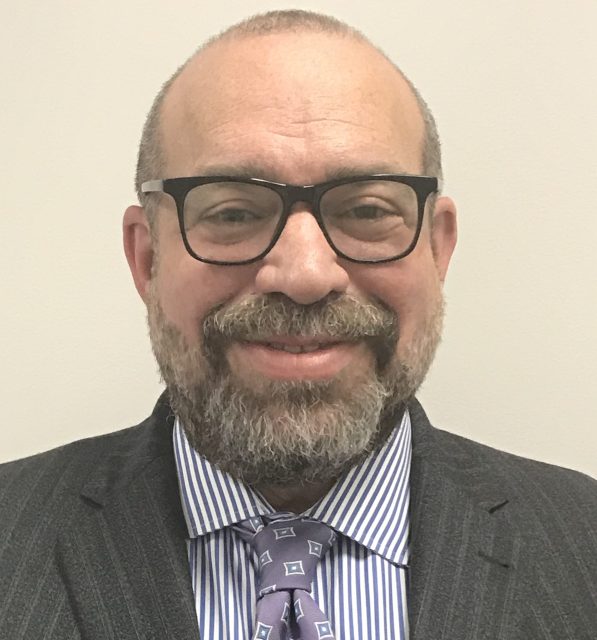
The product is judgment sold through projects and retainers, not a dashboard or subscription. There is no public rate card. Clients buy research, policy design, access, convening, negotiation and the ability to translate one constituency’s hard line into language another can act on. That makes the firm harder to scale than software and harder to evaluate from the outside. It also makes its best public cases unusually revealing.
“Having a union does not mean the death of a factory. You can survive and be very productive with a union.”Claude Fontheim, reflecting on the Honduras agreement
The factory failed before the framework did
In Honduras, the first failure was blunt: the factory closed. The conflict had become a contest over whether organized labor and competitive production could coexist. Pressure from workers, unions, the Worker Rights Consortium and student activists changed the cost of stalemate. But pressure alone does not draft an agreement, reopen a plant or keep a bargaining process alive.
The Washington Agreement replaced a binary fight with a mechanism. It involved the company, worker representatives and independent labor-rights actors. Fontheim represented the company in negotiations and later on the oversight committee. The reopening required more than a change of tone: the resulting collective agreement included investment in modern machinery, a tangible sign that Fruit of the Loom expected the factory to have a future.
What moved management was not one tender epiphany. Organized workers, documented violations and an international student campaign had made the status quo expensive. But Fontheim later recalled an additional motive from company leader Rick Medlin: he wanted to resolve the dispute and create an example others could see. Pressure opened the door; ambition changed what the company was prepared to build on the other side.
How a promise becomes operating machinery
The work was not instant. Eighteen months passed before the first collective-bargaining agreement at Nuevo Día; another agreement elsewhere followed roughly a year later. By 2019, five Fruit of the Loom factories in Honduras were unionized and three had collective agreements. A 2022 Solidarity Center study described the Washington Agreement as a foundation that gradually became less necessary because local actors gained the capacity to manage the relationship themselves. The consultant’s most persuasive result was a structure that could recede.

Myanmar, and the price of going first
A different version of the problem arrived in 2014, when Gap prepared to become the first American retailer to source garments from Myanmar after sanctions eased. The opportunity was obvious: a new production market. So were the hazards: weak labor enforcement, low wages, political instability and the possibility that “first” would become another word for exposed.
Gap met local NGOs, trade-union leaders and officials, then brought in Fontheim, described at the time as a labor lawyer experienced in brokering company-union deals. The eventual plan combined factory orders with external audits and a women’s education program involving USAID and Hewlett-Packard. It did not erase skepticism. One labor expert demanded radical transparency; local observers warned that responsible corporate behavior is harder when government capacity is weak. That criticism is part of the case, not an inconvenient footnote. Stakeholder strategy works only when the stakeholders retain the power to say the plan is insufficient.
What leaders can copy
Start before the announcement. Put critics and affected people into the design. Convert values into operating commitments. Use outsiders for verification. Give the relationship somewhere to go when the first argument returns.
What the method demands
A client willing to spend political capital, accept scrutiny and change operations. Without authority, local participation and credible enforcement, “engagement” is only a longer meeting.
The awkward middle is the market
Fontheim’s customers come to the firm because no single corporate function owns the whole problem. A sustainability team can write a standard. Government affairs can read the political weather. Lawyers can define liability. Communications can prepare the statement. Yet a dispute crossing a factory floor, a ministry, an activist network and a board committee still needs an integrator.
The company’s wider ecosystem is consistent with that role. Fontheim is affiliated with GlobalWorks Foundation, a nonprofit focused on labor and human rights and inclusive globalization. Claude Fontheim has chaired GoodWeave, which works against child and forced labor, helped found the American Leadership Initiative, served on federal trade-policy advisory bodies and rejoined the board of the Center for International Private Enterprise in December 2025. In May 2025, he moderated a discussion on worker rights in global seafood supply chains. The industries change; the institutional puzzle does not.
This is where the firm sits in the market: smaller than the global public-affairs networks, broader than a labor-rights specialist and more political than a conventional sustainability consultant. Its reach is global, but its operating system is distinctly Washington - map the interests, know the institutions, find the credible intermediary and write a mechanism that can survive the next election, audit or organizing drive.
The amusing thing about corporate responsibility is how often it is presented as a matter of discovering the correct principle. Usually, everyone already knows the principle. Workers should have rights. Supply chains should not depend on coercion. Companies should keep their promises. The difficult part is constructing a situation in which acting on the principle becomes more plausible than retreating to the old fight. Fontheim International has spent more than three decades working on that construction. Its real deliverable is not consensus. It is a room where disagreement can finally produce something sturdier than a statement.