An avocado arrives at a supermarket checkout with a small administrative problem: it has no barcode. Somewhere between the fruit display and the payment screen, somebody must tell a computer what it is. Marcel Herz helped build a business around that moment. For a founder working in artificial intelligence, it is a pleasingly unpretentious place to begin. The machine can have all the mathematics it likes; the shopper would quite reasonably like to get home.
Herz is a co-founder and co-CEO of Tiliter, which began in Sydney in 2017. Its early work taught checkout systems to recognise loose products. Its newer work asks cameras and photographs to answer questions about deliveries, equipment and the state of a room. Across those changes, the recurring question is practical: once a computer has recognised something, what useful job can it finish?
That question suits someone whose working life has included cars, cranes and engineering. Herz did not arrive in Australia with an elaborately rehearsed startup destiny. He arrived without a career plan. The company came later, through people he met and a problem they decided was worth attempting.
A degree, a departure, three founders
He grew up in Germany and studied mechanical engineering at Paderborn University, completing his bachelor’s degree in 2013. Work as a student research assistant put him in a laboratory concerned with materials and joining technology. Before Tiliter, he also worked at Active Crane Hire, where his responsibilities included servicing cranes and managing the service department.
These are useful details in a story about software. A crane technician deals with equipment that has to function beyond a presentation. Faults must be located; repairs must hold. There is no need to invent a straight line from that work to artificial intelligence to see the continuity in the kinds of problems Herz has encountered: physical things, technical systems and people waiting for them to work.
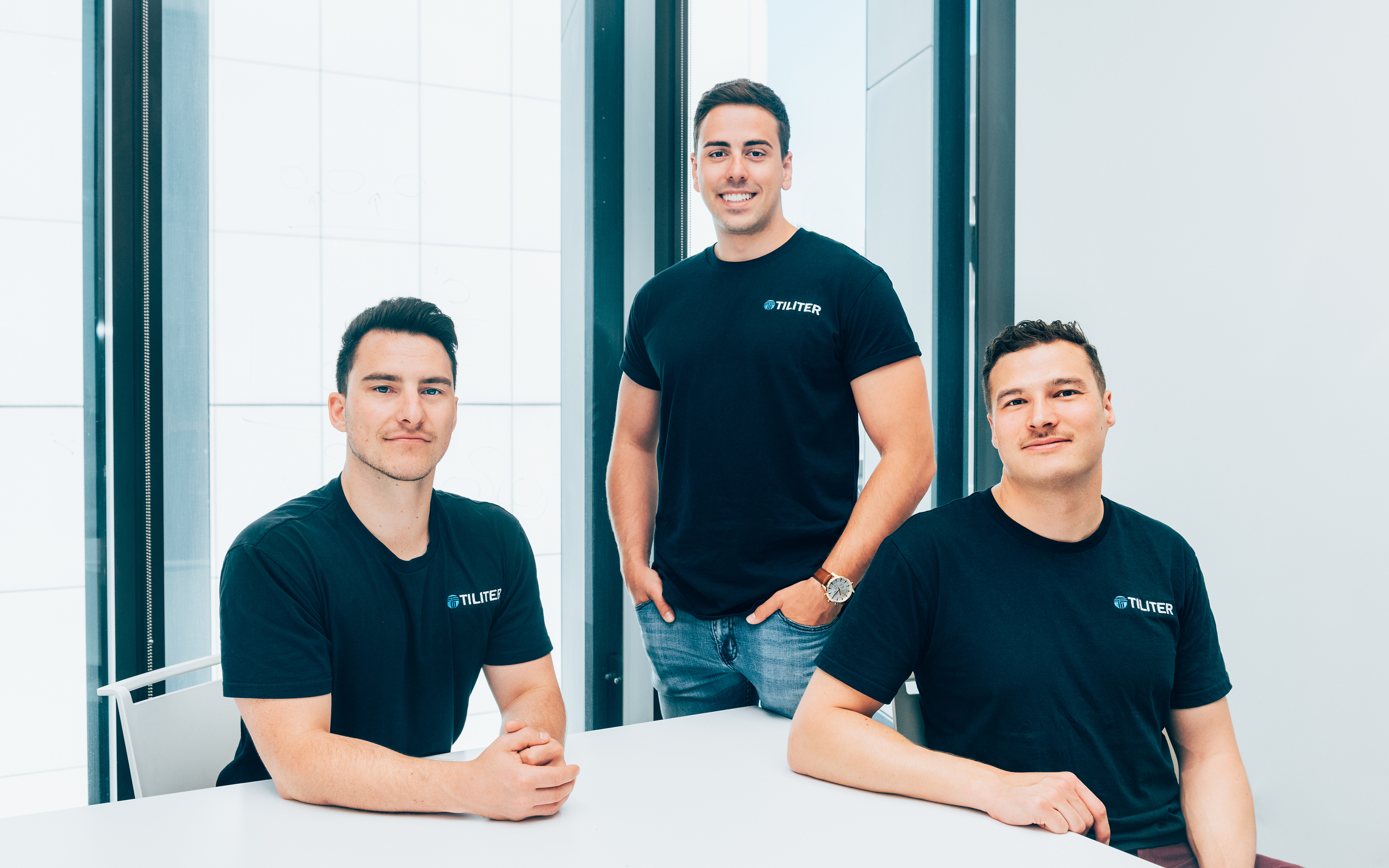
In Australia, he combined construction work with postgraduate study at UNSW. The founding circle came together there. Christopher Sampson and Martin Karafilis already knew each other from school; Sampson met Herz at university. By September 2017, the three had founded Tiliter. Herz became CEO, Sampson took the technology role, and Karafilis led operations.
Their relationship mattered, but friendship did not supply every skill required to build a company. They joined UNSW’s Founders 10x accelerator, gaining access to mentors, investors and instruction in business strategy. A university programme became part of the bridge between having technical ability and knowing how to sell what that ability could produce.
The avocado does not read the manual
The early product addressed an awkward exception in retail automation. Packaged goods can announce themselves through a printed code. Loose fruit and vegetables generally require a customer or cashier to select the right item. The self-service checkout has delegated part of the shop assistant’s job to somebody who may simply be wondering which picture represents their pear.
Tiliter’s approach used a camera and computer vision to identify the produce. In one Scan&Go arrangement, a shopper placed an item on a scale, the system recognised it, and the display generated a barcode to add it to the digital basket. Recognition fitted into an existing shopping process. The fruit remained reassuringly uninterested in the engineering.
There was also a packaging consequence. If identifying loose produce becomes easier, a retailer has less reason to package it merely to attach a barcode. That possibility helped make the checkout problem larger than a few seconds saved at a screen. Identification affected how the product could be sold.
- 01PlaceLoose produce on the scale
- 02RecogniseA camera image identifies the item
- 03AddScan the displayed code into the basket
Conceptual sequence, not a speed or accuracy benchmark.
The founders built a prototype and approached grocery chains to test it. By the time Herz appeared on Yaro Starak’s podcast in 2021, the discussion concerned a technology already reaching hundreds of stores. That progression contains the less glamorous part of the story: getting a device out of the workshop and into somebody else’s operation, where the surroundings and expectations are no longer yours to arrange.
Capital meets the checkout queue
In October 2020, Tiliter announced a $7.5 million capital raise led by Investec Emerging Companies. Eleanor Venture and Cornell University also participated. The announced customers included Woolworths in Australia, Countdown in New Zealand and Westside Market in New York City. At that point, the Woolworths deployment included more than 20 live stores.
Those names gave the venture geographical range early in its life. They also made the work more complicated. A supermarket technology company has to fit into retail systems, and each deployment places the product inside another organisation’s priorities. A successful demonstration gets a conversation started. Installation, integration and continued use determine whether it becomes a business relationship.
The new capital was intended to accelerate expansion in Europe and the United States. For Herz, the company was already becoming an exercise in operating across borders. His work involved customers and colleagues in different markets, rather than a single room of engineers keeping the same hours.
Herz, Sampson and Karafilis establish Tiliter in Sydney.
A $7.5 million funding round backs international expansion.
Herz announces Tiliter’s product recognition API.
The offer extends to photo verification and operational workflows.
A product that could travel without its own box
In 2023, Herz announced another change: Tiliter’s product recognition API. The business had begun by making its own hardware products and checkout system. Now the recognition software could be integrated into other devices, including scanners, overhead cameras, smart carts and mobile phones.
That widened the choices available to a customer. The intelligence could travel into equipment a retailer already used, or equipment supplied by a partner. It also changed Tiliter’s own work. Herz described the API as a shift in how the company shipped software and interacted with customers around the world.
The distinction is commercially consequential. Owning the box gives a supplier control over the complete product. Working through an interface lets other companies carry the software into their own products and relationships. Tiliter was making room for those companies rather than requiring every customer to adopt an entire Tiliter-built checkout.
The importance of somebody who can install it
The partnership with Cucos Retail Systems, announced in February 2024, gave that approach a concrete expression. Tiliter supplied AI product recognition software through an API; Cucos brought retail hardware, implementation, advice and local support in Germany, Austria and Switzerland.
For Herz, who grew up in Germany and whose current professional profile lists Munich, Europe was both a market and familiar territory. The partnership divided the work according to what each company could provide. A retailer needed the software to identify products, but also needed someone who could put the system in place and support it afterwards.
At EuroCIS that year, Herz joined Rob Blythin for a conversation about computer vision in retail. The discussion covered a Woolworths implementation across more than 900 stores and the relationship between identification, shopping convenience and loss prevention. That was a different scale from the early rollout described in 2020. It was also a reminder that the same recognition capability could serve several purposes inside a shop.
“It’s about differentiation and providing value that transcends technology.”
Marcel Herz / EuroCIS 2024 conversation
What a photograph should do next
Tiliter’s current offering extends the idea beyond a checkout. Teams can submit pictures for tasks such as counting objects, checking labels and comparing a photographed setup with a reference. The intended result is a decision that somebody can act on, connected to the process that follows.
Consider the difference between collecting a delivery photograph and checking its contents against what was expected. Both begin with an image. Only the second attempts to complete the verification. The company now organises its offering around that connection between capturing evidence, interpreting it and routing the result to the relevant person.
Herz has been describing the same progression in his public posts. He points to recognition becoming inventory checking, and counting becoming delivery verification. His concern is the gap between what a model can identify and what an operations team needs to accomplish. The first use case can open the door to another one once customers start using the product.
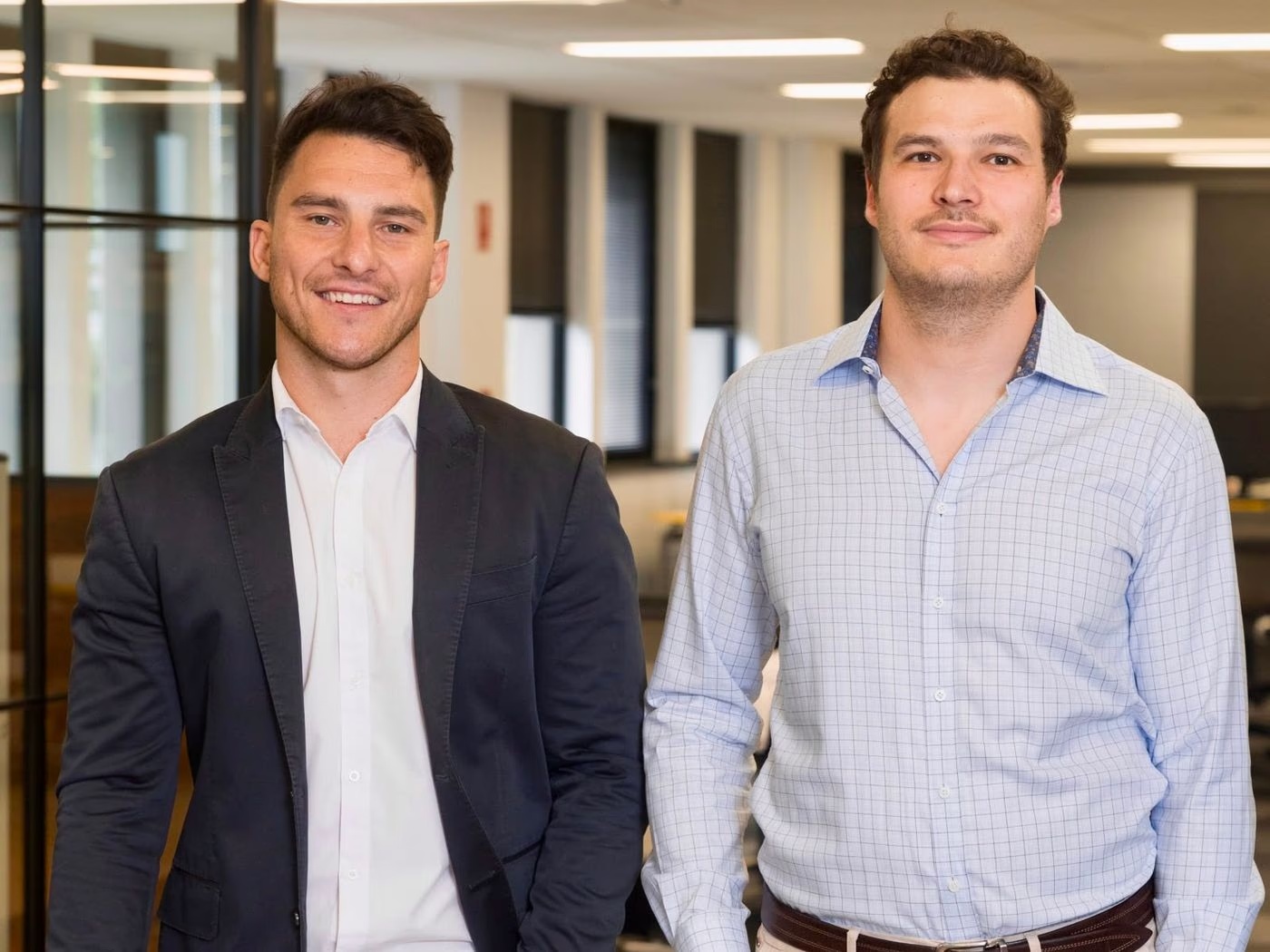
In August 2026, Tiliter’s public discussion also returned to where customers come from. Sampson spoke about the importance of Australian businesses adopting local AI, explaining that international commercial traction had helped establish credibility at home. For a company founded in Sydney and built across markets, adoption remains as tangible a concern as the software itself.
The unfinished song
There is a smaller, rather endearing detail in Herz’s account of life around the company. He plays guitar to take a break and think through a problem. He also admits to changing songs roughly every minute, with singing that his partner may have cause to question. Even the musical interlude appears to have a queue of competing priorities.
He has described himself as a product person and spoken of building a lasting company culture as a personal ambition. Those two interests sit together in the work: deciding what to build, then helping a team keep building it. His route into that responsibility was indirect. Germany, construction work, university, three founders and a supermarket problem gradually became a career he wanted to stay in.
The avocado remains a useful measure of the whole enterprise. It does not care about an API, an accelerator or a funding round. It needs to be identified correctly so the transaction can continue. Herz’s story has grown well beyond that first assignment, but the standard is still admirably concrete: the technology should help somebody get on with the next part of their day.