The cheque is almost as wide as the three students holding it. There are suits, ties, green caps and a pleasingly unambiguous verdict: gold. On the right stands Aengus Tran. In June 2015, he and his UNSW teammates Ryan Chen and Daniel Liang have shared first place in the university division of an entrepreneurship competition in Hong Kong. Their idea concerns something a student understands rather well: going out.
The app is called ClubQnect. It helps people buy event tickets and see when their friends have bought them too. A ticket gets you through the door; knowing who else is coming gives you a reason to leave the house. The product makes room for that small but consequential distinction.
Today, Tran is the co-founder and CEO of Harrison.ai. The photograph belongs to an earlier chapter, before that title and its responsibilities. It is a useful place to begin because it puts him beside collaborators, holding evidence of a project they made together. The future executive is already trying things.
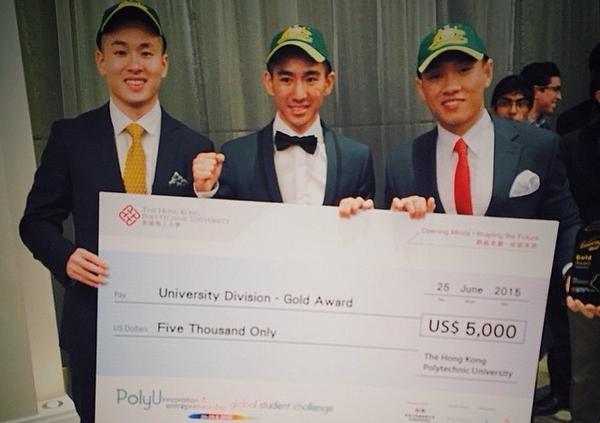
The ticket came before the company
ClubQnect grew out of UNSW’s Peter Farrell Innovation Cup and was refined with university startup support. Its features included inviting friends, gifting tickets and reselling them. The students were working on the ordinary frictions around an event, including the awkward business of a ticket its owner could no longer use.
At the PolyU Innovation and Entrepreneurship Global Student Challenge, their team competed in a field drawn from more than 130 teams across 22 countries. Reaching the final required a business plan and a video. An idea had to become something explainable, with a proposition other people could examine. The shared gold gave the students a visible result.
Tran’s subsequent interviews also place his first startup in a university dorm room. The setting fits the scale of the experiment: friends, a problem close at hand, and the opportunity to make something rather than wait for someone else to provide it. A dorm room does have one advantage over a corporate headquarters. Nobody expects the furniture to communicate a mission.
A family fluent in numbers
Long before university, programming was part of Tran’s upbringing in Vietnam. Both parents were mathematics teachers. His father encouraged computer science alongside maths. Numbers and code were subjects he encountered early, within the family, years before either became part of a company description.
Dimitry, his older brother, moved to Australia in 2003. Aengus followed at 16 and attended Sydney Secondary College at Blackwattle Bay. Later came UNSW. The move placed a teenager in a new school and a different culture; his public recollections emphasise how Australia’s diversity expanded his perspective.
“Now I recognise Sydney as my home,” he says. The sentence gives the journey a destination without turning it into a neat farewell to Vietnam. There is a childhood in one country and an adult life taking shape in another. His later business would be based in Sydney too.
“Now I recognise Sydney as my home.”
Dr Aengus Tran
In a conversation with Ian Gardiner, Tran returned to the experience of arriving as a teenager and adapting to a new culture and language. That chapter matters alongside the technical education. Learning how another place works requires attention to other people: their assumptions, their vocabulary, the things they take for granted.
It is tempting to make a childhood interest in computers predict everything that follows. Tran’s early record is more interesting when allowed some room. A family interest became a student skill. A student skill became an experiment with friends. The company most people associate with him came later.
Two brothers, different tools
In 2018, Aengus and Dimitry founded Harrison.ai. Aengus completed his UNSW degree that year. His LinkedIn profile records his university years as 2013 to 2018 and graduation with distinction. The student ventures and the academic work occupied the same stretch of his life.
The partnership brought together different preparations. Aengus had the technical skills of an AI engineer. Dimitry had accumulated business and management experience. Aengus’s role became CEO; the older brother’s experience added another way of looking at the organisation they were building.
Going into business with a sibling gives a founder relationship an unusually long preface. The brothers’ shared history preceded the incorporation documents. It included the same parents, early exposure to programming and the move from Vietnam to Australia. Their company began with a connection already formed over years.
Tran has discussed the decision to build with Dimitry in his conversation with entrepreneur Alejandro Cremades. He credits their relationship, together with the team they assembled, in explaining the company’s growth. The emphasis is on people doing the work together. The CEO’s account leaves room for more contributors than the two names on the founding story.
A machine assembled from tutorials
One early Harrison.ai detail deserves to survive the funding announcements. The original two-person team built its first supercomputer from scratch with help from YouTube tutorials. The account appears in the company’s introduction to Tran’s conversation with Mark Bouris. Even an AI business sometimes needs someone to follow instructions.
The appeal of the anecdote is its physical scale. “Artificial intelligence” can make a story drift into abstraction. A machine being assembled puts the work back within reach: hardware, instructions, tasks to finish. The founders had a technical ambition and an immediate piece of construction in front of them.
The same conversation introduces Tran’s fascination with getting work done while sleeping. It is an engineer’s interest in what a program can continue doing after its author steps away. Computers make that possibility ordinary enough to forget how peculiar it is: you can finish work, go home, and leave some of the work running.
His early ticketing venture offers another tangible example of code doing a job for people. Friends could coordinate attendance rather than exchange the same information separately. A digital product carried a little of the organising work. The applications changed, but the attraction of making useful tools remained visible.
As the company expanded, construction took other forms. Partners, employees and management arrangements became part of what needed building. A computer can be assembled by a small team. An organisation requires people who can keep contributing when its founders are occupied elsewhere.
The work after the award
In November 2022, UNSW recognised Tran with its Alumni Award for Innovation and Entrepreneurship. Seven graduates received awards that year. The photograph of the recipients shows another version of public recognition: the student prize has given way to an alumni gathering, with Tran among people whose careers followed quite different paths.
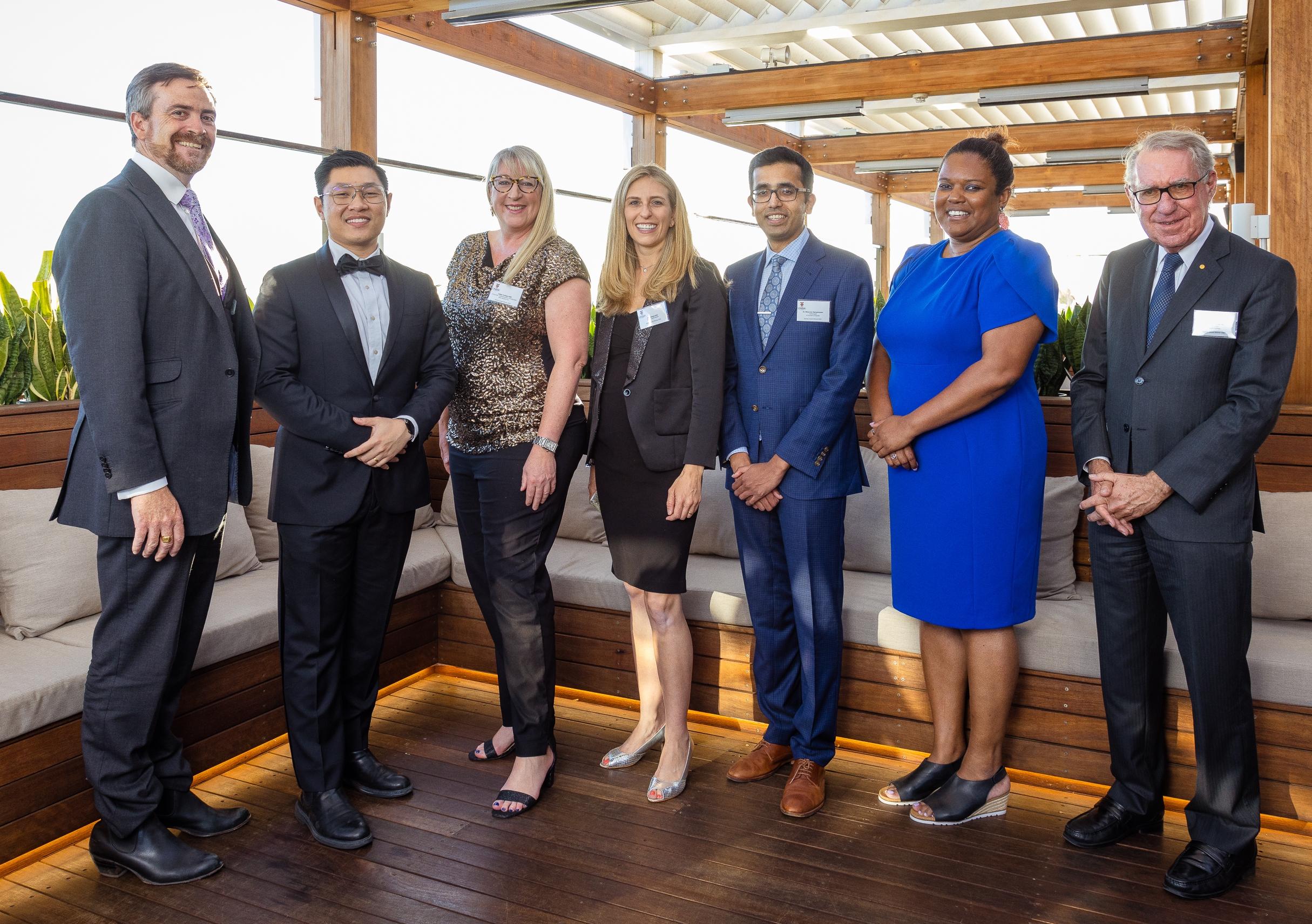
The award recognised an entrepreneurial career already under way. It also connected the current CEO to the university where he had studied and experimented. The institutional relationship runs through his story: student support, teammates, a competition, graduation, and later recognition.
By July 2023, Harrison.ai had added Robyn Denholm to its board. Her appointment took effect on July 1. Tran welcomed her experience as the company entered its next phase of growth. The announcement described governance and commercialisation expertise, subjects that belong firmly to the work of running a business.
In February 2025, Harrison.ai announced a US$112 million Series C round and a North American presence in Boston. Aware Super, ECP and Horizons Ventures co-led the round. The company said its total capital raised exceeded US$240 million. These figures describe company financing; they also mark the resources and expectations now attached to the founders’ project.
Series C funding supporting the company’s next phase of international expansion.
Later, Harrison.ai and Annalise.ai announced that they would unite under Aengus as CEO. The change gave him responsibility for the combined business. There is a familiar progression here for a founder: the title stays short while the organisation behind it becomes more complicated.
Keeping the builder in the business
Across Tran’s public conversations, collaboration keeps returning. His Wild Hearts interview connects the first dorm-room startup with his enjoyment of working with people. It also gives partnerships and the wider team a place in his explanation of growth. The early group photograph turns out to be an apt opening.
A motto associated with his Talking Business interview is to do simple things brilliantly. It is a demanding instruction for a company whose work is technical. Simplicity has to survive the explanation of a product, the arrangement of a team and the decisions that come with expansion. It cannot remain a phrase on a presentation.
There is pleasure in tracing this career through its less ceremonial objects: an event ticket, a student app, an oversized cheque, a machine assembled with online help. They give the founder’s story texture. They also remind us that the current company grew out of work done before its later milestones were available to put on a slide.
Tran’s path took him from Vietnam to Sydney, from programming lessons to university ventures, and from projects with classmates to a business with his brother. Each stage added people and responsibilities. The builder’s next task is to make the organisation work as carefully as the things it builds.