The home screen was trying to be helpful. It had more than eighty rows of content, each offering something else to watch. On some stations, a Roku app asked for that abundance in one enormous request. The result, according to Oxagile’s account of the project, was a launch that exceeded Roku’s fifteen-second requirement. A generous catalogue had become an obstacle to entering it.
- Oxagile builds custom software, with a particular appetite for streaming’s awkward details.
- Its customers include broadcasters, platform vendors, and enterprises buying engineering expertise.
- The useful lesson: measure the bottleneck before buying a rewrite or a bigger cloud bill.
Eighty rails, one impatient viewer
Oxagile separated the request into five parallel calls: one for general content that could be cached, four for personalized rows. It also introduced lazy loading, fetching home-screen images progressively as people scrolled. Stations with eighty-plus rows then loaded in about eight seconds, the company reports. The viewer received less information at once and reached the information sooner.
There is a pleasing indignity here for anyone who has attended a product meeting. The customer does not experience the ambition of your roadmap. The customer experiences the wait. Eighty rows may look impressive in a presentation; a remote control is a less forgiving audience.
General + personalized content
CacheablePERSONAL
Four parallel calls
for stations with 80+ rails
The engineers also had a choice: replace the existing framework or extend it. The case study describes a codebase tied to SGDex, with a full rewrite carrying a substantial cost in time and money. They built custom components inside the existing structure. That decision is worth keeping in mind. A system can be frustrating without deserving demolition.
The business behind the play button
Oxagile sells the engineering required to turn a business idea into functioning software. Its work covers design, applications, integrations, testing, and ongoing operations. Video streaming gives that broad offering a recognizable center: television apps, live broadcasts, media libraries, advertising systems, and the machinery that keeps them running.
“OTT,” the industry’s favored abbreviation, means over-the-top delivery through the internet. For a viewer, it means watching on a screen of their choosing. For the company serving that viewer, it means accommodating different operating systems, payment arrangements, content rights, and performance limits. The play button is small. Its dependencies are quite sociable.
The current website reports more than 350 clients and more than 300 professionals. Published customer testimonials include Nagra, Panasonic Connect, Kaltura, Cleeng, and Opera. The range matters: a broadcaster needs viewers to reach programming; a software vendor needs its product to work inside another company’s service. Both can buy engineering, but they bring different integration problems.
“The project was challenging and meant a lot of fine-tuning of the app’s performance”
Christian Van Boven, Nagra
Testimonial published by Oxagile
That testimony describes a difficulty rather more persuasive than a string of badges. Television models differ. Model generations differ. A feature that looks finished on a developer’s device can still require patient adjustment elsewhere. Oxagile’s expertise lives partly in that inconvenient gap.

Public television meets the device zoo
In June 2024, Cascade PBS announced through Oxagile that it had chosen the company for a cross-platform expansion. The public-media organization wanted to move beyond Roku. The announced destinations included Fire TV, Apple TV, Google TV, a web portal, and LG and Samsung televisions.
The plan used React Native for a shared codebase across the platforms, excluding Roku. That exception is revealing. “One codebase” is an attractive sentence; a device ecosystem has the power to add a footnote. The aim was to speed development and keep new features consistent while accommodating the screens themselves.
Oxagile occupies the space between content and infrastructure. Its partner network includes companies working on monetization, encoding, playback, and platform backends. Kaltura’s published testimonial describes pairing its backend expertise with Oxagile’s frontend work. The commercial opportunity is in making those pieces cooperate.
This is a crowded market. EPAM and Globant also offer media and streaming engineering. A buyer can hire internally or choose a ready-made OTT service. Oxagile’s case for consideration rests on relevant device experience and integration work, rather than an exclusive claim to software development. The sensible comparison begins with the actual assignment.
The invoice has two stories
Custom engineering has a development bill and an operating bill. They should be discussed separately. In a published broadcasting project, a legacy WebRTC portal struggled with growing audiences. Oxagile’s work included capacity testing, resource analysis, configuration changes, autoscaling adjustments, and tuning the cores used for video transcoding. The company reports cloud infrastructure costs falling by as much as tenfold.
That figure describes infrastructure in one engagement. It is not a discount on the developers’ invoice. Clutch’s pricing snapshot places one reviewed project in the $200,000-$999,999 band. A single review is a cost reference, not a company-wide tariff.
Oxagile publishes three engagement models: fixed bid, hourly time and materials, and a dedicated development center. The underlying choice concerns uncertainty. A defined release can support a fixed scope. Evolving requirements call for a budget that can accommodate changing work. A continuing product may need a continuing team.
For a buyer, the copyable habit is to separate the estimates. Ask what development will cost, what infrastructure will cost under realistic load, and what maintenance will require. A saving becomes useful when its denominator is clear.
The handover nobody wants
Another published OTT project arrived with an especially awkward inheritance: undocumented platforms and code that differed from the live deployment. Before expanding the service, Oxagile had to establish what was actually running. The company describes correcting Redis memory and replication problems, upgrading authentication infrastructure, and improving reliability across five platforms. It reports 99.99% system uptime.
The instructive part is the order. Adding features to an uncertain foundation makes every new promise harder to keep. Reconcile the deployed system with its records, inspect the failure points, and then decide what to extend. Documentation becomes a practical instrument for finding out whether everyone is discussing the same machine.
There are also limits that good architecture cannot wish away. In a hospital-video project, Oxagile reports testing up to 500 concurrent streams and investigating Chrome WebRTC constraints. It proposed staged connection creation and monitoring. Treat that as a finding in a particular tested environment, rather than a universal browser ceiling. Measurement earns its authority by describing its conditions.
An interviewer without a calendar
Oxagile now offers named conversational AI products alongside its engineering services. Austra Nova makes and answers calls, qualifies leads, and writes outcomes back into business systems. Its published pricing model combines subscription and usage. Voiager conducts voice interviews and produces transcripts and analytics, with SaaS and on-premises deployment options.
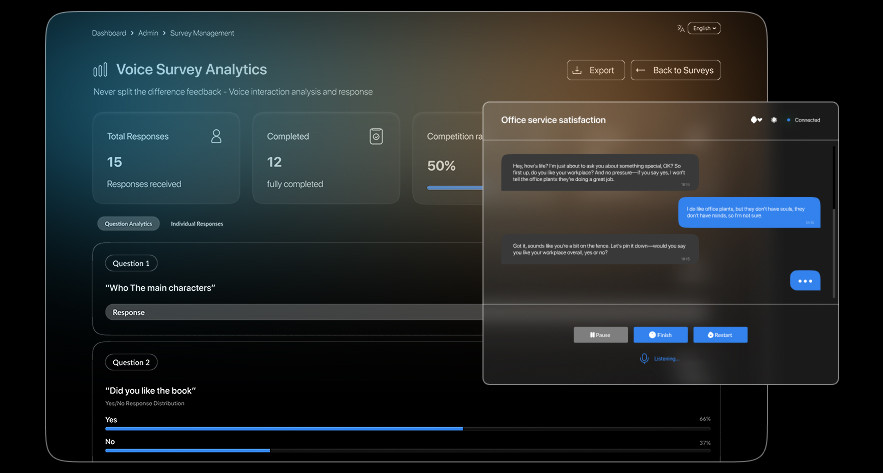
These products sell a different unit of value from a television app: a completed conversation, a qualified lead, an insight someone can use. Yet the engineering question is familiar. Can an appealing demonstration survive integration with the customer’s actual workflow?
Oxagile’s AI engineering page describes an internal change of approach: isolated tools and ad hoc prompts did not produce predictable results. The company moved toward documented requirements, verification, controlled execution, and senior oversight. That is its account of what changed its mind. It is also a useful test for buyers: ask how a generated answer or a piece of code is checked before it becomes your problem.

Co-founder and CTO

Co-founder and chairman
A useful brief beats a wish list
For a broadcaster expanding to new devices, a platform owner inheriting fragile code, or an enterprise connecting AI to existing systems, Oxagile offers a relevant body of work. A simple service with standard requirements may be better served by a ready-made platform. Custom engineering earns its cost when the differences matter enough to maintain.
Bring a concrete brief: target devices, existing integrations, expected traffic, acceptable delays, and the person who will own the system after launch. Request evidence under those conditions. The Roku story offers a modest, portable idea: before making a machine do more, ask whether it is doing too much at once. Sometimes the shortest route to a satisfied customer is five requests leaving together.