The $25 Sunglass That Skipped the Spec Sheet
How a self-funded brand turned $25 running shades - the kind with names like Flamingos on a Booze Cruise - into a sport-eyewear company doing roughly $47 million a year.
There is a moment most founders keep to themselves. Stephen Lease says his happened in front of a mirror, dressed for a training run, staring at a pair of expensive performance sunglasses and thinking he looked ridiculous. He was training for a marathon with his friend Ben Abell, both of them relatively new to distance running, and both of them noticing the same thing: the sunglasses built for their sport were overengineered, overpriced, and somehow still not something anyone wanted to be seen in.
Then came the observation that turned an annoyance into a company. At the Los Angeles Marathon, Lease reckoned, roughly four out of five runners were not wearing sport-specific eyewear at all. They were wearing normal, cheap, fun sunglasses. The performance category had priced and styled itself out of the hands of the people actually running. In 2015, Lease and Abell decided to build the pair those runners would want - functional enough to hold up on a long run, cheap enough that nobody would treat it like an heirloom. They called it goodr.
The IdeaFour words instead of a spec sheet
Sport eyewear had long been sold on technology: hydrophobic coatings, interchangeable lens systems, materials borrowed from aerospace, and a price tag to match. goodr took the opposite route. Its entire product promise fits on a hangtag - no slip, no bounce, all polarized, all fun. The glasses use a grippy coating so they stay put when you sweat, a light frame so they don't bounce while you run, and polarized UV400 lenses that block the sun. That is the whole pitch. The rest of the energy goes into color, humor, and price.
The founders self-funded the first run: about 1,800 pairs in six colors. There was no seed round, no institutional backer waiting in the wings, and - notably - there still isn't. goodr has grown as a privately held, largely bootstrapped business, which is unusual for a consumer brand that reaches the scale it now does. The discipline shows up in the product line: rather than chase margin with a premium tier, goodr kept its core sunglasses inexpensive and made its money on volume and repeat purchases.
The FounderCompany number six
Lease did not arrive at goodr on a lucky first try. A marketing graduate of what is now Metropolitan State University of Denver, he spent about a decade in corporate roles - including a stretch at Easton Sports - while running a rotation of side hustles on the margins. By his own account, he launched and folded five companies before goodr. That history is part of why the brand's positioning feels so certain: the pitch, the price, and the tone were not a first draft. They were the thing that finally worked after five that didn't, and the founders held onto ownership rather than trading it away round by round.
The ProductsOGs, BFGs, and a name generator gone feral
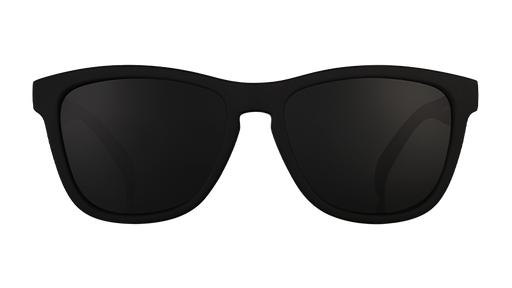
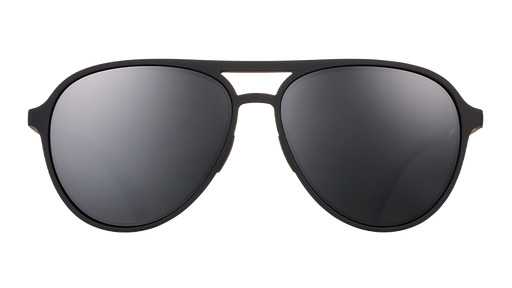
The original frame, the OG, is still the anchor: a lightweight, no-slip running sunglass that historically sold at around $25 and now sits in the mid-$30s. For anyone the OG doesn't fit, there is the BFG - the initials stand for exactly what you think, and the line is built for larger heads with wider frames, longer arms, bigger lenses, and silicone grip inserts. From there the catalog fans out into shapes: rounds, aviators, cat-eyes, wraps, and shields under names like Circle G, Mach G, and PHG, all carrying the same no-slip, all-polarized formula into everyday and lifestyle looks.
What people remember, though, are the names. goodr ships colorways called things like Flamingos on a Booze Cruise and Whiskey Shots with Satan. It is a deliberate joke that does real work: the naming makes a commodity product feel like a personality, gives each drop a story, and turns a $35 purchase into something worth photographing and sharing. In a category that usually sells seriousness, goodr sells a wink.
The BusinessDirect-to-consumer, but make it wholesale too
goodr runs two engines at once. One is direct-to-consumer: its own Shopify storefront and Amazon, where limited-edition drops and collaborations keep regulars coming back. The other is wholesale, the quieter workhorse - more than 5,000 retail doors including run-specialty stores, outdoor retailers, and gift shops. That second channel is easy to miss behind the bright branding, but it is the reason a pair of goodrs turns up at the marathon expo, the local running store, and the ski-town shop alike.
The limited-edition drop is central to how goodr keeps a commodity feeling alive. New small-batch releases roll out through the year - holiday themes, seasonal colors, and licensed collaborations. In 2025 the brand teamed up with Mattel on a Barbie and Ken capsule, three designs pulled from a franchise that needs no introduction. Each drop is cheap, scarce, and quickly gone, which is a lot of the appeal: it gives a low-cost product the cadence and urgency of something you might miss.
The CustomerWho actually wears them
The core buyer started as a runner, and that DNA still shows - the fit, the grip, the no-bounce frame are all runner problems solved first. But the audience widened as the catalog did. goodr now shows up on cyclists, golfers, pickleball and tennis players, skiers, and a large group of people who never race anything and just want a good-looking pair of polarized sunglasses they won't panic about losing. That last group matters more than it looks. A pair cheap enough to be casual about is a pair people buy more than once, in more than one color, and hand off without ceremony - which is exactly the repeat behavior a low price and a rotating drop calendar are built to reward.
It also lowers the stakes of the whole purchase. Premium sport eyewear asks you to make a considered decision about a $200 object. goodr asks almost nothing - the price is close to impulse, the polarization is real, and the worst case if you lose them is a shrug. Removing the anxiety from the transaction turns out to be its own feature.
The CultureEveryone here is a Flamingo
Internally, goodr leans all the way into its own bit. Employees are called Flamingos. The stated core values are fun and authenticity, and the company has been recognized as a Great Place to Work. It also ran a hybrid schedule - in the office Tuesdays and Thursdays, remote the rest - before hybrid was standard practice, and fills the calendar with team outings, birthday celebrations, and the kind of programming that reads as marketing from the outside and retention from the inside. The tone is not incidental. For a brand whose entire promise ends in "all fun," the culture is the product's proof of concept.
The ExpansionSame idea, pointed uphill
The clearest sign that goodr has an idea and not just a product came when it moved into winter sport. The Snow G goggle carries the exact same logic as the sunglasses: affordable, anti-fog, UV400, no-slip fit, and a magnetic system that lets you swap between a bright-light and a low-light lens. At around $75, it undercuts the goggle category the way the OG undercut sport sunglasses. It is the sunglasses thesis - good optics shouldn't cost a paycheck - carried to a new mountain, literally.
The MarketWhere goodr actually fits
goodr sits in a stretch of the sport-eyewear market that the incumbents mostly abandoned. Above it are premium brands like Oakley and Roka, selling technology and status at $150 to $250. Around and below it are value plays like Knockaround, Tifosi, and Zenni. goodr's position is specific: real polarized performance a runner can trust, priced low enough that losing a pair at the beach is annoying rather than devastating, wrapped in branding nobody else in the category is willing to attempt. That combination - genuine function, disposable-feeling price, non-disposable personality - is the part competitors have found hard to copy.
Ten years in, the numbers back up the bet. goodr sold more than a million pairs in a single year, reaches roughly $47 million in annual revenue, employs around 180 people, and did it all without an outside funding round steering the ship. The question the eyewear industry never bothered to ask - what if sunglasses were affordable, functional, and actually fun - turned out to have a large, patient answer.