In Kitimat, British Columbia, a factory arrived in pieces. Some of those pieces were taller than an apartment building. Fluor and its Japanese partner, JGC, used overseas fabrication yards to assemble modules for LNG Canada, then brought them by ship to the Canadian coast. By July 2023, 215 modules had arrived. The first export cargo left on June 30, 2025. It is an appealing picture of industrial competence: make the enormous thing somewhere else, then fit it together.
- Fluor turns industrial plans into operating facilities, from engineering through construction and maintenance.
- Its contract reset followed costly failures; reimbursable work reached 85% of backlog in June 2026.
- LNG Canada has returned for an expansion, with Fluor announcing a $7.5 billion share.
But there is another assembly problem inside Fluor, one less visible than a crane. Before the steel arrives, someone must decide who pays when the drawings change, the schedule slips or the work costs more than expected. For a company handling projects at this scale, that decision can overwhelm the ingenuity of the design.
A factory arrives in pieces
LNG Canada makes the physical problem easy to grasp. The facility takes natural gas and liquefies it for export. Its initial two processing units have annual capacity of 14 million tonnes. Its owners include Shell, PETRONAS, PetroChina, Mitsubishi Corporation and KOGAS. Those companies own the venture; JGC-Fluor supplied engineering, procurement, fabrication management, construction and commissioning.
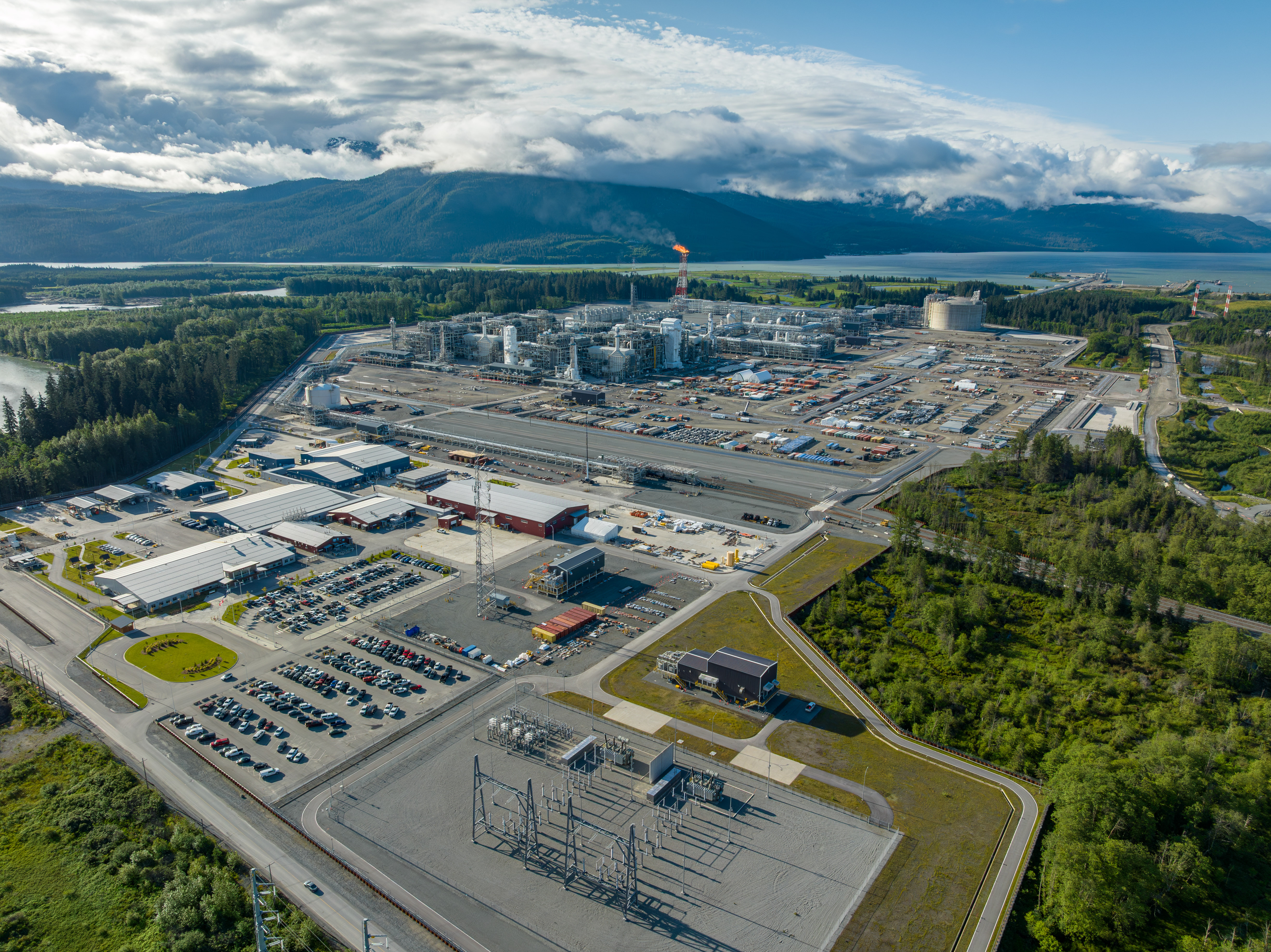
Building major components elsewhere allowed fabrication and site work to proceed in parallel. It also reduced congestion at the destination. That method requires decisions early: dimensions, connections, transport routes, installation order. Moving unfinished decisions around the world is considerably less useful than moving finished equipment. Modular construction rewards preparation and punishes improvisation.
The customer buys the handoffs
Fluor sells the ability to make complicated work join up. Its engineers design systems; procurement teams acquire equipment and materials; construction teams organize the people and sequence that turn drawings into facilities. Maintenance extends the relationship beyond opening day. A customer can engage Fluor for an early study, a particular service or a much broader delivery assignment.
The customers are industrial owners and governments. Energy companies need processing plants. Miners need infrastructure. Drugmakers need manufacturing facilities. Public authorities need roads. Fluor’s work for Eli Lilly illustrates the life sciences business; its Oak Hill Parkway joint venture with Balfour Beatty illustrates transportation. The $677 million Texas project opened to traffic in September 2026, with finishing activities still underway.
- 01Define
- 02Design
- 03Procure
- 04Build
- 05Maintain
The value sits in the connections between the steps.
Bechtel, Kiewit, KBR, Worley and other engineering groups compete for overlapping work. Fluor’s proposition is its combination of disciplines, international delivery experience and supply-chain coordination. It also licenses technology, including Econamine FG Plus for capturing carbon dioxide from flue gas. Buyers must match those capabilities to their particular project; no contractor’s name settles that decision.
The bill for saying yes
John Simon Fluor founded the business in Santa Ana in 1912. The company’s history includes a cooling tower nicknamed Buddha for its shape. That charming detail belongs to a business that has spent more than a century solving physical problems. Its recent history adds an uncomfortable qualification: knowing how to build something does not guarantee that the contract makes sense.
In an April 2025 business update, management described $1.7 billion in cumulative project losses across 2017, 2018 and 2019. Its account connected those losses to increased project risk and onerous fixed-price terms. A fixed price can be sensible when the work is understood. When uncertainty has been underestimated, the contractor may inherit an expensive promise.
Fluor’s January 2021 post-mortem described failures upstream of the finished structure: inadequate validation of front-end engineering, failures to follow risk processes, unfavorable terms and work performed out of sequence. The breakdown was partly organizational. Crews can be capable and still become unproductive when the plan sends them into the wrong work at the wrong time.
“fair and balanced distribution of risk”Fluor’s project pursuit principles, January 2021
The response was a stricter filter for accepting work. The 2021 strategy targeted more than 75% reimbursable backlog by 2024. Under reimbursable arrangements, the client generally pays agreed costs plus a fee. Fluor would still need to execute, but it sought commercial terms that better matched its responsibility to the uncertainties it could control.
85% tells the story
Contract mix, not profit margin. The first row is a target; the others are reported results.
By June 2026, 85% of Fluor’s $26.9 billion backlog was reimbursable. Backlog measures work expected to become revenue; it is neither cash in the bank nor guaranteed profit. Fluor reported $15.5 billion in 2025 revenue and a $51 million net loss attributable to the company. Size alone tells remarkably little about the quality of a contractor’s business.
Old work can also outlive a new policy. Fluor’s 2025 results included a $643 million reversal of previously recognized revenue associated with a judgment on the completed Santos project in Australia. Reimbursable contracts bring their own limits: clients must accept the arrangement, costs need scrutiny, and performance or reimbursement disputes remain possible. Changing the contract mix cannot substitute for running the job properly.
The next promise at Kitimat
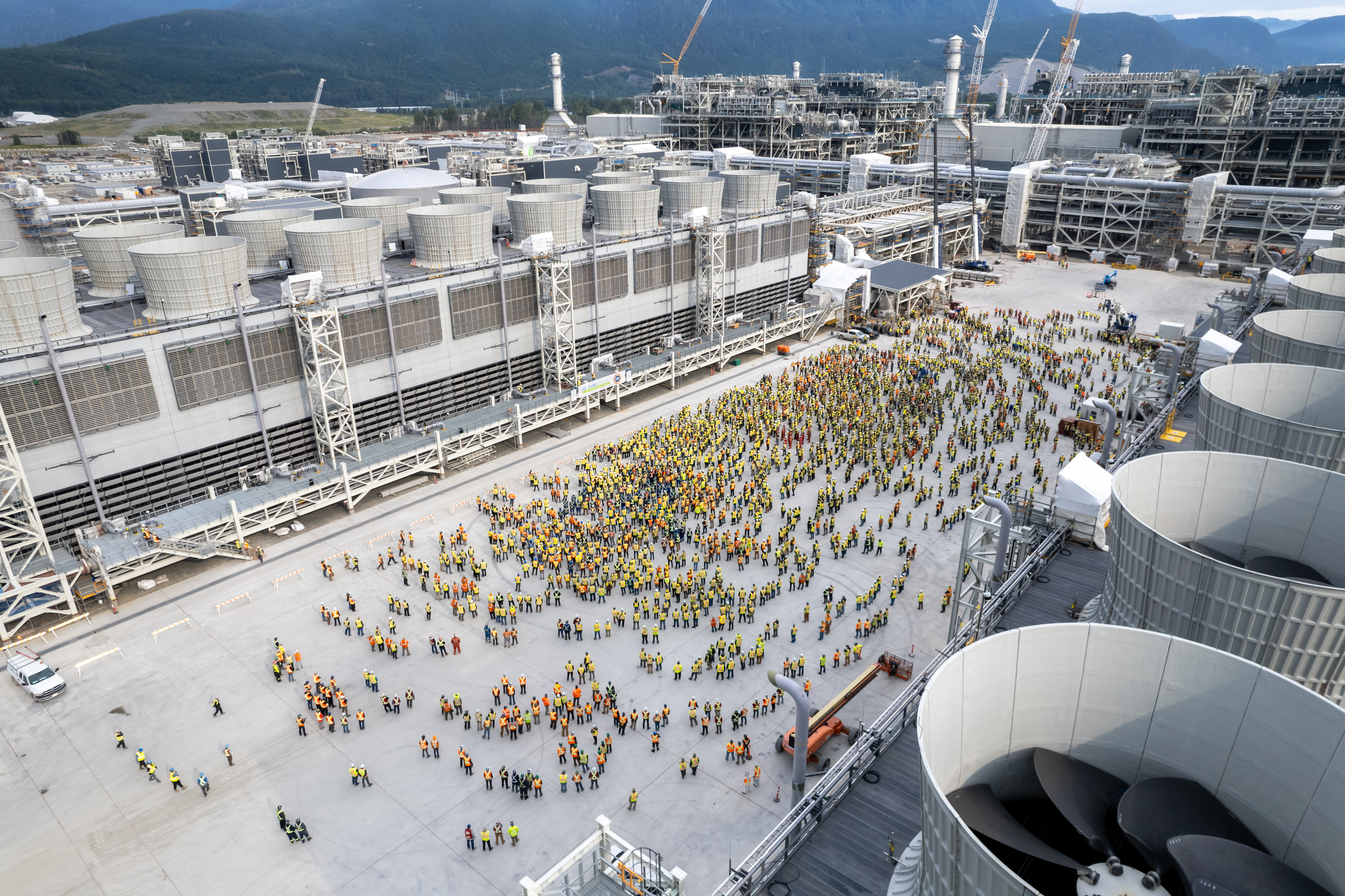
Jim Breuer became chief executive in May 2025. In July 2026, Fluor announced a long-term program management agreement with Aramco. Then, in September, JGC-Fluor won LNG Canada’s second phase. Fluor announced a $7.5 billion share of the contract. Two additional processing trains and another storage tank are intended to double annual capacity to approximately 28 million tonnes.
The useful lesson travels further than an LNG module. Verify the brief before accepting it. Agree who pays for changes. Protect the sequence of work. These are practical habits for anyone selling a complicated outcome. At Kitimat, Fluor has another chance to demonstrate them, with a working first phase beside the next set of promises.