The trouble with the old fishtail drill bit was the rock. In softer ground, its scraping action worked. In harder formations, the cutting edge dulled, and progress slowed. The drillers had a rig, a crew and a promising place to look. What they lacked was a way through the next few feet.
In 1909, Howard Hughes Sr. patented a different answer: two toothed cones that rolled and crushed. The distinction was mechanical and wonderfully specific. Change the action at the cutting surface, and previously difficult formations became accessible. One ancestor of Baker Hughes began by making the rest of an expensive system useful.
- The job: drill wells, move gas, generate power and keep industrial equipment running.
- The customer: energy producers, LNG developers and operators of expensive physical assets.
- The business: equipment sales followed by service, parts, upgrades and software.
01 / The interruption is the opportunity
That is a useful starting point for understanding a company whose catalogue now stretches from drill bits to industrial software. Reuben Carl Baker's 1907 casing-shoe patent belongs to another branch of the family tree. Baker International and Hughes Tool merged in 1987. The present combined business emerged from the GE Oil & Gas combination in 2017.
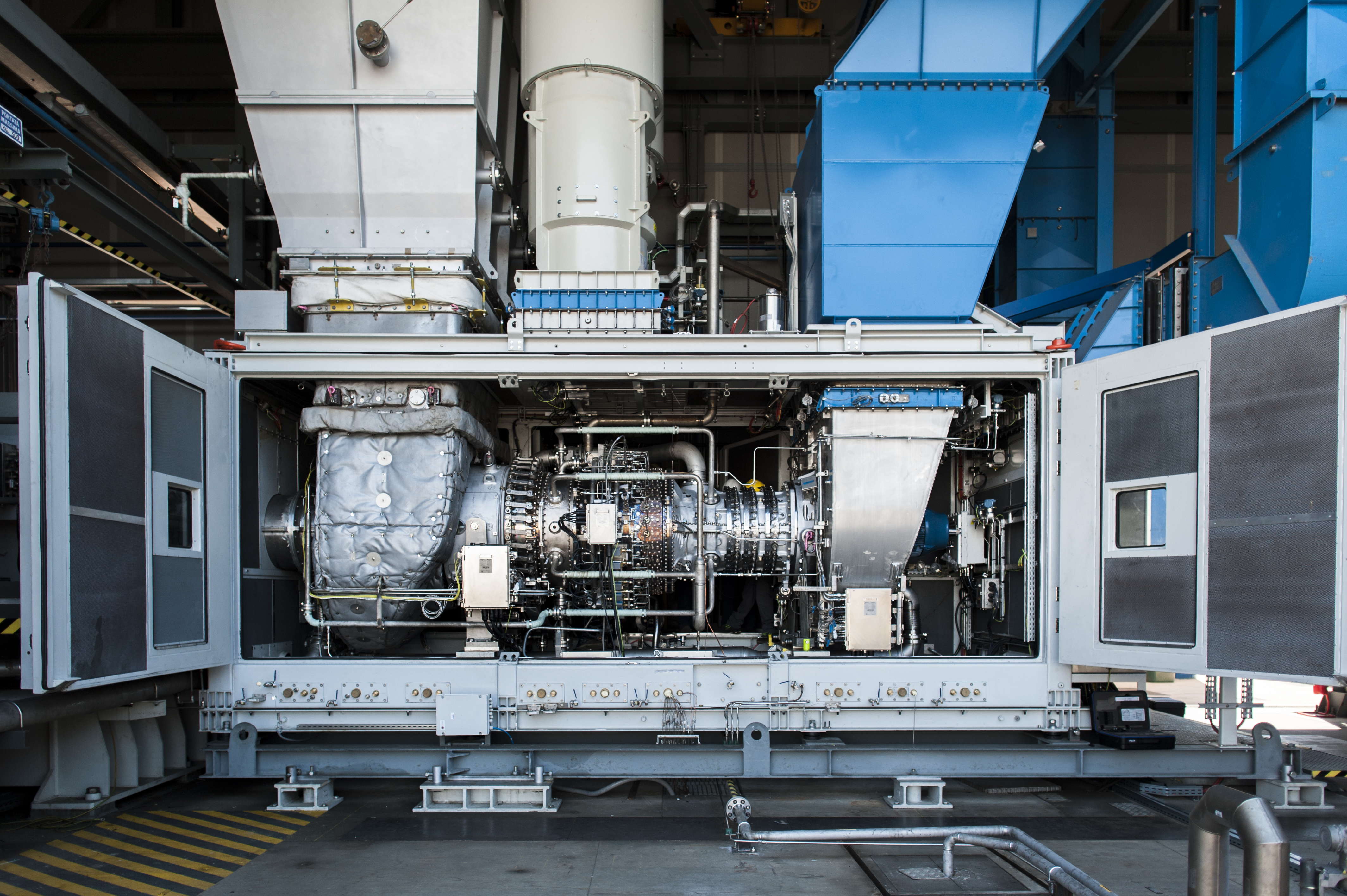
Today, Baker Hughes helps customers construct wells, control subsea production, compress gas and maintain rotating machinery. Its industrial inspection tools look for defects without destroying the thing being inspected. Its sensors listen for signs that machinery needs attention. The common concern is what an interruption does to the operation surrounding the machine.
02 / The sale has a long tail
The customer list makes the scale tangible. Venture Global develops LNG infrastructure. QatarEnergy LNG buys compression and power equipment. Petrobras needs turbomachinery support offshore. These businesses buy machinery for demanding environments, then need it serviced over years of operation. A purchasing decision has consequences far beyond delivery day.
Baker Hughes earns money from equipment, field services, rentals, parts, upgrades and long-term aftermarket agreements. Software and monitoring extend that relationship. For the buyer, the relevant calculation includes maintenance, fuel use, availability and the cost of lost production. A cheaper machine can become an expensive purchase if the supporting operation repeatedly stops.
The competition changes with the problem. SLB and Halliburton compete in oilfield services; TechnipFMC in subsea equipment; Siemens Energy in rotating machinery; Emerson in industrial technology. Baker Hughes' distinguishing feature is the combination of subsurface work, heavy equipment, instrumentation and service. Buyers still have to compare the particular product and contract.
03 / When the merger stopped drilling
Corporate scale has its own obstacles. The proposed Halliburton acquisition ended in 2016 after difficulties securing regulatory approvals and deteriorating industry conditions damaged the economics. Halliburton paid Baker Hughes a $3.5 billion termination fee. The failed transaction is a reminder that combining competitors can encounter a constraint that engineering cannot remove.
The next route brought different capabilities. GE Oil & Gas combined with Baker Hughes in July 2017, adding industrial equipment and digital offerings to the oilfield business. In October 2019, after GE's ownership dropped below half the voting power, the company became Baker Hughes Company. The name simplified; the machinery portfolio remained broad.
“Grow. Lead. Collaborate. Care.”
Baker Hughes' stated values
The vocabulary is short. The operational challenge is less so: coordinate engineering, manufacturing, field service and safety across different businesses. Those stated values describe the company's intended culture. The work demands that a software team and a turbine technician understand the same customer's problem.
04 / A bearing gets a voice
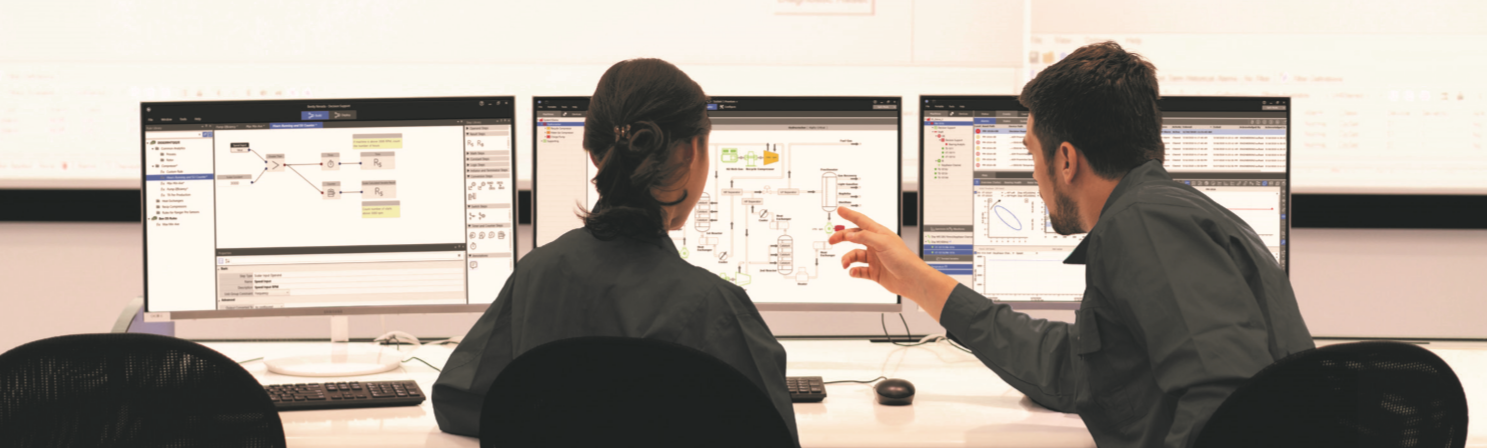
Cordant, launched in 2023, gives that combination a practical expression. It brings asset-performance and process-optimization tools together with equipment knowledge. Bently Nevada sensing and protection hardware supplies information about machinery condition. The aim is to help operators decide which risks deserve attention and where maintenance effort should go.
There is a useful distinction between measuring something and acting on it. A warning needs a maintenance decision, parts and an opportunity to intervene. Baker Hughes' collaboration with bp helped develop Cordant's functionality. Separate work described with EPAM and Microsoft addressed data-processing and integration difficulties. Even industrial AI has to get through the plumbing.
05 / A $13.6 billion addition
In July 2026, Baker Hughes completed its Chart Industries acquisition, a transaction with an enterprise value of approximately $13.6 billion. Chart became a third operating segment, alongside Oilfield Services & Equipment and Industrial & Energy Technology. It adds air and gas handling, thermal management and lifecycle services to the portfolio.
Approximate transaction enterprise value.
Purchase consideration: $210 per share in cash.
The strategic logic is understandable: broaden the equipment offering and the service relationship. The integration still has to deliver. Chart's capabilities do not automatically become a coordinated customer experience because ownership changes. Product platforms, manufacturing practices and service operations have to fit together. That is the work after the announcement.
06 / Follow the next bottleneck
In October 2026, a framework with Venture Global and GE Vernova contemplated equipment and services for up to 16 power islands, with deliveries scheduled for 2028 through 2034. The possible uses include LNG operations and adjacent data centers. These are prospective purchases under a framework, rather than 16 completed plants.
Other opportunities require equally careful boundaries. Baker Hughes' electric ICL compressor has zero operational emissions at the machine, but the electricity supply determines associated power-generation emissions. Predictive maintenance needs usable data and people able to respond. Hydrogen and carbon-capture equipment needs viable projects around it. Hardware cannot make every surrounding economic assumption come true.
What can another business copy? Start with the customer's specific interruption. Work out what it costs, then connect the product to the support required to prevent it. The original Hughes bit addressed a few stubborn feet of rock. More than a century later, Baker Hughes is still looking for the point where an expensive system gets stuck.