A bank can grow so far that its next useful move is to come closer. In 2022, First Interstate bought Great Western, stretching a six-state business across fourteen states. By October 2026, its operating territory covered ten. The interesting question is what happened between those two maps. Why would a bank spend years getting bigger, then begin choosing places to leave?
- Buy local banks and connect them into a regional network.
- Absorb the costs of a much larger operation.
- Concentrate capital where existing relationships can grow.
The answer matters beyond banking. A new market looks like an opportunity in a presentation. On Monday morning, it becomes a building, a payroll, a technology conversion and a customer who expects someone to answer. First Interstate’s story is a useful examination of the distance between acquiring a business and making it belong.
01 A borrowed name. A separate bank.
The enterprise began with a purchase. In 1968, Homer Scott, Sr. acquired Bank of Commerce in Sheridan, Wyoming. A Billings bank followed in 1970; the holding company was incorporated the next year. Buying established banks gave the group a starting stock of customers, employees and local knowledge.
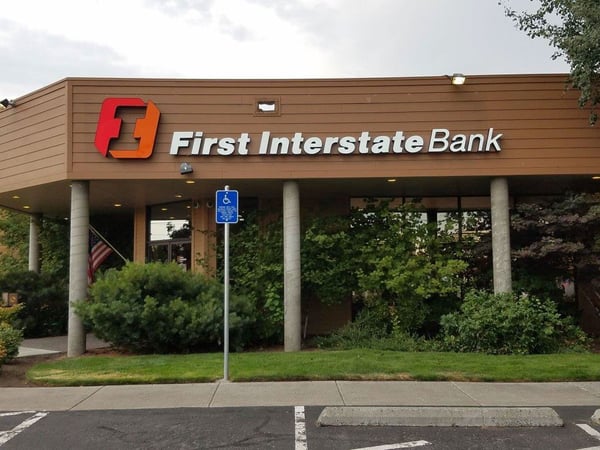
Even its name arrived through a relationship. In 1984, the group licensed the First Interstate identity from a Los Angeles banking company. Wells Fargo bought that California company in 1996. It did not buy the Montana group, which secured regional rights and kept going. National rights to the name followed in 2017. The familiar sign conceals two distinct corporate histories.
02 The second bill
Great Western changed the arithmetic. The acquisition closed on February 1, 2022, carrying First Interstate into eight additional states and taking the network above 300 branches. The announced transaction value was approximately $2 billion. At closing, the shares issued were worth about $1.7 billion. Those figures describe different moments in a stock transaction, rather than a cash discount negotiated at the finish.
Then came the work of combining institutions. First Interstate recorded $118.9 million in acquisition expenses during 2022. That category covered items including technology conversion, contract termination, professional fees and employee severance and retention. A share exchange can transfer ownership in a day. These expenses reveal how much remains to be joined afterward.
Reported Great Western acquisition expenses. Separate from the value of the shares issued.
Another pressure appeared in the banking machinery. In its fourth-quarter 2023 presentation, First Interstate explained that interest-bearing deposit costs were rising faster than loan yields, excluding purchase-accounting effects. Its adjusted, tax-equivalent net interest margin fell. More branches could not, by themselves, repair that spread. The example illustrates a constraint on expansion; it does not establish that the acquisition caused the squeeze.
03 A smaller map, deliberately
Jim Reuter succeeded Kevin Riley as chief executive in November 2024. The strategic goals published in 2025 emphasized core profitability, existing-market density and fewer peripheral activities. That October, Enterprise Bank & Trust acquired all twelve First Interstate branches in Arizona and Kansas. Eleven Nebraska branches went to Security First Bank in April 2026.
The company also exited Minnesota and North Dakota, outsourced its consumer credit-card portfolio and stopped originating indirect loans. In the 2025 annual report, management described putting resources into places with stronger growth prospects. This was a change in allocation, visible in transactions and product decisions, rather than a private revelation that outsiders can reconstruct.
The trade-off remains real. Selling a branch also transfers deposits and loans. In the third quarter of 2026, First Interstate reported a 3.53% net interest margin, while loans held for investment were down 11.7% from a year earlier. Net income was $62.2 million. Better margins and a smaller loan book can coexist; enduring earnings growth still requires enough productive business.
04 What a relationship does all day
For a customer, that business is wonderfully unglamorous. Orange Checking offers no minimum balance and no service charge with Online Banking and eStatements. Households can arrange home financing and use mobile banking. Wealth services address retirement, college funding, trusts and estates. Investment products carry market risk and differ from insured bank deposits.
A rancher can seek an operating line or financing for machinery and livestock. A business can borrow for working capital, arrange equipment financing and run payments through Treasury Banking Suite. The suite supports user permissions, ACH payroll, wires and reporting; Positive Pay tools add controls around checks and ACH activity. These services address the awkward timing between money arriving and bills becoming due.
First Interstate occupies the space between a neighborhood institution and a nationwide banking network. Its proposition is regional access with a broad service menu. Customers comparing it with Wells Fargo, U.S. Bank, a credit union or an online bank have a practical choice: the combination of location, banker access, borrowing needs, rates and account terms that fits their lives.
The economics connect these ordinary tasks. Deposits fund earning assets; loans and securities generate interest, while payments and wealth services produce fee income. A customer using several services gives the bank more ways to earn and the customer fewer institutions to coordinate. That is the business logic behind pursuing relationships in places where the bank already has a presence. Whether the convenience outweighs the cost depends on the customer’s actual account terms.
05 Let the people nearby choose
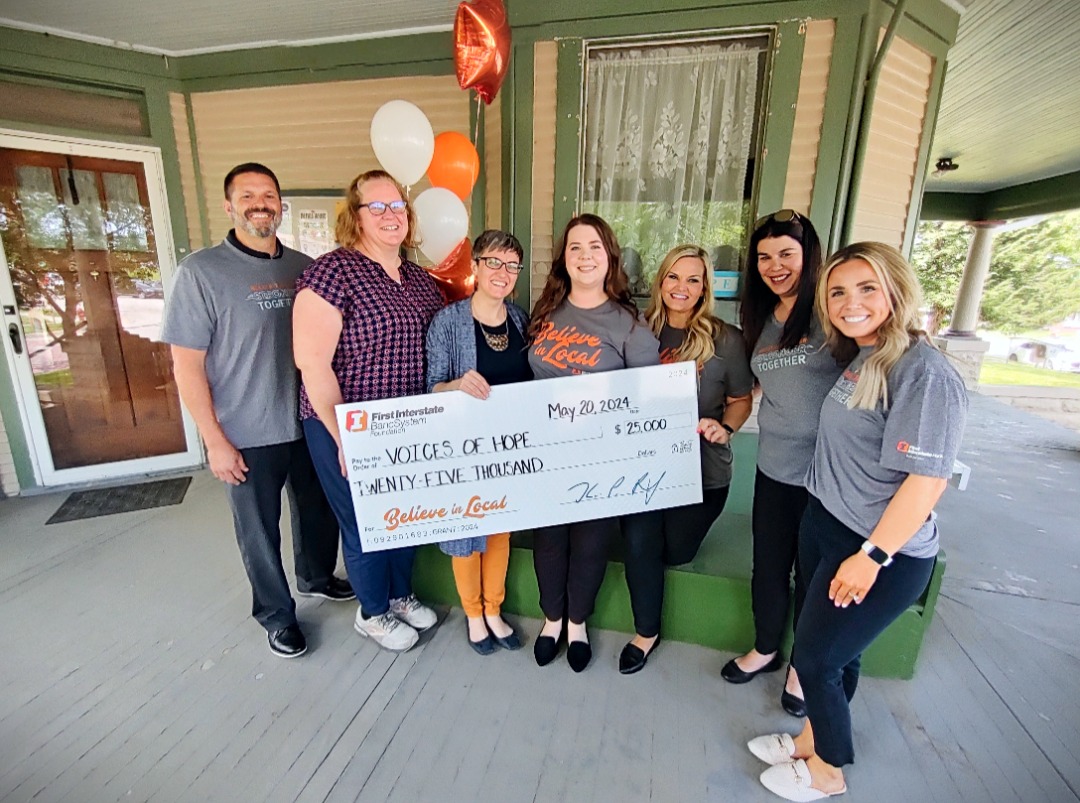
The company’s community promise has a specific mechanism. In 2025, its Believe in Local program received 615 employee nominations and awarded forty nonprofits $25,000 apiece. Employees help identify organizations that a distant committee might overlook. The Bank and Foundation reported $7.2 million in total giving that year and more than 60,540 volunteer hours.
“This milestone reflects what we can do together”
Jim Reuter · on $100 million in cumulative community giving · April 2026
There is a useful idea to copy here: give local knowledge a route into resource decisions. The same logic helps explain the narrower map. It needs reliable deposits, sound lending and customers who value the relationship. A customer chasing the highest savings yield, or needing branches nationwide, may choose differently. First Interstate’s task is to make the remaining connections useful enough to justify staying.