Before First Merchants had a stock ticker, it had a grocer. Hardin Roads had been a schoolteacher and a wholesale grocer when he helped organize a bank in Muncie in 1893. The starting capital was $100,000. The first premises were a room at Main and Mulberry. It is a pleasantly small beginning for a business whose modern problem is how to keep getting bigger without becoming distant.
- Consumer banking, business credit and wealth advice under one roof.
- Acquisitions add deposits, customers and specialist lending skills.
- Its promise of attention has to survive growth - and reach every neighborhood.
A grocer, a room, a banking idea
There is something useful about the grocer detail. A grocer works close to the transaction: goods arrive, customers pay, bills come due. Banking serves the same calendar. The machinery is more elaborate, but the underlying questions remain wonderfully ordinary. Can I buy the equipment? Will payroll clear? What happens when the money arrives later than the invoice?
By 1914, an advertisement described the institution as the bank of personal service
. That phrase has had a long working life. Today, First Merchants sells an idea familiar to anyone who has called a bank with a complicated problem: access to a person who understands what you need.
Buying the next conversation
The bank’s board formed First Merchants Corporation in 1982. In 1985, it chose to pursue acquisitions of banks with compatible community interests and management cultures. Pendleton Banking Company joined in 1988. The corporation listed on Nasdaq the following year. Growth became an organized activity, with shareholders watching.
The First Savings Financial Group deal illustrates the method. Announced in September 2025 at approximately $241.3 million in stock, it brought a southern Indiana network of 16 banking centers and a route toward the Louisville market. The legal closing became effective February 1, 2026.
The appeal extended beyond addresses. Management pointed to triple-net-lease financing, first-lien home-equity lines and SBA lending. Buying another bank can bring capabilities that would take time to assemble internally. It can also bring relationships that customers are free to move elsewhere. The purchase agreement starts the work; keeping the business requires a different set of skills.
The useful part is coordination
For a household, the offer includes checking, savings, mortgages, home-equity borrowing and digital banking. For a company, it reaches into asset-based lending, commercial property, agriculture and treasury management. First Merchants Private Wealth Advisors adds investment management, financial planning and estate planning. A business owner can have several kinds of financial problem at once. The useful bank is the one that can connect them.
Its SBA operation also complicates the label “regional.” The team lends to qualified small businesses nationwide and offers 7(a), Express and 504 financing. A Midwestern branch map does not define every customer it can serve. Government-backed lending provides another route for businesses that may not qualify through conventional channels.
One recent plan makes that coordination visible. In October 2026, the bank announced a downtown Royal Oak banking center, three-tenths of a mile from its Michigan regional headquarters. The nearby headquarters houses 120 employees and specialists in mortgage, commercial banking, treasury and lending. The proposed branch adds a place to walk in. Its opening still requires occupancy confirmation and regulatory approval. The geography is the argument: put a familiar point of contact within reach of the expertise that a neighborhood storefront cannot hold by itself.
The business model is familiar: earn interest from loans and investments, pay for funding, and collect fees for financial services. Its competitive claim is the combination of local access and a broader toolkit. That puts it between small community institutions and larger alternatives such as Huntington, Fifth Third or Chase. Customers should compare the actual service they need, rather than assume that a bank’s size determines its usefulness.
A business owner can have several kinds of financial problem at once. The useful bank is the one that can connect them.
A promise meets a map
Personal attention becomes a serious claim when you ask who receives it. In 2019, the Justice Department alleged that First Merchants had avoided predominantly Black Indianapolis neighborhoods in mortgage lending from 2011 through at least 2017. The court-approved settlement required $1.12 million in loan subsidies, $500,000 for outreach and education, and a branch and loan-production office serving those neighborhoods.
Those were allegations resolved through settlement. They belong in the story because a bank can describe itself as community-minded while its reach remains uneven. The Justice Department’s later implementation account documented expanded services, subsidies and the new offices. Here, the practical change involved money, locations and responsibility for community lending.
In June 2026, First Merchants and the National Community Reinvestment Coalition announced a $2.02 billion agreement for 2026 through 2030, developed with community input. Read the composition carefully. Most of the commitment is lending and investment; philanthropy accounts for $6 million. These are future commitments, with different purposes and economics. Calling the whole amount a donation would miss the point.
$2.02 billion2026-2030 community commitments
The next person at the desk
The latest results put a price on some of the difficulty. At September 2026, assets were $21.1 billion. Nine-month acquisition expenses totaled $21.7 million, alongside a $29.8 million first-quarter negative valuation adjustment on mortgage loans sold. Third-quarter net charge-offs reached $29.4 million, driven by two troubled credits. Scale does not remove the consequences of individual lending decisions.
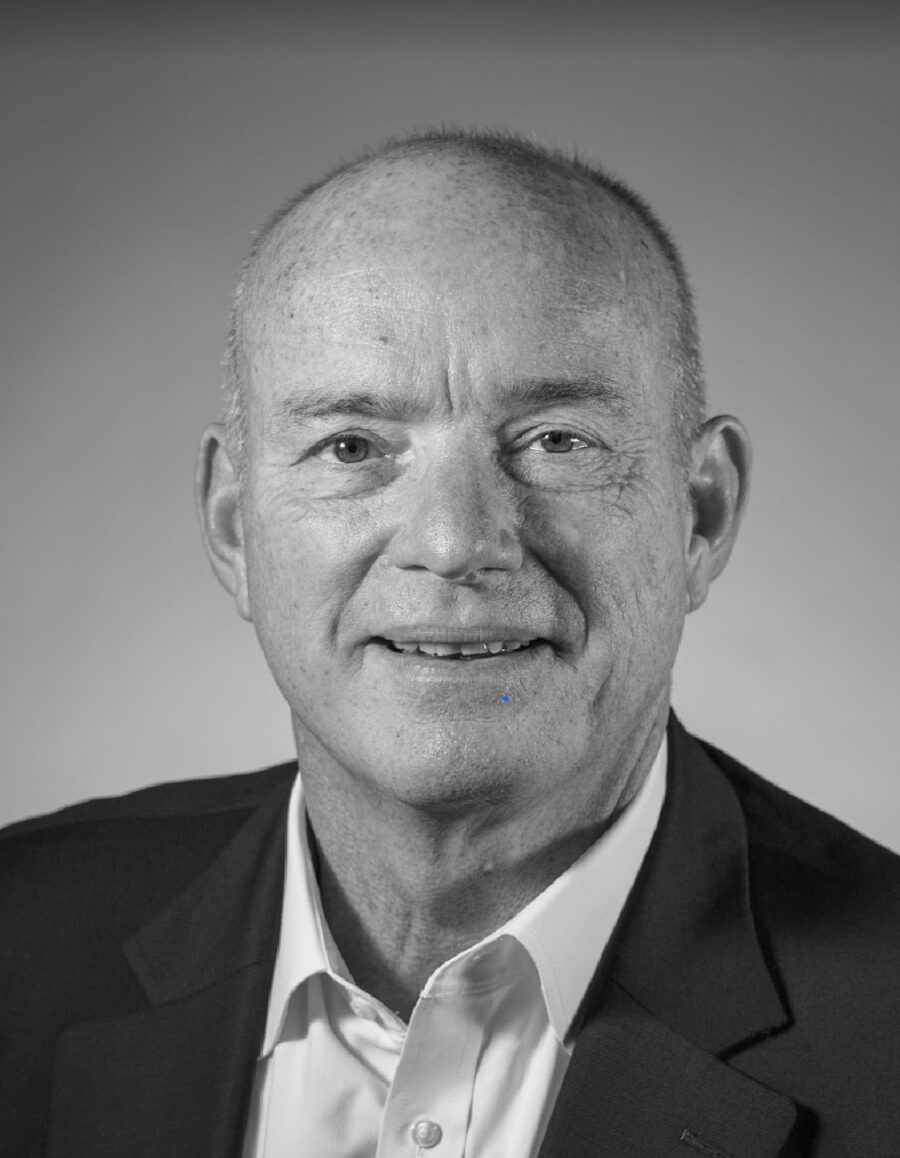
Mark Hardwick plans to retire at year-end 2026; President Mike Stewart is the announced successor. The company’s careers page lists paid volunteer time, a small but concrete way to make community involvement part of working life. Neither succession nor a benefits policy settles the service question. They show where the organization places responsibility.
The lesson worth borrowing is to give a promise a measurable shape. For a customer, that means asking who handles a difficult request and which specialist joins the conversation. For a growing business, it means checking whether expansion preserves the service people originally bought. This approach depends on disciplined lending, dependable funding and integrations that customers can live with. Personal attention becomes valuable when it helps somebody get something done.