Kevin Riley put a price on his own time: $5,000 an hour. The beneficiaries were local hunger programs. The payment was a shift on the teller line. In December 2018, First Interstate’s chief executive turned up at the downtown Billings bank to honor a bargain suggested by an employee. Colleagues had raised $11,000 through Neighbors Feeding Neighbors. Their boss owed them two hours behind the counter.
A CEO can describe customer service from a comfortable distance. Riley had agreed to try it at counter height. He explained that the shift gave him a chance to understand what the tellers actually did. The money would stay in the Billings area, helping families during the Christmas season. It was a small, cheerful reversal of the usual corporate arrangement: employees set the challenge, and the chief executive did the shift.
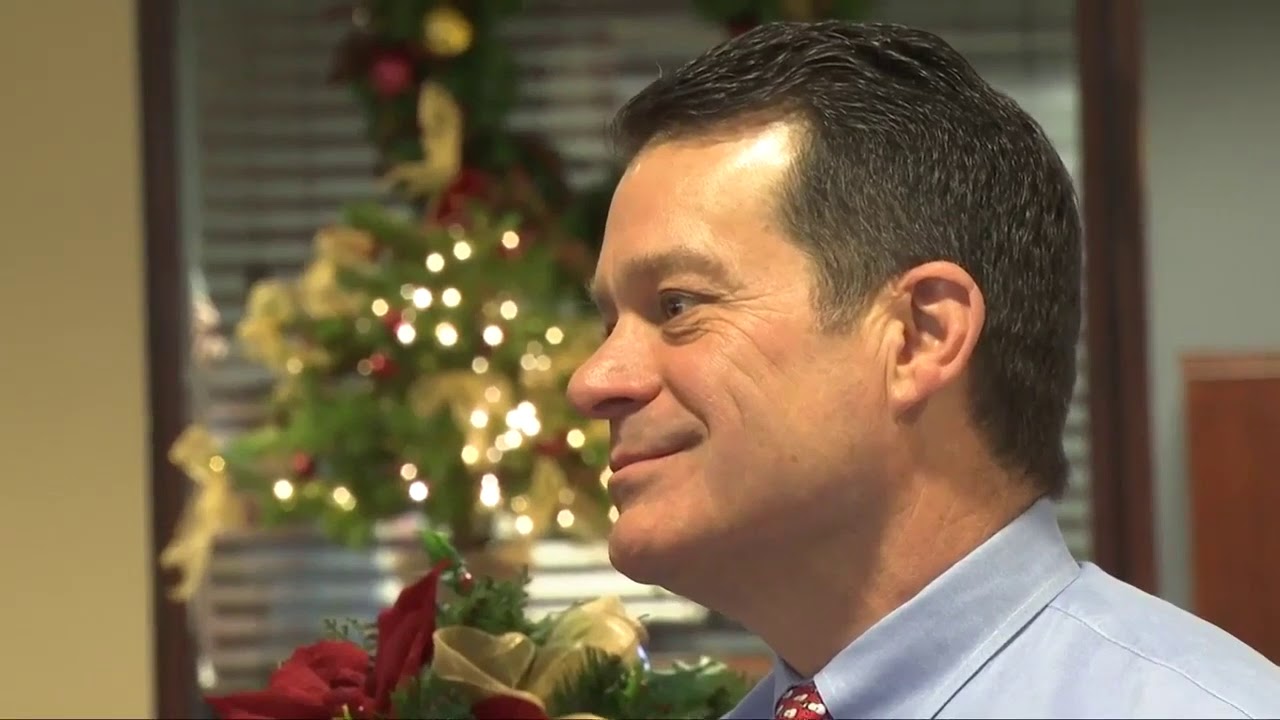
That morning offers a useful entrance to Riley’s nine years running First Interstate. His tenure also involved acquisitions, new markets and a bank balance sheet that passed $30 billion. Alongside those changes sat a recurring management problem: how to make a growing institution feel close enough for employees and customers to recognize themselves in it.
A flight to Billings, a road to Cody
Riley’s route into banking had a family connection. His father, Victor Riley, led KeyCorp for 26 years. Kevin became a certified public accountant and worked at Ernst & Young. In 1986, his father asked him to help with deals in Oregon. A career in banking followed.
The attraction of Montana was more personal than a job description. Victor later retired to a ranch near Cody, Wyoming. Kevin spent years flying into Billings and driving south for hunting trips. By the time a finance job opened at First Interstate, the journey was familiar. Mountains, hunting and banking were already three established interests; the vacancy put them within reach of the same airport.
There is a modest lesson in that geography. A move that looks like a professional leap on a résumé may feel like a return to somebody making it. Riley was arriving with experience from larger institutions and an existing affection for the region. He did not need a recruitment brochure to explain the appeal of the drive.
The accountant takes the chair
His formal preparation included an accounting-focused business administration degree from Northeastern University, completed in 1983. He held executive roles at KeyCorp and became Berkshire Hills Bancorp’s chief financial officer in 2007. First Interstate appointed him executive vice president and CFO effective August 15, 2013. He succeeded Terrill Moore, who stayed on to help with the transition.
The institution Riley joined had 76 banking offices in Montana, Wyoming and South Dakota. Its headquarters were in Billings. Its culture had been shaped by the Scott family and decades of community banking. An incoming finance executive could bring new methods, but he was joining a company with an established view of itself.
Two years later, the board chose Riley to succeed Edward Garding as president and CEO, effective September 23, 2015. Garding had spent 44 years with First Interstate. Riley’s experience extended beyond finance to operations, information technology, data governance, customer relationships and sales. That breadth mattered for a role in which the balance sheet was only one of the things requiring attention.
Across the mountains
The Cascade Bancorp transaction gave Riley’s growth plans a recognizable shape. Announced in November 2016, the proposed cash-and-stock deal was valued at roughly $589 million at announcement. Cascade brought a network in Oregon, Washington and Idaho, extending First Interstate toward the Pacific Northwest and markets including Bend and Boise.
Riley’s argument joined two ideas: the bank had invested in people, processes and technology, and a larger network could put those investments to work. Geography helped explain the transaction, but he also emphasized the fit between the institutions’ relationship-based banking cultures. Buying branches was one thing. Persuading the people inside them that they belonged together required a different sort of arithmetic.
The acquisition closed on May 30, 2017. Customers were told that familiar bankers and local leadership would remain in place while the two banks moved toward a systems conversion in August. The announcement distinguished between the legal transaction and the later operational change. That interval is where a merger becomes real for customers: new systems, new information and the practical question of whom to call.
The interview that changed the job
One of Riley’s more revealing professional connections began with a recruitment conversation. Renee Newman had been exploring a role with First Interstate when she traveled to Billings for a day of interviews. At the end, Riley asked whether she would consider moving there. It was a larger question than the position she thought she was discussing.
In Newman’s account, their conversation led to an offer to become president of wealth management and the executive responsible for client experience. The role had changed as the conversation developed. Riley had used an interview to explore a different possibility for the candidate and the bank.
It is a useful counterpoint to the acquisitions. Institutions grow by purchasing other institutions, but they also change through individual appointments. Bringing wealth management and client experience together put the customer’s relationship with the bank into the executive conversation. Newman’s story supplies something an organizational chart cannot: the moment a job became bigger than its original description.
Fourteen states, one headquarters
Great Western Bancorp brought a much larger expansion. The companies announced their agreement in September 2021. The merger closed on February 1, 2022, with the combined organization retaining the First Interstate name and its Billings headquarters. Great Western Bank initially operated as a division before the planned conversion of systems and branches.
The transaction brought new colleagues into leadership, including Karlyn Knieriem as chief risk officer and Scott Erkonen as chief information officer. Five Great Western directors joined the holding company’s board. Those appointments put the acquired organization’s experience inside the enlarged bank’s decision-making structure.
By May, former Great Western branches were opening under the First Interstate name. The combined network offered access to more than 320 branches across fourteen states. The change also included closures: ten former Great Western branches in three states closed that month. Expansion can enlarge a company’s map while reducing the number of doors in particular places. Both belong in the account.
The scale of Riley’s CEO tenure
Rounded figures in the June 2024 retirement announcement. Assets are bank assets, not personal wealth.
When the next deal can wait
After Great Western, Riley was prepared to talk about restraint. In early 2023, First Interstate had completed eight acquisitions since 2014, and the Great Western transaction had added about $13 billion in assets and 170 branches. Another purchase was not his immediate priority.
He wanted shareholders to see that the bank could integrate Great Western, earn money, grow organically and operate efficiently before it bought again. The important word in that sequence was “before.” Acquiring a business and demonstrating that the combination works are separate obligations, even when the deal announcement arrives with a single celebratory photograph.
“It’s a very thoughtful process here about how we acquire institutions.”
Kevin Riley, 2023
The pause gives his record more texture than a list of transactions would. Riley helped enlarge the bank, then publicly described the work required to justify that enlargement. For customers, much of that work is ordinary: accounts functioning, employees answering questions and services remaining dependable after the signage changes. Ordinary is an entirely respectable ambition for a bank account.
A local banker’s seat in Washington
In 2019, Riley was appointed to the Federal Advisory Council to represent the Federal Reserve’s Ninth District. The district includes Montana, Minnesota, the Dakotas, northwestern Wisconsin and Michigan’s Upper Peninsula. The appointment gave him a national forum for discussing the financial and business conditions facing that region.
The council has twelve members, one from each Reserve Bank district, and meets with the Federal Reserve’s Board of Governors four times a year. Riley’s term concluded in December 2021. His work in Billings thus overlapped with a role that asked him to consider conditions well beyond any single bank’s loan book.
That is another dimension of regional banking leadership: local experience can travel. A conversation grounded in borrowers and businesses across the northern states can become part of a discussion in Washington. The job required Riley to translate between those scales, just as his bank was learning to operate across a wider territory.
The afternoon the branches closed
During Riley’s tenure, First Interstate also made a habit of closing its branches for half a day so employees could volunteer. The annual Volunteer Day began in 2018, the bank’s fiftieth anniversary year. By 2024, the planned program spanned more than 350 service projects across its fourteen-state footprint.
Local employees could select projects suited to their own communities, with the broader effort focused on poverty, hunger and homelessness. The distinction matters: a company can coordinate the afternoon centrally without deciding every local need from headquarters. The schedule made room for employees to exercise judgment where they lived.
Riley’s public explanation of community banking extended to its financial foundations. In a 2023 interview, he emphasized conservative balance-sheet management, risk controls and liquidity alongside local relationships. He also described changes to overdraft practices and an account designed for underbanked customers. Community commitments had to reach the product itself, as well as the volunteer calendar.
Leaving the desk
First Interstate announced Riley’s planned retirement in June 2024. He counted 38 years in banking and pointed to the organization’s expansion from a roughly $7 billion bank in three states to more than $30 billion across fourteen. The figures describe the scale of the institution he had helped change; they do not, by themselves, settle every question about the results.
James Reuter was named his successor in October and took over in November 2024. The transition arrangement provided for Riley to remain a special adviser to the board chair through January 1, 2025. In his first annual shareholder letter, Reuter credited his predecessor’s stewardship of the bank’s culture and community emphasis.
Riley had left open the possibility of considering future opportunities that interested him. His public career already offered a complete loop: an accountant recruited into dealmaking, a move west along a familiar route, an expanding bank and a succession planned over several months.
The teller shift remains the more memorable unit of measurement. Two hours cannot summarize nine years as CEO. They can show a chief executive accepting a bargain made with his employees, then arriving to carry it out. At a bank, promises are rather central to the business.
Keep reading. Or watch the shift.
- Kevin Riley on LinkedIn
- First Interstate Bank
- Watch: Riley’s teller-line shift
- 2013 CFO appointment
- 2015 CEO succession
- Cascade acquisition completed
- Great Western merger completed
- Riley on banking and community
- The case for an acquisition pause
- A career and retirement conversation
- The conversation with Renee Newman
- 2024 CEO succession filing