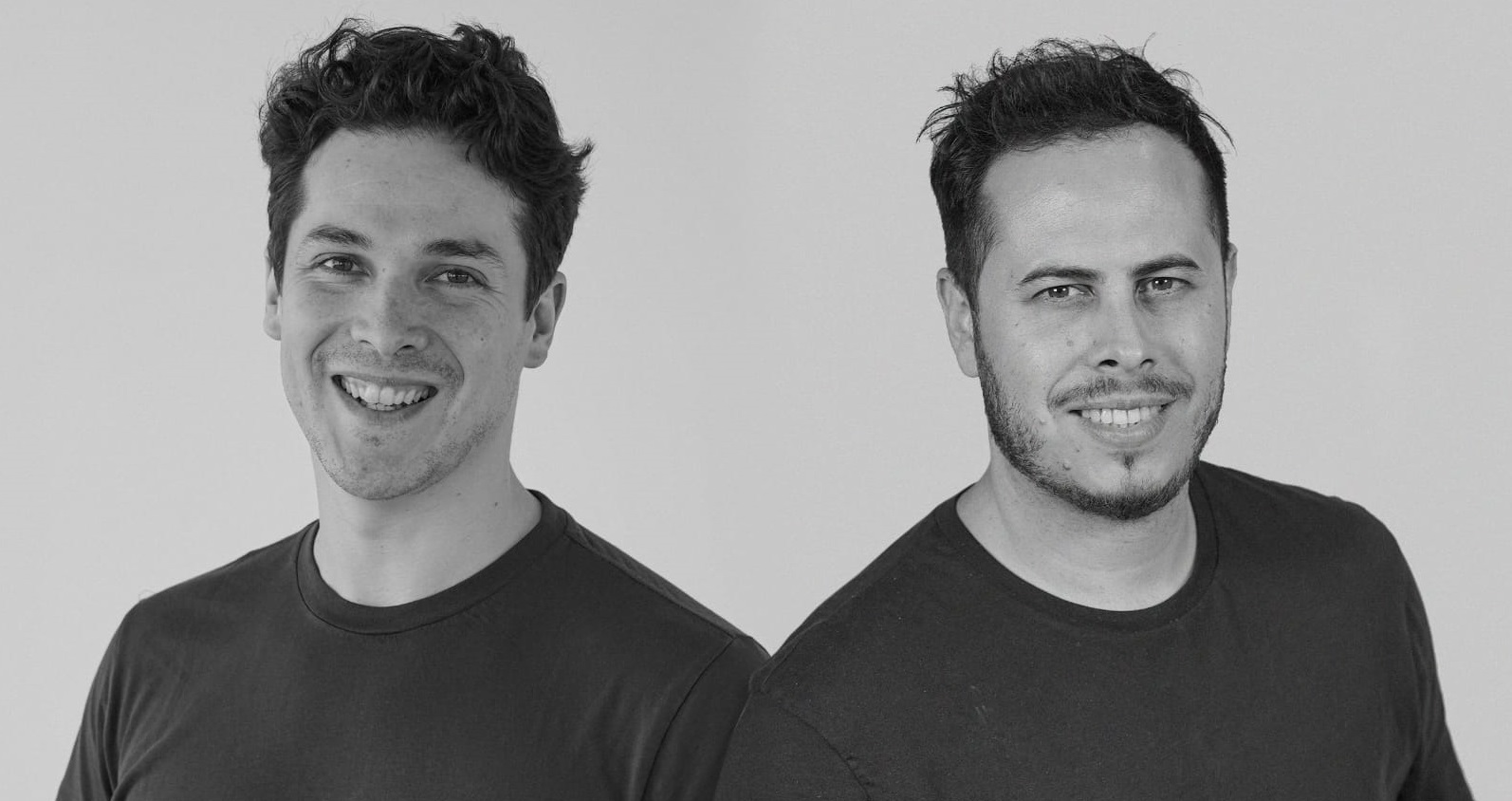
The story begins with two cousins, a grandfather's instruction, and a small domestic obligation. Federico D'Alvia Vegh and Juan Francisco “Yuyo” Llamazares Vegh had been taught to make beer, and the family tradition came with a gentle warning: keep brewing or let the ritual disappear. So they brewed for friends and relatives. Then they wanted to experiment. For that, they needed liquid yeast. In Argentina at the time, it was not so easy to obtain.
A normal hobbyist might have changed the recipe. The cousins tried making the yeast. It was the sort of escalation that looks faintly comic from a distance and perfectly rational while it is happening. Yet the yeast introduced them to a less charming fact: producing living material reliably requires complicated facilities, careful controls, and considerable expense. The missing ingredient was merely the door. Behind it stood the architecture of modern biomanufacturing.
Federico was an improbable person to walk through that door. He had studied audiovisual arts at Universidad del Cine and later hospitality management at Universidad Nacional de Quilmes. His early jobs ran through tourism, hotel accounts, contract management, and revenue work. There was no tidy march from biology degree to laboratory. There was, instead, a collection of skills that serious technical companies discover they need after the clever prototype arrives: explaining, selling, organizing, hiring, budgeting, negotiating, and making many different kinds of people move in one direction.
A company assembled from unlike parts
In 2015 the cousins turned their attention from the yeast itself to the machinery around it. Traditional bioprocessing relied on large tanks and specialized plants. Their question was both scientific and logistical: could cells be grown in a smaller, more natural environment, and could the equipment be repeated instead of merely enlarged? Stämm formally emerged around that ambition in 2016.
Yuyo brought a scientist's training. Federico became the operating complement. His remit eventually covered finance, business development, communications, quality, IT, human resources, and the biofacilities themselves. If that sounds like too many departments, it is also a useful description of founding a deep-tech company before the departments have hardened into separate kingdoms.
The pairing mattered. A bioreactor company does not live by fluid dynamics alone. It must persuade researchers to join, investors to wait, partners to test, and regulators to understand. It must turn workshop space into a facility and a facility into a repeatable system. Federico's earlier career was not an embarrassing prologue to biotech. It was training in the human traffic around an invention.
The refrigerator and the factory
Stämm's technical argument begins with scale. In the conventional picture, more production means a larger vessel, a larger facility, and more fixed infrastructure. The company has pursued another geometry: small channels, laminar flow, modular cartridges, and 3D-printed structures. Cells move through an environment designed to resemble vascular networks rather than being stirred in a giant tank.
“Our big promise is the bioprocessor, a refrigerator-sized piece of equipment that can be operated by one person and has the same productive capacity as a large factory.”Federico D'Alvia Vegh
The image is deliberately domestic. A refrigerator belongs almost anywhere; a factory announces that everything must come to it. Federico has described the larger ambition as compact production plants that can be deployed quickly, relocated, and resized. This is operations thinking at industrial scale: if the plant can move, production choices can change with it.
The Stämm origin in three moves
The distinction is more than a pleasing diagram. Cells are sensitive to their surroundings. In Stämm's bubble-free design, gas exchange and nutrients are managed through laminar flow without the conventional impeller. The company's cartridges are meant to be single-use and customizable; automation coordinates production and formulation. The design seeks to make the route from an experiment to a larger process more consistent.
Federico's public explanations tend to move quickly from engineering to deployment. He talks about footprints, location, partnership, and access. This is the COO's view of technology: an object is not finished when it works. It is finished when someone can install it, operate it, finance it, and fit it into an existing workflow without rebuilding the world around it.
The rooms had to come before the world
Stämm entered the GridX portfolio in 2017 and joined IndieBio's San Francisco program in 2018. A $2 million seed round led by Draper Associates followed in 2019. Then came the physical work. The company opened its first Buenos Aires offices and laboratories in 2020, a pilot biofacility in 2021, and another site in 2022. Federico has been credited with leading at least four infrastructure expansions.
Infrastructure is a quiet biography of a company. A larger room says the team has outgrown the last one; a specialized room says the experiment has become a process; a second country says validation and customers may live elsewhere. In 2023, two Stämm bioprocessor prototypes were validated at BioArk in the Swiss canton of Valais. The next year, Stämm opened its own research and development facility there. San Francisco, Buenos Aires, and Monthey formed a triangle around the company: capital and commercial reach, engineering and talent, testing and European presence.
Beer and liquid yeast expose the first production constraint.
The founders attend IndieBio's San Francisco accelerator.
A $2 million seed round finances the next stage.
BioArk validates prototypes; the founders join Endeavor's entrepreneur network.
Stämm opens a research and development site in Monthey.
The High-Throughput Bioprocessor launches for research use.
By 2023, Endeavor had selected Federico and Yuyo as Endeavor Entrepreneurs. The recognition was as much about the company-building project as the machine. Stämm had started with $5,000 supplied by family members. Its later rounds brought institutional investors and a far less forgiving set of expectations. Federico's job was to keep an interdisciplinary organization legible to itself while it crossed those thresholds.
People who have worked at Stämm describe a culture where opinions are heard and disciplines mix. Federico himself says he enjoys working with people and having a positive effect on their lives. Neither statement proves that a workplace is easy. Deep-tech companies are arguments conducted under financial and physical constraints. But they do clarify his chosen terrain: the space between expertise, where coordination is neither glamorous nor optional.
A launch, then the longer test
In March 2026, Stämm launched its High-Throughput Bioprocessor for research-use applications. The system combined a control unit, a production unit holding the bubble-free cartridge, and a formulation unit. It could run independent experiments and continuously monitor variables such as temperature, pH, carbon dioxide, and dissolved oxygen. At BIO 2026 in San Diego, the team demonstrated the system live, opening its casing to show a safety interlock and running the cartridge through continuous perfusion.
For Federico, the launch closed one loop and opened a sterner one. The beer experiment had shown how awkward biological production could be. The new machine was an answer in product form, available to research teams rather than confined to a pitch. Yet a research-use launch is not the same thing as widespread commercial adoption. Partnerships, regulatory paths, manufacturing discipline, and repeatable performance still decide whether a new geometry of scale becomes an industry habit.
“We are in a commercialization and partnership-building stage, which will guide the next locations we open.”Federico D'Alvia Vegh
There is something fitting about an operator placing geography after partnership. Expansion is tempting to narrate as flags on a map. Federico's version makes location an outcome of useful work with other companies. It is the difference between collecting addresses and building a network that can actually carry a product.
His aspiration has widened beyond the biopharmaceutical sector to food, cosmetics, and materials. The claim is not that one machine solves every manufacturing problem. It is that biological production may become a more common industrial tool if its equipment stops demanding cathedral-sized commitments. Smaller systems can still carry enormous expectations; physics is unimpressed by good metaphors. But a compact machine can be tested in more rooms, by more teams, with less ceremony.
The useful outsider
Federico's path can be read as a sequence of departures: from film to hospitality, from tourism to biotech, from a bottle of beer to a continuous-flow reactor. A better reading is accumulation. Film taught him to frame a complicated idea. Hospitality and sales taught him to notice what another person needs. Revenue work taught him to watch the numbers. Stämm forced those habits into the same room as microfluidics, cell culture, software, quality systems, and machinery.
The scientific founder is a familiar character. The operator with an eclectic résumé is easier to overlook, particularly when the product is technical enough to monopolize the vocabulary. Yet companies built from new science depend on translation. Someone must move between the researcher, investor, employee, client, contractor, and regulator without pretending they are all asking the same question.
A decade after the cousins discovered that yeast was troublesome, Federico is still working on the same class of problem: how to make living production easier to repeat. The scale has changed. The questions have not. Where will it fit? Who can run it? How much infrastructure must surround it? What has to happen so the next experiment does not require a new factory?
The family brewing tradition survived. It also escaped the bottle. What began as a modest obligation to keep making beer became a company devoted to making biological production less fixed, less immense, and more portable. Every founder likes to say that a problem found them. Federico D'Alvia Vegh has the rarer story: he found a small problem, kept looking, and discovered that it was wearing a factory.