Bio-Techne does not make the miracle drug. It sells the exquisitely fussy things that help someone else discover, test and manufacture it. A vial of cytokine. An antibody that binds the right target. A control that tells a hospital analyzer it has not gone sideways. A machine that turns a western blot from a day of manual bench work into a largely automated run. This is biotechnology's plumbing, except the pipes can see proteins.
That position has made the company both important and oddly anonymous. From Minneapolis, Bio-Techne supplies academic researchers, biotech and pharmaceutical teams, contract research organizations, cell-therapy developers and clinical laboratories. Its portfolio now exceeds 500,000 products. The company says those products appear in more than 40,000 scientific citations each year. Fiscal 2026 revenue was $1.215 billion.
The number that matters more is $985.1 million. That was consumables revenue - roughly 81 cents of every sales dollar. Instruments may earn the product demo, but single-use reagents, assays and controls create the repeat order. It is the familiar razor-and-blades model, translated into pipettes and pathology slides, with much higher consequences for getting the blade wrong.
A tiny control sample becomes an empire
The company began in 1976 as Research and Diagnostic Systems. Its first territory was hematology controls and calibrators - standardized materials that let clinical labs check whether blood analyzers were producing trustworthy results. In 1981, it became the second manufacturer in the world to introduce a whole-blood control containing platelets. Four years later, a merger with Techne Corporation took the business public.
The early insight was beautifully unromantic: reproducibility has a budget. If an experiment or diagnostic test must work again tomorrow, customers will pay for a known input instead of gambling on a cheaper mystery vial. R&D Systems moved from blood controls into recombinant proteins and was the first company to commercialize TGF-beta. A dependable product became a catalog; the catalog became shelf space in the customer's workflow.
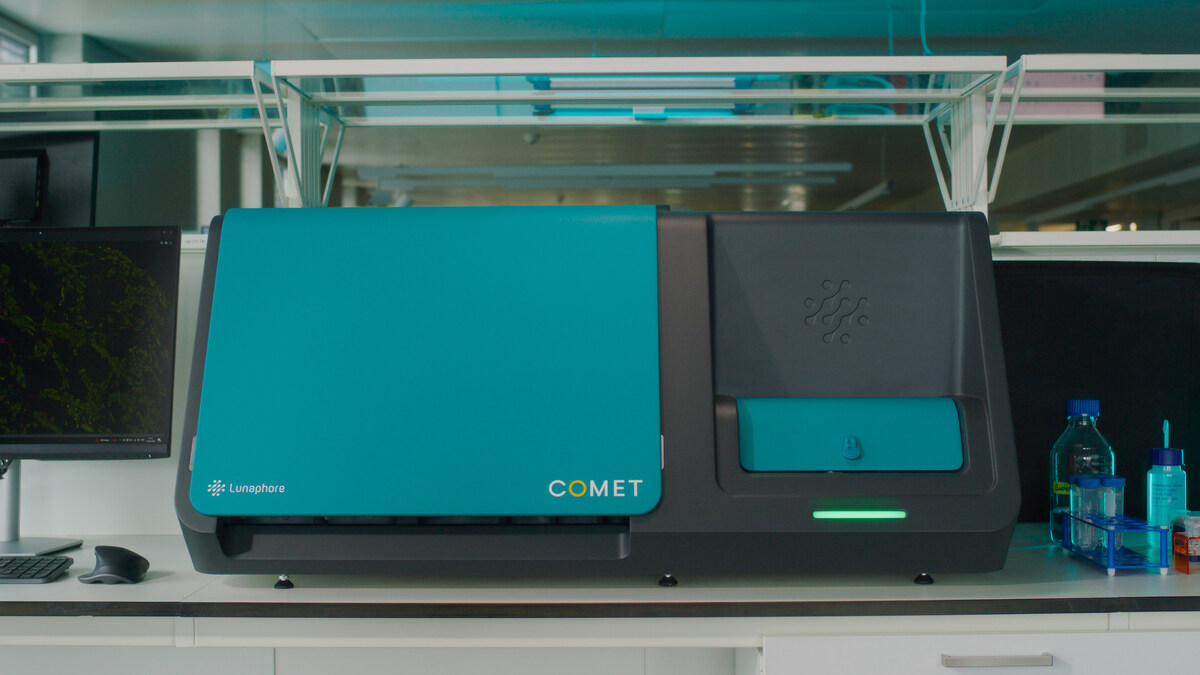
Bio-Techne then widened the definition of the shelf. ProteinSimple, acquired in 2014, brought automated protein-analysis instruments. Advanced Cell Diagnostics, acquired in 2016, brought RNAscope probes that reveal where RNA sits inside cells and tissue. Lunaphore, purchased for $169.7 million in 2023, brought COMET - an instrument that automates spatial protein and RNA analysis on standard pathology slides. The portfolio moved from biological content to the machines and software that interpret it.
The moat is not a dramatic machine. It is the quiet moment when a scientist writes a trusted product into the protocol.YesPress analysis
The product is a workflow, not a box
Consider Leo, Bio-Techne's high-throughput Simple Western system. Traditional western blotting asks a scientist to separate proteins in a gel, transfer them to a membrane, incubate antibodies, wash, detect and interpret. It works, but the workflow is manual and variation can sneak in at every handoff. Leo uses capillaries and automation to process up to 96 samples plus molecular-weight ladders in about three hours, using only a few microliters per sample.
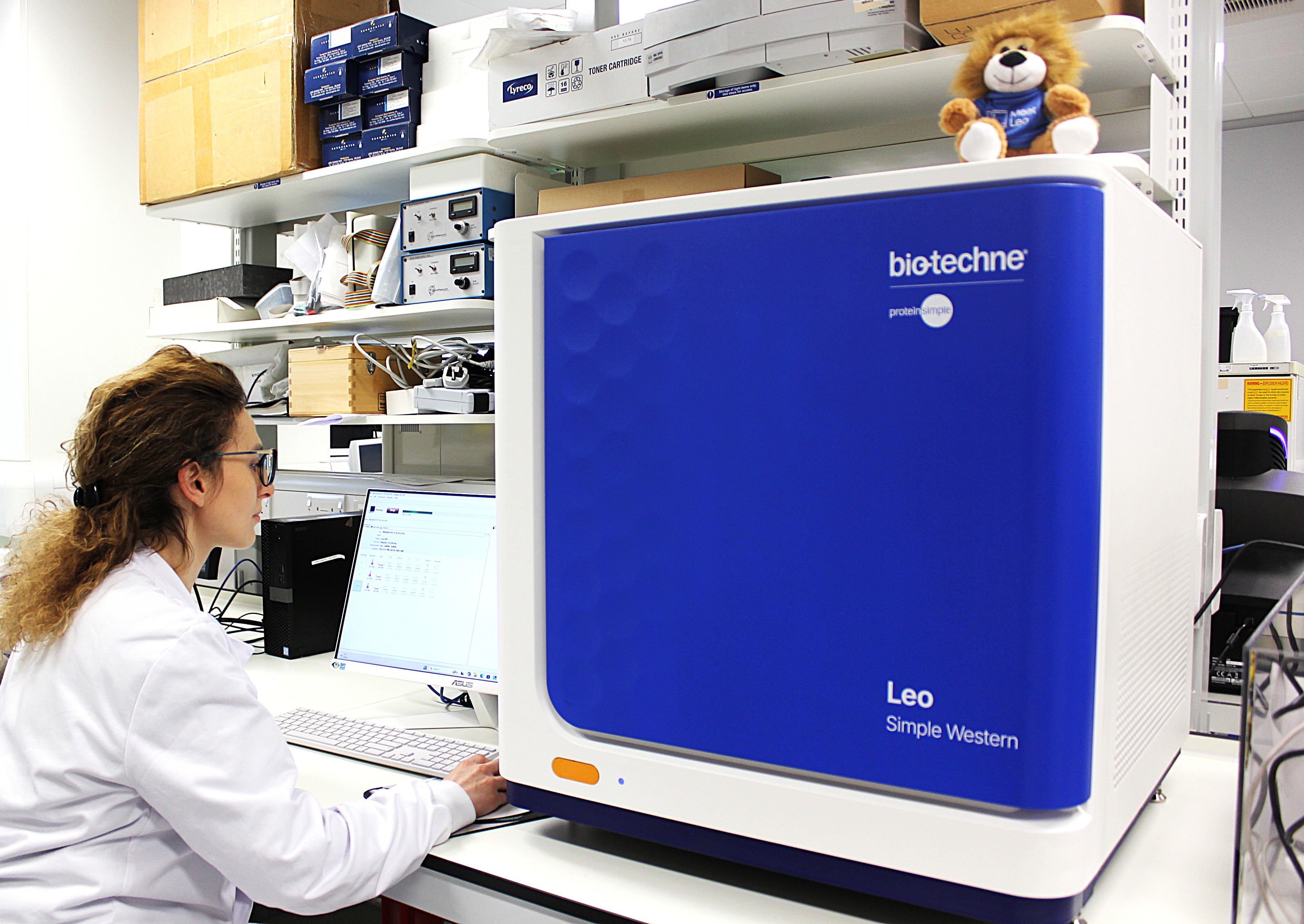
The sale is not merely the blue-and-white box. It is the instrument, cartridges, reagents, antibodies, Compass software, compliance features, training and service. COMET works similarly: instrument placement creates demand for SPYRE detection reagents, RNAscope assays and HORIZON analysis software. Every additional component makes the overall result easier to reproduce and the vendor harder to replace.
The economic engine
Fiscal 2026 revenue by type
US dollars, millions. Bar lengths use consumables as the maximum.
This is where Bio-Techne differs from a one-product instrument maker and from a therapeutics company. It can sell across discovery, translational research, manufacturing and diagnosis without depending on the clinical success of one drug candidate. Its breadth also creates cross-selling opportunities: the same customer studying a tumor may need recombinant proteins, antibodies, an automated protein assay and a spatial readout.
The miss that improved the map
Portfolio breadth can become an excuse for buying anything adjacent to biology. Exosome Diagnostics shows the limit. Bio-Techne acquired the liquid-biopsy company in 2018 for $250 million upfront, with as much as $325 million more tied to milestones. The prize was ExoDx Prostate, a urine-based test intended to help assess whether a patient with an ambiguous PSA result should proceed to biopsy.
The science was interesting. The operating model was awkward. Exosome Diagnostics ran a CLIA laboratory service, requiring dedicated clinical infrastructure and reimbursement capabilities. Bio-Techne's strength was manufacturing and distributing products that customers could use inside their own labs. By fiscal 2025, the company said the service business had limited synergy with its core life-science and diagnostic product lines. It recorded an $83.1 million impairment and sold Exosome Diagnostics to MDxHealth in September 2025 for consideration of up to $15 million.
What failed first
Operational fit, before scientific promise
The detour required a service, reimbursement and clinical-lab machine. Bio-Techne's repeatable advantage lived in products, platforms and global distribution. The company retained access to exosome technology for kit development, but let a diagnostics specialist run the test business.
What changed management's mind was not a sudden rejection of exosomes. It was the recognition that owning a test laboratory is different from supplying test makers. The divestiture sharpened investment around non-CLIA product lines, improved the Diagnostics and Spatial Biology segment's margin profile and preserved access to the underlying technology for future kits. The copyable move is not “sell your failed acquisition.” It is to define the operating capabilities that make an adjacency real.
A $65 offer walks into a boardroom
The pending Merck KGaA deal adds a second lesson in knowing what the machine is worth. Merck had discussed a possible transaction with Bio-Techne as far back as 2023. In July 2025, with Bio-Techne shares near a five-year low, it offered $65 a share. CEO Kim Kelderman told Merck that the board would likely view the approach as opportunistic. Bio-Techne declined to engage at that price.
By May 2026, Merck was back at $67. Bio-Techne asked for $74 to open diligence, contacted two other strategic buyers capable of paying cash and eventually opened a data room to three parties. One bidder withdrew to pursue other priorities. A second reached $71 and then paused. Merck climbed to $73. On June 25, Bio-Techne signed an all-cash agreement implying an enterprise value of about $11.3 billion - a 36 percent premium to its prior one-month volume-weighted average price.
What did the process cost? Beyond the purchase price, Bio-Techne agreed to pay Goldman Sachs an approximately $106 million transaction fee if the merger closes. A specified termination by Bio-Techne can trigger a $230.455 million fee. Merck expects about EUR 140 million in annual cost synergies by year three. Shareholder and regulatory approvals still matter, and closing is expected in late 2026 or early 2027. Until then, this is an agreement, not a completed sale.
Bio-Techne did not win by holding out forever. It created just enough competition to learn where the market stopped.The negotiation lesson
What a builder can steal
Sell the standard
A trusted input gets written into protocols. Consistency, documentation and support can matter more than a lower unit price.
Use hardware as a doorway
The instrument is most valuable when it creates repeat demand for proprietary consumables, assays, software and service.
Acquire a missing step
ProteinSimple, ACD and Lunaphore expanded adjacent parts of the same research workflow. Cross-sell potential is more useful than a fashionable category label.
Name the operating model
Exosome Diagnostics required capabilities that did not match Bio-Techne's product engine. Adjacency without shared operations is a costly costume.
Simplify after you assemble
In 2026, the company organized its customer face around R&D Systems, Bio-Techne Spatial and Bio-Techne Diagnostics. A portfolio only compounds if buyers can navigate it.
When the playbook breaks
This approach does not work when consumables are easily interchangeable, instruments do not produce meaningful pull-through or customers can switch protocols without revalidation. It also weakens when research budgets freeze, biotech funding contracts or policy changes disrupt academic and government labs. Bio-Techne disclosed those pressures in recent years, alongside softer conditions in China.
Acquisition-led breadth creates its own hazards. Integration can blur brands, duplicate systems and tempt management into markets that share vocabulary but not economics. In spatial biology, formidable rivals are chasing the same laboratory budgets. In core reagents, Thermo Fisher, Danaher businesses, Merck's MilliporeSigma, Abcam and many specialists offer alternatives. A large catalog is a moat only if quality stays high and customers can find what they need.
Bio-Techne's most durable achievement is therefore not one instrument or transaction. It learned to occupy the boring, repeatable layer beneath scientific drama. Merck is paying for biological content, installed workflows, manufacturing expertise and access to customers from discovery through production. The Exosome stumble made the boundary visible. The machine works when Bio-Techne supplies the lab. It strains when Bio-Techne tries to become the lab.
Keep exploring