A price tag can be an act of impertinence. On Dash Bio’s website, laboratory tests sit beside dollar amounts, available to anyone with a browser. No introductory meeting. No negotiation before the number appears. For a company selling sophisticated work to drug developers, this is a curiously shopkeeper-like gesture. It also tells you where the founders think the trouble begins.
- Dash runs bioanalytical assays for biotech and pharmaceutical companies.
- Robotics and integrated software support its promise of faster, repeatable results.
- Published fees and outcome guarantees put a price on completed work.
A price tag in a place that prefers a meeting
Ander Tallett, Dash’s co-founder and chief operating officer, has thought about this before. In an August 2025 essay, he recalled trying, and failing, to reform car repair through a marketplace roughly 15 years earlier. The problem he described was familiar: the buyer knew less than the seller, and paying for hours gave the two parties different interests.
He now makes a related argument about bioanalysis. If a customer wants an answer and the supplier sells labour, completing the job sooner can be an awkward business proposition. Tallett’s prescription is public pricing paired with a predictable process. The price tag is the visible part. The difficult work happens behind it.
That earlier failure gives the argument some welcome texture. A marketplace alone did not rescue the mechanic’s invoice. At Dash, the founders are taking responsibility for the service itself: the machines, methods, software and scientific work that determine what an answer costs to produce. You cannot reliably fix the fee while leaving the production process to chance.
The bottleneck after the breakthrough
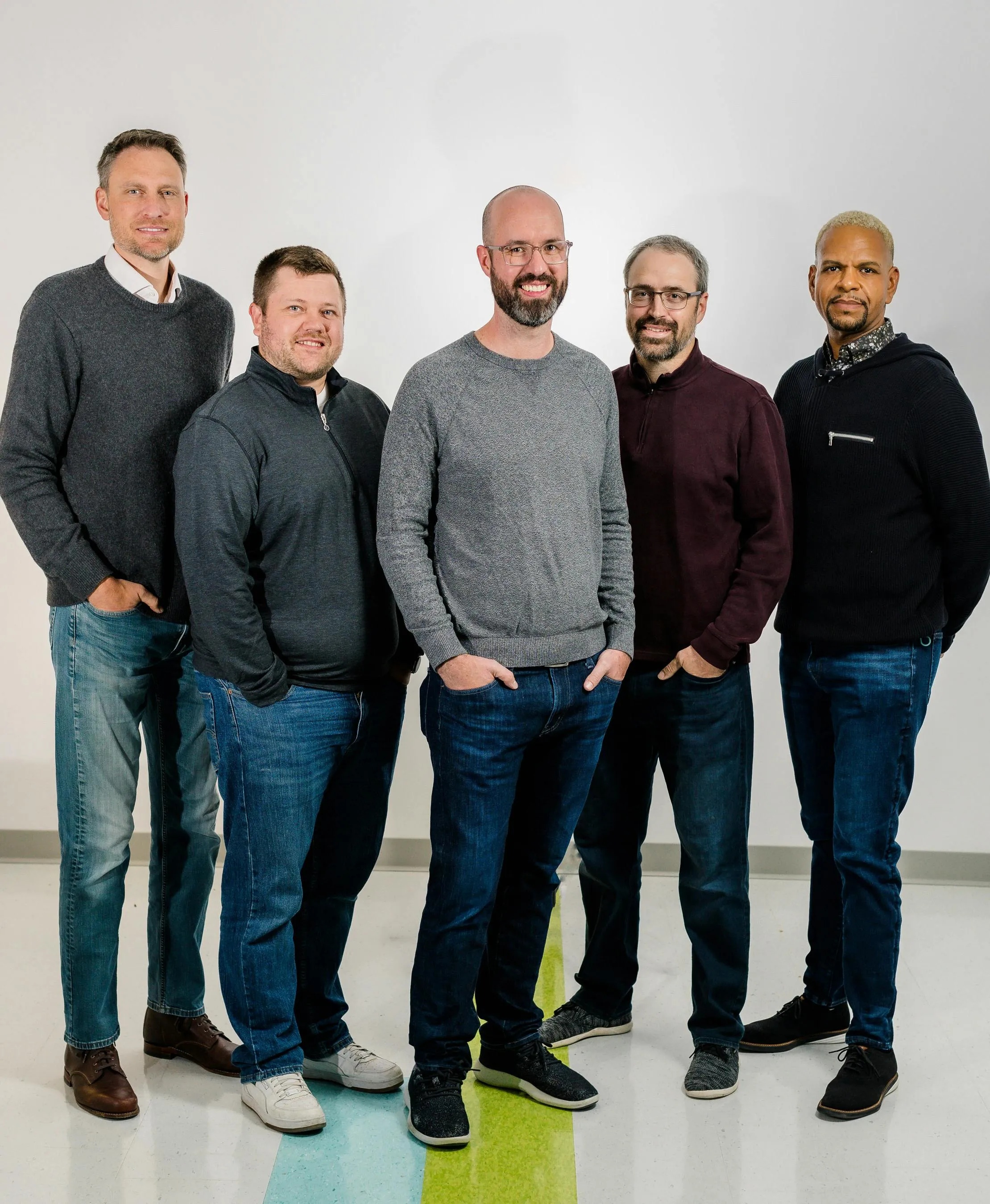
Dash entered public view in October 2024. Dave Johnson, its chief executive, had been Moderna’s chief data and AI officer. Tallett brought experience at Moderna, DigitalRadius and Science Exchange. The third co-founder, Ely Porter, had co-founded Rootpath and served as its chief technology officer; Dash now lists him as chief scientific officer.
Their chosen territory is bioanalysis: measuring drugs and biological signals in samples to help developers understand exposure, response and other questions. A promising molecule still needs evidence. Dash supplies some of the laboratory work required to obtain it, serving programs from preclinical research through late-stage clinical studies.
“Development is broken in biotech today, and we all pay the price.”Dave Johnson, announcing Dash’s seed financing, October 2024
The company is a contract research organization, or CRO. Customers outsource assays; they do not have to purchase Dash’s robots or assemble its software infrastructure. That distinction matters. The product they buy is laboratory output, delivered through a system the supplier owns and operates.
Busy is an expensive way to wait
Johnson’s March 2026 essays explain the operating thesis. The scientific procedure may be relatively brief, while the sample spends much longer waiting for people, equipment or the next department. Splitting work among specialists creates handoffs. Each handoff offers another opportunity to join a queue.
Queueing theory supplies an uncomfortable observation: pushing capacity toward full utilization can sharply increase waiting time. An instrument constantly occupied looks productive on a manager’s spreadsheet. To a sponsor whose samples are next in line, it looks unavailable. Both descriptions can be true.
Illustrative utilization factor u / (1 - u), holding other terms constant. A model of queue pressure, not measured turnaround times.
Dash’s response combines integrated automation with fewer manual transfers. Its business-model argument follows: fixed payment for a finished project rewards reducing the work and waiting needed to finish it. This is the founders’ case for their system, rather than a verdict on every incumbent. The useful lesson travels beyond biotech: inspect what a supplier gets paid to maximize.
What the sample actually buys
The menu includes ELISA and MSD ligand-binding assays, LC-MS mass spectrometry, and qPCR and ddPCR nucleic-acid testing. These are different measurement tools for different questions. Dash also develops methods, transfers existing assays, validates them and prepares samples. A developer can arrive with an established protocol or ask for a new one.
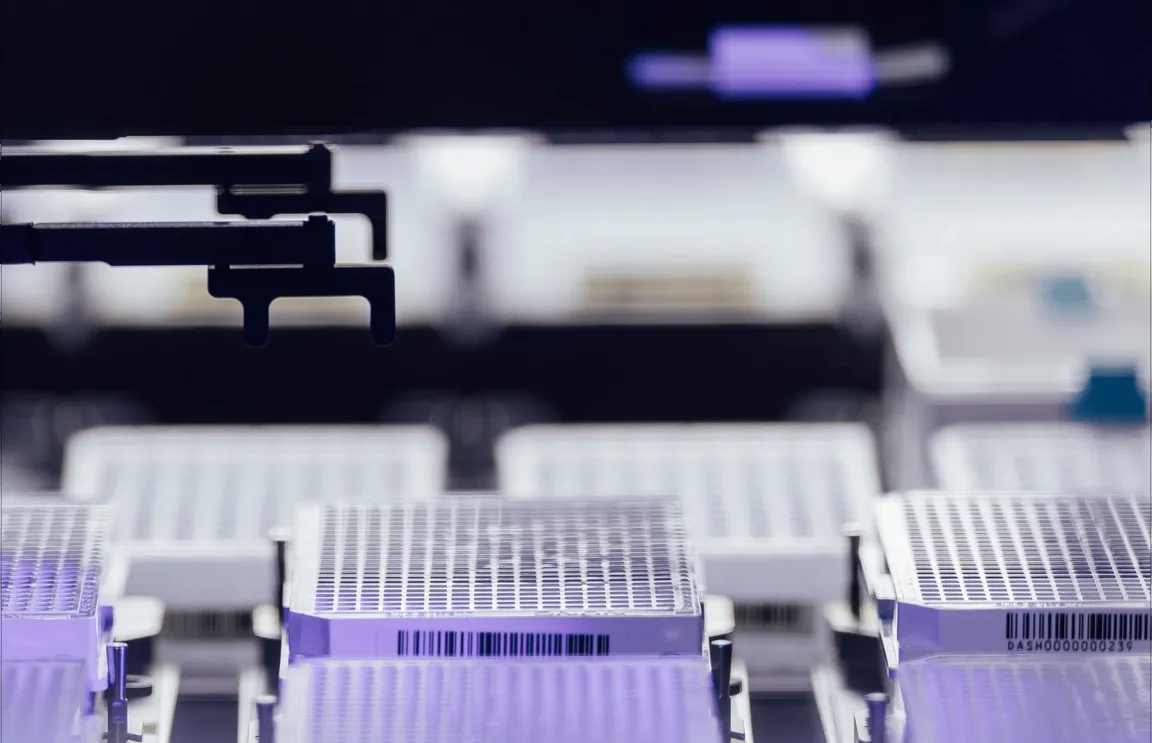
The published base price for ELISA or LC-MS analysis is $90 per sample; GLP/GCP work adds $30. Standard ELISA/MSD development starts at $7,000, while validation is listed at $35,000. Those are scoped offerings, with batch minimums and possible extras. A tiny project can therefore cost more per submitted sample than the headline rate suggests.
Dash says required retesting is included in analysis fees. Development carries a promise that customers pay only if the assay runs on its platform and meets agreed requirements. Paid-for assay intellectual property belongs to the customer; the automation platform belongs to Dash. For a sponsor, that makes method documentation and portability part of the purchase.
Quality is built into the stated workflow through locked assay parameters, audit trails and change controls. Automation’s value here includes repetition: executing the same validated procedure consistently. A fast answer becomes useful only when the developer can trust and document how it was obtained.
The queue grows when you succeed
In December 2025, Dash reported five assay platforms online and announced a move from its pilot lab to a 24,000-square-foot facility in Waltham. It also introduced self-service quoting. The combination is revealing: more laboratory capacity on one side, less purchasing ceremony on the other.
Total disclosed financing through August 2026
$6.5m seed + $11m additional financing + $30m Series A
Its August 2026 Series A, led by Oak HC/FT, brought total disclosed funding to $47.5 million. Dash then reported contracts with more than 30 customers, including four top-15 global pharmaceutical companies. Those figures suggest commercial traction; they do not establish profitability or independently verify its advertised turnaround advantage.
Established providers such as Charles River and BioAgilytix also offer bioanalytical development, validation and testing. Dash’s positioning rests on the combination of integrated automation, visible prices and guarantees. Buyers still need a method suited to their molecule, appropriate validation and an agreed delivery schedule. A shorter assay queue cannot shorten every biological process or guarantee that a drug works.
The proposition is nevertheless refreshingly inspectable. Read the menu. Define the result. Check the scope. Ask who bears the cost of rework. Somewhere between the robot and the invoice lies Dash’s real experiment: whether making laboratory work predictable can make buying it less of an ordeal.
Dash Bio · Pricing · Build a quote · LinkedIn
Johnson on laboratory queues · Tallett on the price tag · The founder interview · The Series A announcement