A liver has no particular interest in your algorithm. It responds to what reaches its cells, how those cells are arranged, and the conditions around them. For a company trying to predict whether a drug will harm a human being, that indifference is useful. Xellar Biosystems has built its business around giving biology a more convincing laboratory setting, then watching carefully enough to turn the response into data.
- Human tissue chips supply the experiments; imaging and AI help interpret them.
- OC-Plex combines dynamic 3D culture with a barrier-free microfluidic design.
- A published liver study provides an early test, while Sanofi backs vascular-toxicity research.
The idea sounds simple until one considers the equipment. Xellar brings together microfluidic engineering, cell culture, automation, high-content imaging and computational analysis. The customer is a drug researcher trying to decide which candidate deserves another experiment, which safety concern deserves attention, and which apparent success might disappear when the biology becomes more realistic. A flattering result from a poor model can be an expensive compliment.
The missing wall
Organ-on-chip is an awkward name for an elegant proposition. Put human cells inside a small device, give them an extracellular matrix and flowing culture medium, and reproduce selected features of the environment they would encounter in tissue. The aim is functional resemblance. A chip need not look like a liver to help investigate what injures one.
Xellar’s OC-Plex platform makes an unusually interesting choice about separation. Its cancer-chip research describes thermoplastic devices with channel geometry and surface treatment that confine hydrogel without porous membranes or micropillars. The cells get structure; neighbouring tissue compartments can interact without an artificial barrier between them. For questions involving invasion, movement or communication between cells, the layout belongs to the experiment as much as the drug does.
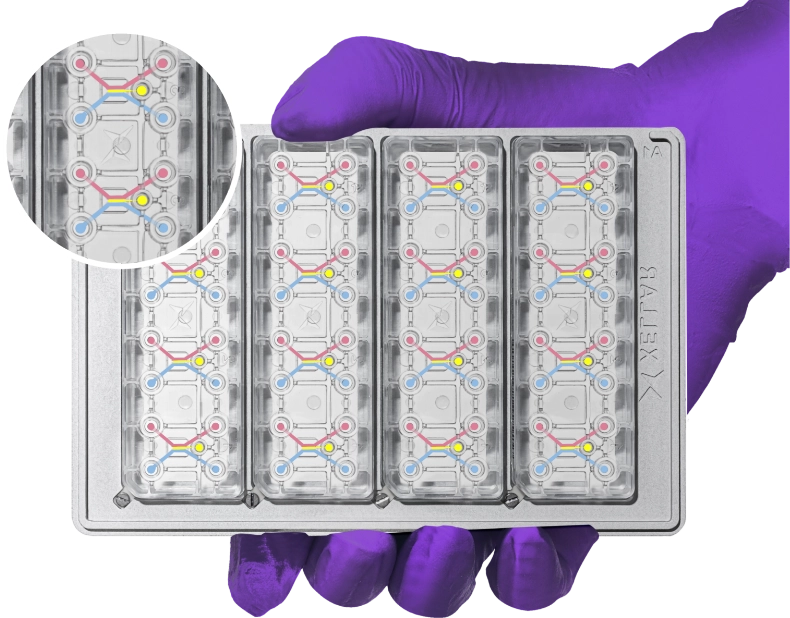
This is also a manufacturing argument. A beautiful laboratory device that resists repetition is a poor foundation for screening. Xellar’s earlier thermoplastic research examined selective polymer coating to guide hydrogel through microchannels, and demonstrated human hepatocyte culture under controlled flow for 14 days. Its later cancer work describes injection molding. The progression connects a biological ambition to a mundane requirement: making another chip that behaves like the previous one.
A liver result with a denominator
The company’s liver study makes the proposition tangible. Published online in December 2025 and appearing in Toxicology in 2026, it introduces a drug-induced liver injury model using OC-Plex. Primary human hepatocytes retained viability and metabolic competence. Researchers measured responses through six readouts, including albumin, urea, mitochondrial function and cell viability. A liver’s opinion can arrive in several forms.
The proof of concept tested 17 compounds, including drugs and cosmetic ingredients. For the evaluation described around 13 compounds with known human toxicity liabilities, the abstract reports 85.7% sensitivity, 100% specificity and 92.3% accuracy. Those figures make the paper worth reading. They describe performance within a defined experiment; they do not settle how every future compound, donor or disease will behave.
The authors themselves frame broader replacement of animal testing as a prospect requiring development and validation. That distinction matters for a buyer. A model earns trust for a particular question, under particular conditions. The useful conversation concerns the cells, exposure, endpoints and reproducibility that match the customer’s decision. One percentage cannot perform all those jobs.
Four jobs, one experiment
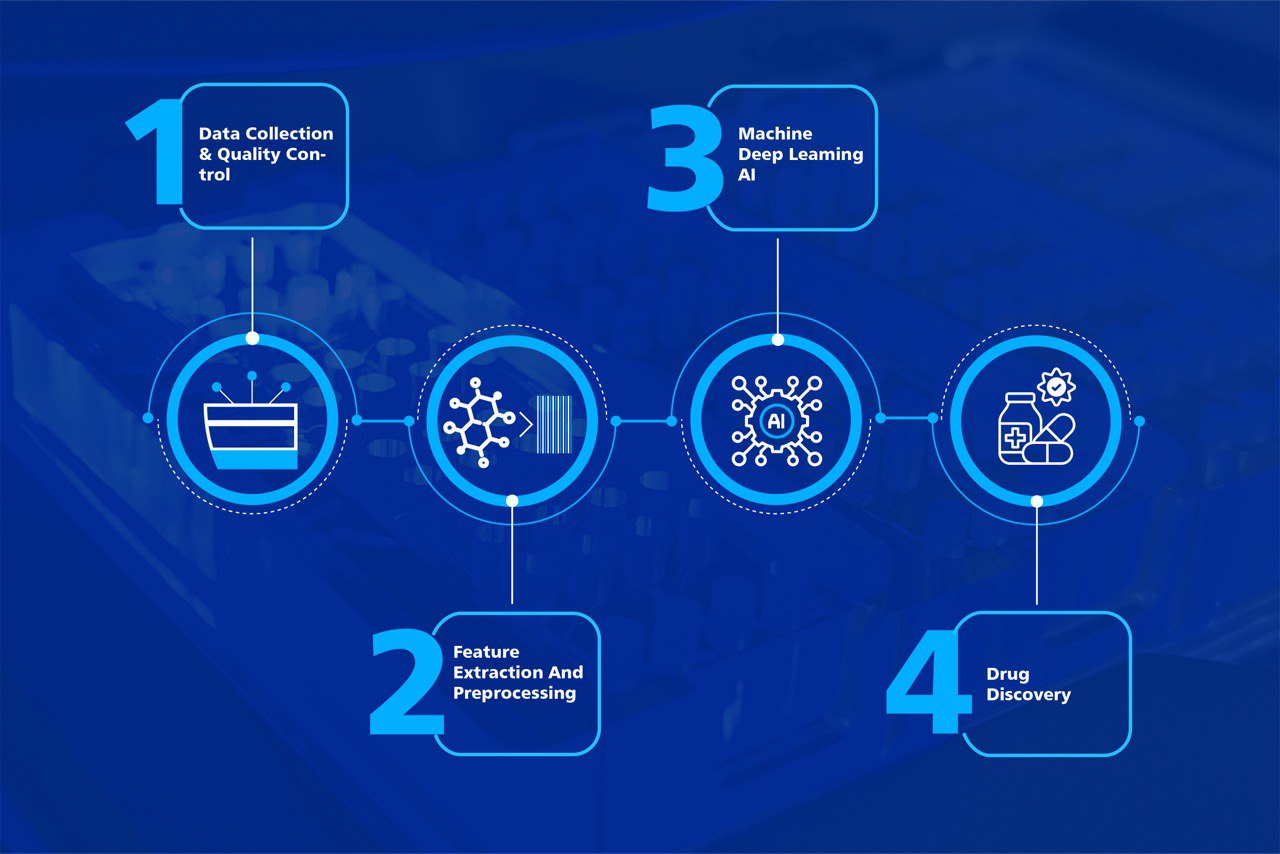
Xellar calls its integrated platform E.P.I.C.: Engineering, Preclinical, Imaging and Computation. The acronym is cheerful; the sequence is practical. Engineering creates the device. Preclinical biology supplies the model. Imaging captures cellular responses. Computation analyses and integrates the measurements. The company presents these activities as a feedback cycle, with experiments generating data that inform subsequent modeling and investigation.
Its 2026 cancer-chip paper adds a clever imaging detail: a deep-learning model predicts fluorescence staining from bright-field images. That supports repeated, label-free phenotypic analysis over time. Researchers can examine changes in cellular appearance and drug response rather than relying only on an endpoint stain. The study uses cancer cell lines and patient-derived cells, connecting the instrument to functional precision-oncology research.
For a pharmaceutical team, Xellar offers several entry points. Its listed models cover tumors, vascular effects, liver injury and kidney toxicity. Tumor models can include immune-cell co-culture; vascularized models address penetration and angiogenesis. The company also offers custom R&D and patient-derived tumor modeling. This is a business serving laboratories, with products and research work shaped around the question being asked.
Sanofi asks about blood vessels
In February 2025, Xellar announced a sponsored research collaboration with Sanofi to develop organ-chip models for vascular toxicity assessment. Funding came through Sanofi’s iDEA-TECH Awards. The specificity is instructive: the partnership has a defined safety problem. It illustrates how a large drug developer can explore a new experimental method without treating the entire platform as a finished answer.
Xellar competes in a field that includes Emulate, MIMETAS and CN Bio, alongside established cell cultures, organoids and animal studies. Its emphasis sits at the intersection of barrier-free chip engineering, scalable experimentation and image-based AI. Buyers have to compare fit, workflow and evidence for their own application. The charm of the concept cannot substitute for the quality of the assay.
The money follows the measurements
In June 2026, Xellar announced $50 million in combined Series A and A+ financing. It said the funding would expand automated biological data generation, strengthen AI and computational-biology teams, and advance virtual-cell technologies. The proposed destination is a “3D Bio Intelligence” platform connecting experimental biology to predictive computational models.
“AI alone will not revolutionize drug discovery.”Xin Xie, cofounder and CEO
There is a portable lesson here for anyone building an AI business: examine how the data are made. Xellar’s bet places the measuring apparatus beside the model, with engineers, biologists and imaging specialists sharing the problem. The company’s future depends on whether that arrangement produces useful decisions beyond its initial studies. For now, the revealing object is the chip: a small piece of engineering asking biology a better question.