A drug can cure a mouse and still do nothing for a person. That grim little translation problem has swallowed years, budgets and plenty of promising molecules. Viscient Bio, a privately held San Diego biotech founded in 2017, has built its company around a blunt response: stop asking another species to deliver the final word on human disease.
Its alternative is a piece of living human liver tissue made in the lab. The construct is tiny - roughly three millimeters across in one format described by founder Keith Murphy - but biologically crowded. Hepatocytes sit alongside stellate cells, sinusoidal endothelial cells and macrophage-like Kupffer cells. Put them in three dimensions and the cells can form relationships that a flat plastic dish erases. In liver fibrosis, where collagen threads through tissue, geometry is not decoration. It is part of the disease.
Viscient uses these tissues as both microscope and audition room. First, the team compares healthy and diseased donor cells, then studies gene expression and other molecular data to find pathways associated with progression. Next, it tests compounds against a visible endpoint such as fibrosis. The commercial bet is that a model with more human context can help select targets and medicines that have a better chance of surviving clinical trials.
The old proxy failed first
The target disease is metabolic dysfunction-associated steatohepatitis, now called MASH and formerly NASH. It is the inflammatory, fibrotic form of fatty liver disease. Drug developers have repeatedly produced candidates that looked persuasive in preclinical work and disappointed in people. Viscient argues that the species gap is a major culprit: an animal can be engineered to display something resembling a human condition without recreating the network of human cells and signals that drives it.
Flat cell culture is faster, cheaper and beautifully repeatable, but cells touching plastic do not behave like cells surrounded by other cells. Murphy’s turning point came from earlier work in which a 3D liver model exposed to methotrexate developed the characteristic bridging patterns of fibrosis seen in clinical samples. The result suggested these tissues could do more than flag toxicity. They might reproduce enough disease biology to support discovery.
“You’re trading off a little complexity for throughput.”Keith Murphy, describing where 3D models fit in drug discovery
That tradeoff defines the company. Bioprinted tissue is not a sensible replacement for every well in an early screen of hundreds of thousands of molecules. Viscient’s opportunity appears later, when a team has perhaps six to ten candidates and the next decision gets expensive. At that point, speed matters less than choosing the molecule whose behavior is most likely to translate.
The Viscient loop / from donor to decision
A model earns trust by calling old games
The smartest part of Viscient’s validation strategy is easy to miss. Before asking anyone to trust a novel prediction, the company ran drugs with known clinical histories through its finalized MASH model. In a 2023 announcement, it said the tissue showed fibrosis reduction for resmetirom and obeticholic acid, both associated with clinical efficacy signals, while showing no reduction for cenicriviroc, selonsertib and elafibranor, programs that failed in Phase 2 or Phase 3. These were retrospective tests, not prospective clinical proof, but they gave the model a hard answer key.
Fibrosis response in Viscient’s model / company-reported
The more durable evidence arrived in 2024. A peer-reviewed study made 3D tissues from primary liver cells of healthy donors and donors with MASH. The diseased-donor tissues developed more fibrosis without an extra chemical trigger. The model preserved several recognizable features of human disease, while experiments helped tease apart the roles of stellate and sinusoidal endothelial cells.
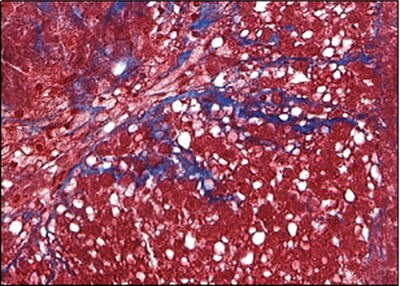
The paper matters because it separates platform rhetoric from a reproducible biological result. It does not prove that Viscient’s own drug will work in people. It shows that the tissue can express a disease-linked phenotype and that specific cell populations influence it. For a preclinical model, that is a credible job description.
Two founders, one awkward handoff
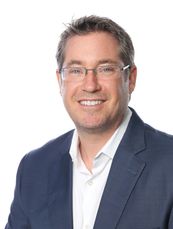
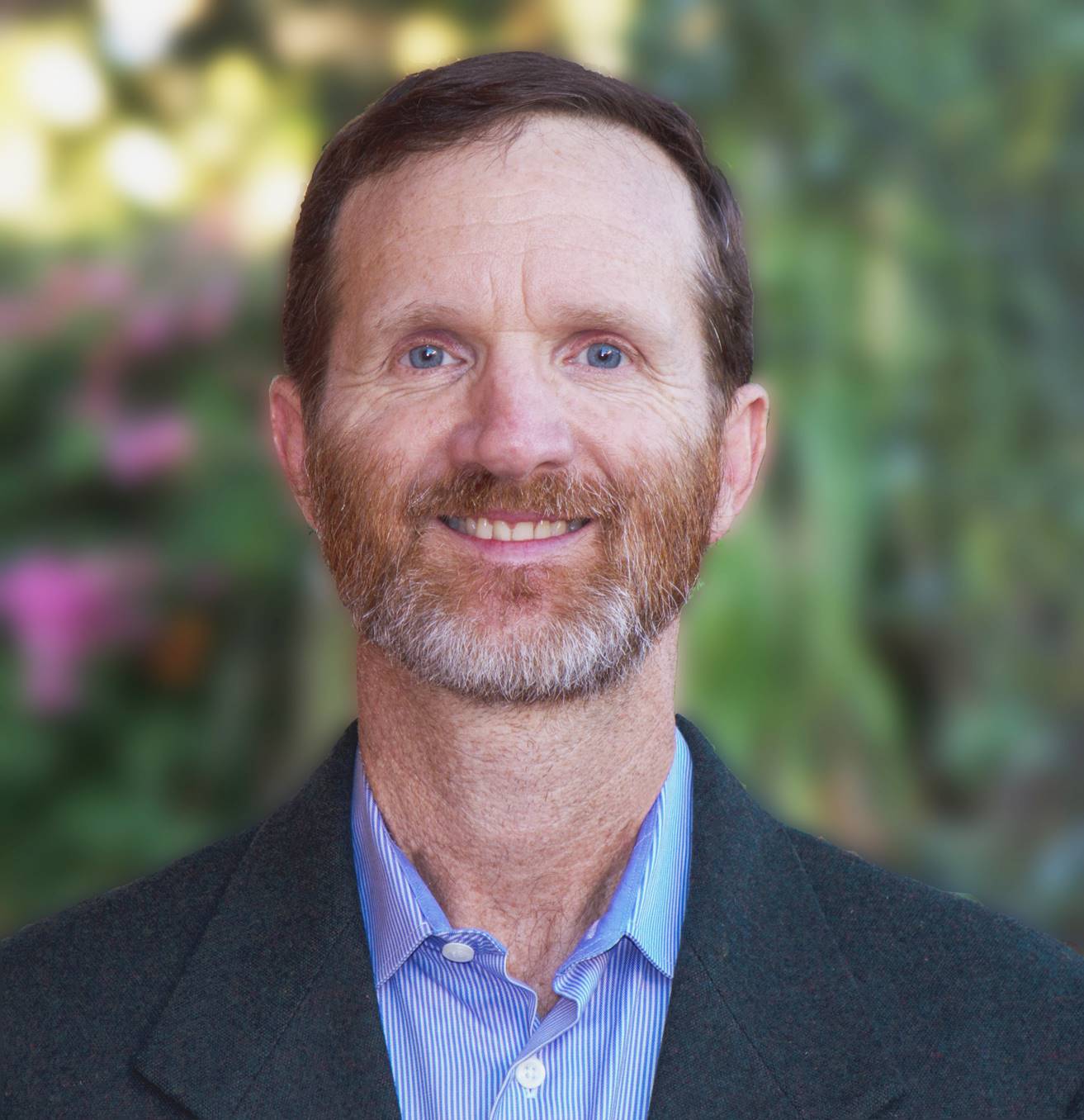
Viscient’s founders bring complementary scar tissue. Murphy co-founded Organovo, helped invent its NovoGen MMX bioprinter and spent a decade at Amgen, including work on the medicine sold as Prolia and Xgeva. Jeffrey N. Miner, the chief scientific officer, led discovery biology at Ardea Biosciences and Ligand Pharmaceuticals. Murphy knew how to build tissue; Miner knew how a target becomes a drug program.
The company also kept practical ties to Murphy’s former venture. Starting in 2018, Viscient bought research services and human-cell products from Organovo. A 2019 transaction covered bioprinting equipment and a non-exclusive patent and know-how license for about $171,000. The preceding research quote totaled $149,000 after an amendment. Later agreements covered shared facilities, histology, cell isolation, bioprinter training and qPCR work.
Those disclosed numbers answer part of the cost question. The larger bill - medicinal chemistry, toxicology, manufacturing and clinical development - is not public. Funding records supplied for the company show a $1 million debt financing in 2021, while regulatory filings also identify investors in a convertible note, including Adam Stern, Douglas Jay Cohen and David Gobel through Methuselah organizations. Revenue and valuation remain private.
The business model is closer to a drug company with a proprietary instrument than a lab-service shop. Viscient says it can use the platform to discover original targets, advance its own medicines, in-license candidates and find repurposing opportunities. Research services and partnerships can put the tissue to work for others, but the larger upside sits in owning or sharing therapeutic assets.
A drug emerged; the clinical receipt did not
In May 2023, Viscient announced an unnamed oral small molecule aimed at a novel target expressed predominantly in liver tissue. The target came from its 3D models, and the compound reduced fibrosis in those models. The company called the preclinical candidate well tolerated and expected it to enter the clinic in 2024.
Public materials reviewed for this profile do not establish that it entered a registered human trial. That distinction is the entire story. A platform can reproduce disease, rank historical compounds and generate an attractive candidate, yet clinical validation remains a separate crossing. The model is designed to improve the odds, not repeal pharmacology, toxicology or the complexity of an intact human body.
Viscient’s public site also said it was preparing one internally developed drug for Phase 1 and bringing in a second drug for Phase 2 studies in 2024, without naming either. Treat those as stated plans, not completed milestones. Biotech calendars are hypotheses with dates attached.
The copyable playbook is narrower than the science
Founders outside biotech should ignore the literal printer and copy the decision architecture. Viscient picked a failure-prone workflow, identified the expensive handoff, built a higher-fidelity test for that moment and calibrated it against known outcomes. It began with one disease and one phenotype that could be seen, stained and measured. The platform story came after the wedge.
- Choose the decision where a false positive costs the customer the most.
- Build the smallest realistic model that preserves the mechanism you need.
- Freeze the model before testing it against historical wins and failures.
- Use the expensive, high-fidelity tool late enough that throughput no longer dominates.
- Turn insight into an owned asset; do not stop at selling the instrument.
The approach breaks under clear conditions. If the disease depends on immune organs, circulation, hormones or exposures the tissue does not include, a liver-only model may miss the decisive interaction. Primary donor cells add human variation but can make manufacturing and reproducibility harder. A beautiful fibrosis signal may be irrelevant if a compound cannot reach the liver safely. And a model built for MASH must earn validation again before anyone trusts it in another disease.
Viscient is therefore best understood as a focused biotech operating where drug discovery, tissue engineering and enterprise research meet. Its customers and partners are the teams trying to choose targets and compounds; its competitors range from mice and flat cell plates to organ-on-chip companies, spheroid vendors and other bioprinting platforms. Its differentiator is ambition: use the model not only to sell a test, but to make the medicine.
The company has not yet published the ultimate result - a Viscient-originated drug succeeding in patients. What it has produced is a respectable intermediate proof: diseased human cells assembled into a tissue that behaves enough like diseased human liver to reveal fibrosis, interrogate pathways and challenge compounds. In an industry skilled at spending fortunes on confident guesses, a better-timed no could be a very good product.