- Parallel Bio grows immune organoids from donated human tissue, then uses them to test therapies before clinical trials.
- Its customers are pharma and biotech R&D teams; eight partners had tested more than 50 compounds by mid-2025.
- The company says its biobank covers 170+ donor backgrounds and its results show 87% concordance with human outcomes.
- A $21 million Series A funds lab automation, AI, hiring and more partner programs.
- The important limit: an organoid is a useful model of immune tissue, not a whole human body.
In 2006, six healthy men walked into a London hospital to test an experimental immune drug called TGN1412. The drug had behaved in animals. It had even been given to monkeys at doses far above the human dose. Then, within 90 minutes, all six volunteers were critically ill. Their immune systems had erupted in a cytokine storm. Nearly two decades later, Parallel Bio put the same drug into its lab-grown human immune model. The dish produced the dangerous response the animals had missed.
That retrospective experiment is a neat piece of evidence, not a regulatory coronation. But it contains the whole Parallel Bio argument in miniature. Drug development does not suffer from too little testing. It suffers from an awkward order of operations: first ask an animal, spend years and enormous sums, and only then ask a human.
Parallel Bio wants to move the human question forward. The Brisbane, California company grows three-dimensional immune organoids from donated tissue. Its first systems model lymph nodes and the spleen, the places where immune cells meet, organize and decide whether a foreign thing deserves an attack. A drug can be added. The organoid responds. Cells activate, antibodies emerge, and an experiment that would be ethically impossible in a person becomes observable on a plate.
“What’s missing in early-stage development is testing in humans.”Ari Gesher, former head of technology, describing the premise behind the platform
The useful trick is not miniaturization
A tiny lymph node makes a good picture. The deeper trick is repeatability. If a researcher gives a medicine to a patient, there is no untouched copy of that patient available for the control arm. Parallel Bio can generate multiple organoids from the same donor, hold the biology steady, and expose each copy to a different dose or treatment. The experiment branches while the underlying immune background stays constant.
Then the company repeats the exercise across a population. Its biobank now represents more than 170 donor backgrounds spanning age, sex, ethnicity, genetics and disease state. One compound is no longer facing one tidy lab organism. It is meeting many versions of human immunity early enough for a development team to change course.
These are company-reported figures, and the 87 percent deserves the usual scientific follow-up: which compounds, which outcomes, which endpoints, and how did the model perform when nobody knew the answer in advance? Yet the operating pattern matters. The platform is no longer a single academic curiosity. By June 2025, eight pharmaceutical partners, including three Fortune 500 companies, were using it.
A service business that keeps the receipts
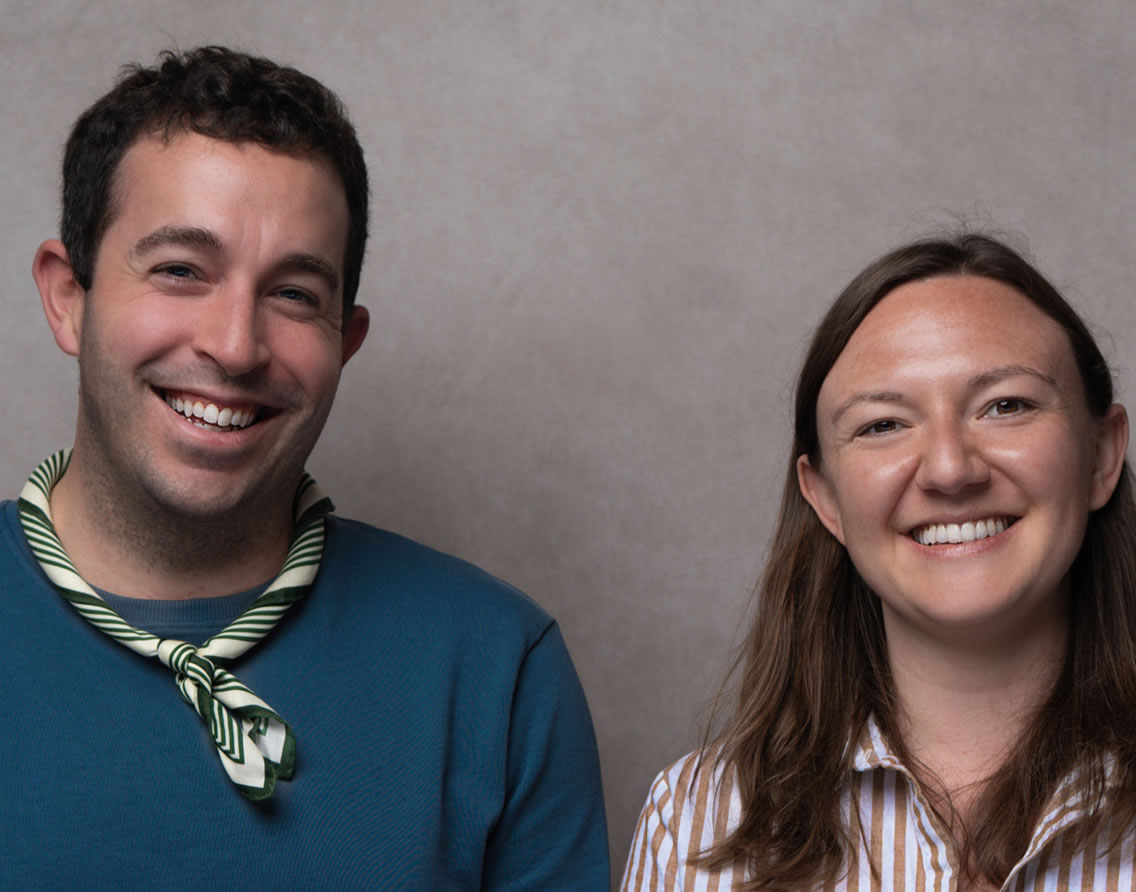
Robert DiFazio came from systems immunology and research strategy at Stanford. Juliana Hilliard had worked on adapting brain organoids for high-throughput drug discovery. They founded Parallel Bio in San Francisco in 2021, during the pandemic, and entered Y Combinator with the phrase “human immune system in a dish.” It was wonderfully legible. The difficult part was making a living system reproducible enough that a pharmaceutical company could use it to make a costly decision.
Their first commercial answer was Clinical Trial in a Dish, launched in 2024. A partner brings a vaccine, immunotherapy or other candidate. Parallel designs a study across immune organoids, runs the work and analyzes the response. The customer buys an earlier look at safety, efficacy and variation across people. Parallel keeps learning from every perturbation.
This is where the company differs from a straightforward contract lab. Each paid project can add another layer to a proprietary atlas of immune response. The organoids generate the signal. Robotics makes the work repeatable and high-throughput. Computation helps connect a molecular intervention to a pattern across donors. If the loop works, the service funds the dataset and the dataset improves the next service.
Centivax offered an early public example. Parallel tested Centi-Flu, a proposed universal flu vaccine, in immune organoids from adults with prior flu exposure. The company reported broad B-cell reactions across strains and activation of both CD4+ and CD8+ T cells. That evidence did not prove the vaccine would succeed in people. It answered a narrower and valuable question: does this human immune tissue show the breadth of response worth carrying into a real trial?
The first thing that failed was the old premise
Parallel Bio did not begin with a dramatic internal drug failure. The failure that changed the founders’ minds belonged to the industry: medicines repeatedly looked good in preclinical models and then failed in people. The company cites development costs of roughly $2.6 billion and 12.5 years per approved drug, with clinical failure rates above 95 percent. Its own ambition - cutting billions and years from development - remains a target, not a settled result.
The strategy has changed in a more practical way. Parallel initially planned to validate the platform on other companies’ products before developing its own. It did exactly that. Four years of partner work produced commercial demand, comparison data and, presumably, enough confidence to begin internal programs in cancer and autoimmune disease in 2026. This is the expensive turn: a toolmaker becoming a drugmaker.
Investors financed the turn in stages. A $4.3 million seed round in 2022 helped move Clinical Trial in a Dish toward launch and the first five pharma relationships. AIX Ventures led a $21 million Series A in June 2025, joined by Amplo, Marc Benioff and returning backers including Jeff Dean. Parallel said it had raised nearly $30 million in total. The money is going into AI, automation, scientists, engineers and more partner programs - the unglamorous machinery required to make delicate biology run like a platform.
The model has edges
Organoids are not organs, and organs are not bodies. They do not reproduce every vascular, metabolic, neurological or long-term systemic effect. Donor tissue varies; culture conditions vary; assays need controls and independent validation. The approach is strongest when the immune mechanism is central, the tissue model is well characterized and the decision can be tied to a measurable response. It is weaker when toxicity depends on several interacting organs, long exposure or biology the dish does not contain.
What another builder can copy
The interesting playbook here is not “add AI to biology.” That phrase explains almost nothing. Parallel’s choices are more specific, and more portable:
- Find the missing measurement. Parallel focused on human immune response at the moment when drug teams still have time to abandon a bad candidate.
- Turn variability into the product. Donor diversity is not noise to average away. It is the basis for seeing who responds, who does not and who may be harmed.
- Sell the first loop before owning the whole outcome. Partner studies created revenue, validation cases and data before Parallel accepted the cost of developing its own medicines.
- Automate after experts define the process. Biologists establish what good work looks like; robotics then makes that work consistent, traceable and available around the clock.
The company sits in a crowded and still-forming market. Emulate, CN Bio and MIMETAS build organ-on-chip systems. Vivodyne grows larger, vascularized tissues. Traditional contract research organizations remain familiar, validated and deeply wired into pharma. Parallel’s wedge is the immune system: repeatable lymph-node biology across a donor population, joined to an accumulating dataset rather than sold only as lab hardware.
Regulation is becoming friendlier without becoming easy. The FDA’s 2025 roadmap encouraged organoids, organ chips and computational models as alternatives in some drug programs, beginning with monoclonal antibodies. Encouragement is not automatic acceptance. Every model still has to prove that it is fit for the decision being made.
That may be the best way to understand Parallel Bio. It is not promising a perfect miniature person. It is offering a better-timed encounter with human biology - early enough to stop a poor bet, broad enough to notice that patients differ, and repeatable enough for software and robots to learn from the result. A small dish cannot contain a human being. It may still contain the reason a drug should never reach one.