The most interesting thing about Navrogen is not its lead cancer drug. It is the annoyance that produced it. Years ago, researchers working on an antibody called amatuximab saw a pattern in mesothelioma patients: people with higher levels of CA125 tended to fare worse. CA125 was familiar as a cancer marker. But the team’s experiments suggested it was not merely standing around holding a sign. It was binding to the therapy and interfering with the immune work the antibody was supposed to recruit.
That observation is the seed of Navrogen, a small, privately held biotechnology company in Cheyney, Pennsylvania. Co-founders Nicholas Nicolaides and Luigi Grasso had spent years together at antibody developer Morphotek, which Eisai acquired in 2007. When they started Navrogen in 2018, they carried forward an unfashionably practical question: why do apparently sensible antibody medicines lose potency in the messy neighborhood around a real tumor?
Their answer is a category they call humoral immuno-oncology, or HIO. The label covers antibody- and complement-driven cancer killing, plus the tumor-produced factors that suppress it. T-cell immunotherapy gets most of the cocktail-party conversation. Navrogen has chosen the antibody end of the room, where molecules including CA125 and ICAM-1 may jam binding, immune recruitment or drug internalization.
A drug can find the address and still lose the fight
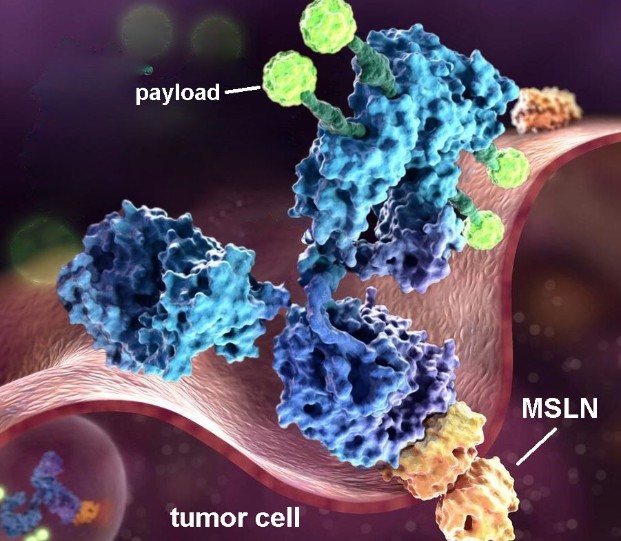
Antibodies are good at recognition. One end binds a feature on a cancer cell; the other can call in natural-killer cells and complement proteins. An antibody-drug conjugate, or ADC, adds cargo: bind the target, enter the cell, release a toxic payload. The tidy diagram makes it look like molecular parcel delivery.
Tumors do not respect tidy diagrams. Navrogen’s work argues that soluble factors in the tumor microenvironment can attach to therapeutic antibodies. CA125 can hinder immune-effector interactions and reduce internalization of some ADCs. ICAM-1 can also bind certain IgG1 antibodies and suppress their function. The target may be present. The drug may reach it. Yet the surrounding biology changes what happens next.
The company attacks that problem from two directions. Its HIO screening platform looks for antibodies that are naturally less vulnerable. Its Block-Removed Immunoglobulin Technology - BRITE, inevitably - maps and replaces the amino-acid region responsible for binding an inhibitory factor. One route picks a molecule that ignores the interference. The other edits out the molecular handhold.
“Implementing HIO screening into ADC development is another feature that may further improve the efficacy of this class of anti-cancer therapeutics.”Nicholas Nicolaides, co-founder and CEO
Two ways around the barricade
NAV-001 is the cleanest expression of Navrogen’s idea. It is a mesothelin-targeting ADC selected to resist CA125 inhibition. Mesothelin is overexpressed by several solid tumors, including mesothelioma and subsets of lung, pancreatic and ovarian cancers. In published preclinical studies, NAV-001 carried a topoisomerase II-inhibiting payload and produced tumor responses in patient-derived xenograft models. Those are mouse models built from human tumor tissue - informative, but several hard steps short of a medicine.
NAV-006 applies BRITE to a familiar drug class. Rituximab targets CD20 on malignant B cells, but Navrogen found that CA125 binds the antibody and suppresses its killing activity in laboratory tests. The company removed the CA125-binding site to produce a next-generation anti-CD20 antibody for HIO-positive non-Hodgkin lymphoma. A 2023 collaboration with the National Cancer Institute is studying CA125 levels and treatment response in Hairy Cell leukemia, a useful bridge between Navrogen’s mechanism and actual patient samples.
Then there is NAV-005, the opposite maneuver. Instead of changing every susceptible antibody, NAV-005 is designed to bind CA125 itself and block its suppressive effects. A 2026 peer-reviewed paper reported restored antibody-dependent and complement-dependent killing, plus improved ADC activity, in preclinical systems. If that approach translates, an antagonist could potentially rescue more than one partner drug. It could also complicate development: combination studies, patient selection and dose design tend to multiply the number of ways a trial can become expensive.
Selected public pipeline · relative maturity
The broader roster includes NAV-003, a mesothelin-CD3 bispecific; NAV-201, a small molecule meant to activate natural-killer cells through CD16; and NAV-004, a CD25-directed immunotoxin aimed at regulatory T cells. Eight programs are a great deal for a company LinkedIn places in the two-to-ten-person band. Read the number as evidence of a reusable discovery engine, not eight near-term launches. Most sit in discovery or preclinical development.
A platform looking for its commercial shape
Navrogen has no approved product and discloses no commercial customers. Its users today are its own scientists and research collaborators. Eventual customers would be oncologists treating biomarker-selected patients, but the nearer commercial audience is more likely a pharmaceutical partner willing to license, co-develop or apply the platform to an antibody portfolio.
The capital history is modest by oncology standards. A 2019 financing was reported at $3.2 million, with Ben Franklin Technology Partners attached. A seed preferred-stock offering that began in 2021 had sold about $9.06 million by a February 2023 SEC amendment, across 20 investors; Tellus BioVentures has been publicly identified with the seed round. A 2024 Form D reported another $542,000 convertible note. The filings are not additive in a perfectly clean way, so they should be read as financing events, not a tidy cash ledger.
What did the work cost? Publicly visible private financing reaches into the low eight figures, alongside undisclosed grant support and in-kind value from collaborations. That is enough to build assays, publish papers, secure patents and move a lead program toward clinical preparation. It is not proof that Navrogen can fund human trials alone. Oncology manufacturing, toxicology and dose-escalation studies can make a small-company budget disappear with impressive speed.
What changed their minds
Clinical response data suggested elevated CA125 was not background noise. Mechanistic work showed it could bind an antibody and suppress function.
What failed first
Not the target-recognition idea. The observed weak point was the therapy’s performance in patients carrying more of an inhibitory tumor factor.
The useful idea is a design constraint
Navrogen’s competitors are not one neat set. NAV-001 enters a crowded field of mesothelin-targeted ADCs and bispecific antibodies. NAV-006 must eventually justify itself beside rituximab, obinutuzumab and other CD20 therapies. The platform also overlaps with companies improving Fc biology, engineering ADC behavior and attacking immune suppression in the tumor microenvironment.
Its difference is narrower and more interesting: Navrogen makes susceptibility to HIO factors a screening criterion. Conventional optimization may focus on target affinity, payload potency, stability, toxicity and manufacturability. The company adds another question - does something made by the tumor bind this molecule and blunt what it needs to do?
That is the part another builder can copy. When a product works in a clean test but disappoints in the field, do not only increase potency. Compare responders with nonresponders. Identify environmental interference. Build a test for it. Then turn the interference into a product requirement. Navrogen’s loop runs from clinical observation to assay, from assay to engineering, and from engineering back toward a diagnostic that can select the patients most likely to benefit.
The company is not building for an idealized tumor. It is building for a tumor that fights back.
Where the thesis can break
The approach only matters when the tumor expresses the therapeutic target and the relevant HIO factor is present at a level that changes treatment response. A CA125-refractory antibody offers little extra value if CA125 is not the problem. A mesothelin ADC cannot help a tumor without enough mesothelin.
There is also the translation gap. Cell assays and mouse xenografts simplify immunity, dosing and toxicity. Engineering away one interaction can introduce another problem in circulation, manufacturing or safety. Finally, a biomarker must be reliable enough to sort patients before the platform’s precision becomes commercially useful.
Patents make a moat. Patients make a company.
Navrogen has accumulated the encouraging middle pieces: peer-reviewed publications, a National Cancer Institute collaboration, experienced antibody developers and patents in the United States, Europe, Japan and China. In 2025 and 2026, those patents expanded around HIO-refractory formats, NAV-001 and the NAV-005 antagonist. The company is converting a scientific thesis into defensible assets.
The missing piece is clinical evidence. Navrogen’s public pipeline remains preclinical. No patient has yet established that screening for humoral suppression, editing away an HIO-binding site or blocking CA125 will improve survival, response or tolerability. That is not a footnote; it is the central risk.
Still, there is something refreshingly grounded about the company’s origin. The founders did not begin with a slogan and hunt for biology. They followed a frustrating clinical pattern, asked what molecular behavior could explain it and built tools around the answer. The resulting pipeline may succeed as proprietary drugs, a partnering platform or some combination of the two. It may also discover that the tumor has more escape routes than a small company can block.
For now, Navrogen occupies a precise corner of oncology: after the antibody finds its target but before the job is done. That sliver is easy to overlook on a pipeline chart. In a patient, it may be where the whole outcome changes.
Continue exploring