The Chemist Who Wants to Build a Kinder Cancer Drug
He spent 25 years learning how cancer drugs fail. Now he is running a company built on the idea that the next generation can be safer, steadier, and easier to live with.
There is a phrase in oncology that sounds clinical and is really about suffering: the therapeutic window. It is the gap between the dose of a drug that helps a patient and the dose that harms one. For a lot of cancer medicines, that gap is narrow. The dose that shrinks a tumor is close to the dose that makes a person too sick to continue. So the dose gets lowered. Or paused. And the cancer, which does not take breaks, notices.
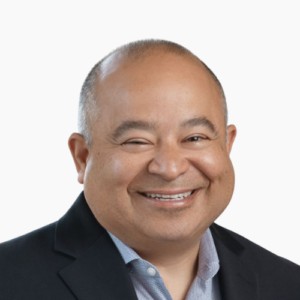
Mohit Trikha has spent 25 years inside that problem. He is a biochemist by training and, since April 2026, the chief executive of Kivu Bioscience, a clinical-stage company in San Mateo, California, building the next generation of antibody-drug conjugates for solid tumors. His pitch is refreshingly unfancy for an industry that loves a moonshot. He wants to make cancer drugs that patients can actually stay on.
"We want to make kinder, gentler, and more efficacious ADCs."Mohit Trikha
The unglamorous path
Trikha did not arrive here on a marquee resume. He earned a bachelor's in biochemistry from California State University, Los Angeles, then a Ph.D. in biochemistry and molecular biology from the University of Southern California. From there it was decades of the actual work - the slow, unphotogenic labor of moving a molecule from an idea on a whiteboard toward something a doctor can prescribe.
That work took him through some of the biggest names in the business. Early roles at Genentech and at Centocor, later part of Johnson & Johnson. A stretch at Triphase Accelerator. A turn as a venture partner at Apple Tree Partners. And a defining run at AbbVie, where he served as vice president and head of oncology early development and site head of AbbVie Bay Area, shepherding discovery-stage programs across antibody-drug conjugates, bispecific antibodies and CAR-T therapies toward clinical proof of concept.
Add it up and you get a career measured in programs, not press releases. He has helped push more than 40 oncology programs from target identification into the clinic, published more than 40 papers, filed patents, and stood on the podium at the field's big meetings - AACR, ASCO, ASH, EHA. His fingerprints are on approved medicines including Kadcyla, Polivy, vismodegib, Sylvant and Emerilis. If you want to know how cancer drugs succeed, and more usefully how they fail, he is a decent person to ask.
What an antibody-drug conjugate actually is
Strip away the jargon and an antibody-drug conjugate is a targeting system bolted onto a poison. The antibody is the guidance - it recognizes a marker on a tumor cell. The payload is a potent, cell-killing drug. A chemical linker holds the two together and is supposed to let go only once the package has reached its target. Done well, it is chemotherapy with an address label. Done poorly, the payload leaks early, the linker frays in the bloodstream, and healthy tissue takes the hit. The result shows up in the clinic as toxicity, dose reductions, and treatments people cannot finish.
Why "kinder" is also "more effective"
Illustrative. The argument: a patient who tolerates the dose is a patient who keeps taking it - which is where the response and its durability come from.
This is the crux of the Kivu thesis, and of Trikha's whole worldview. Safety is not the opposite of efficacy. In his telling it is the engine of it. "By keeping patients on a higher and tolerable dose," he has said, "we allow the patient to get a response." A drug the body can live with is a drug that stays in the fight. The safest dose, in other words, is often the one nobody has to stop taking.
Lessons from altitude
Ask Trikha about how he runs a team and he reaches for the mountains. He draws his management style from high-altitude hiking, where the guiding rule is that no one gets left behind. In a lab, that translates into a flat, cross-functional way of working - sites, contract researchers, investigators and staff scientists pointed at the same outcome, with titles treated as secondary to accountability.
"No one gets left behind. Our mantra is that cancer patients are waiting."On how Kivu works
That mantra is not a poster-board slogan for him. It is a clock. It explains one of the more revealing decisions Kivu has made: running early trials in Australia, chosen for speed rather than cost. His reasoning is blunt and, once you hear it, hard to unhear.
"Money I can find, but no one can give me time back."Mohit Trikha
It is a sentence that tells you how he weighs almost everything. Capital is a renewable resource. A patient's time is not. In an industry where speed is usually framed as an operational metric, Trikha treats it as closer to a moral one.
The climb, briefly
Research and drug-development roles at Genentech and Centocor / Johnson & Johnson.
VP and head of oncology early development at AbbVie; site head of AbbVie Bay Area, across ADCs, bispecifics and CAR-T.
Leadership at Triphase Accelerator; venture partner at Apple Tree Partners.
Joins Kivu Bioscience; the company closes a $92M Series A.
Named chief executive officer, stepping up from president and COO.
When the board named him CEO, chair Daniel O'Connell called it "a natural next step for Kivu as we enter an accelerated phase of growth." Trikha's own reaction was measured: "I'm honored to step into the CEO role at Kivu Bioscience at such an important moment for the company." The move lined up with the pipeline - a lead program advancing while a second and third ADC candidate queue up behind it.
The company he keeps building
Kivu is small on purpose - around 25 people, a $92M Series A raised in late 2024, and a deliberately narrow focus on getting the chemistry right. The pitch to recruits, investors and, most of all, patients is not that Kivu has invented a miracle. It is that the company has picked the least glamorous, most consequential problem in the category - the therapeutic window - and refused to look away from it.
There is something quietly contrarian in that. Biotech loves the language of breakthroughs. Trikha keeps returning to a humbler word: tolerable. A tumor drug that works but wears the patient out is, in the arithmetic that matters, only half a drug. Widen the window, keep people on a full and effective dose, and the same molecule can do more. That is the bet. Twenty-five years of watching the alternative is the reason he is willing to make it.
"You're working for the patients and the project."Mohit Trikha
He frames the whole enterprise as a relay against a clock nobody controls. The team is roped together. The mantra is on the wall. And somewhere in a trial, a patient is waiting for a dose that does not force a choice between fighting the cancer and getting through the week. If Kivu works, that is the thing it will have built - not a headline, but a treatment people can live with long enough for it to matter.