The most important object inside Lumen Bioscience is not a gleaming stainless-steel tank. It is a green corkscrew of life that health-food shoppers have sprinkled into smoothies for years. Spirulina is cheap, rich in protein and cultivated as food. It is also, in the words of co-founder Brian Finrow, “stubborn.” For decades, researchers could see its potential as a biological factory but could not reliably persuade it to accept new genes. Lumen's story begins with the scientists who finally did - and with two business plans that promptly fell apart.
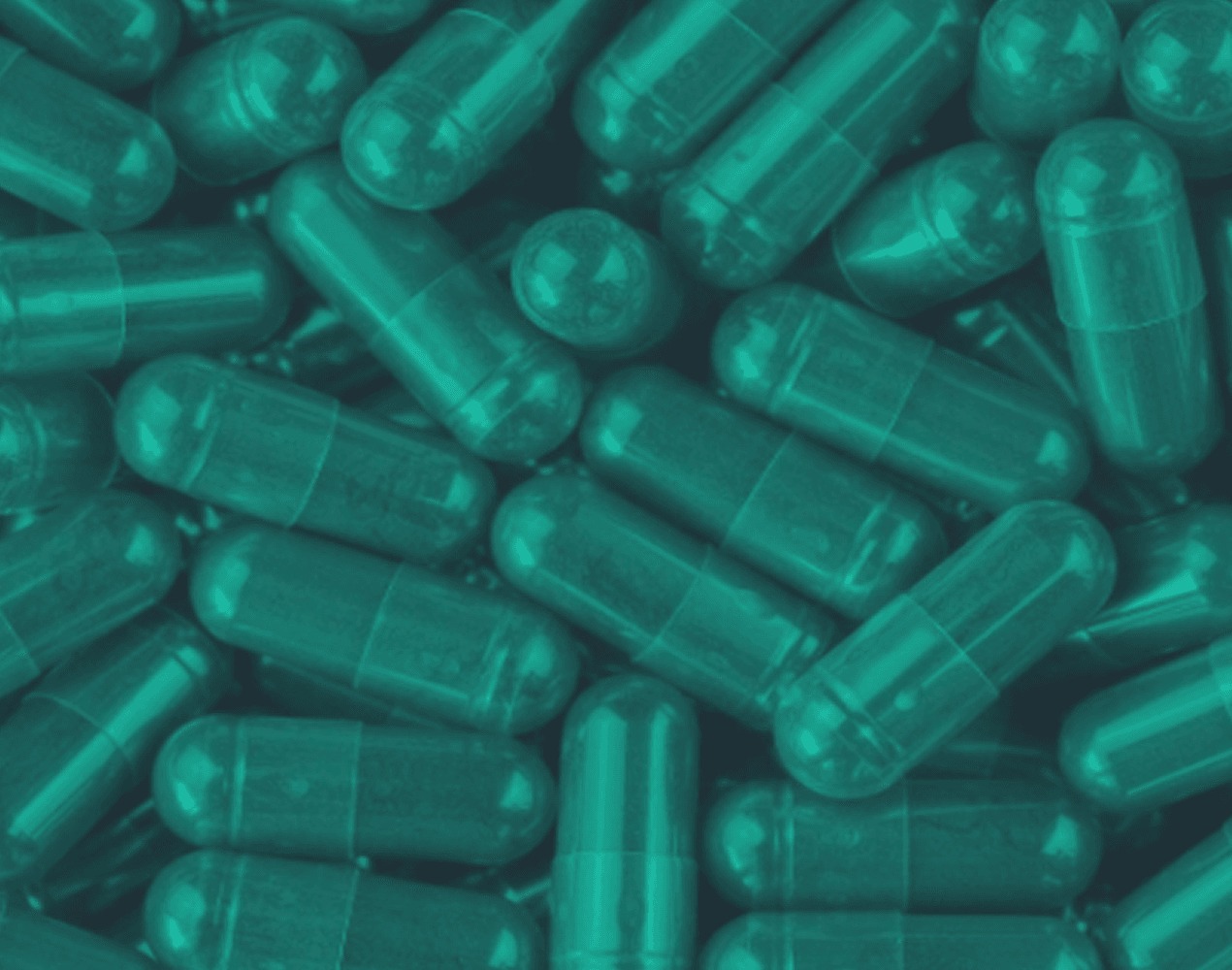
The Seattle company, incorporated in 2017, now engineers spirulina to produce antibodies, enzymes, hormones and vaccine components. It grows those cells with water, salt, carbon dioxide and light, harvests the biomass, spray-dries it into powder and puts precise amounts into capsules. The organism is both factory and parcel. Instead of purifying a fragile protein, shipping it cold and injecting it, Lumen can send the dried cells into the gut, where the payload is released locally.
The pivot had a pivot
The prehistory is refreshingly untidy. Jim Roberts, a physician-scientist and former head of basic sciences at Fred Hutch, founded Matrix Genetics during the biofuels rush. The idea was to engineer microalgae to make oily droplets. The science worked better than the market: crude prices fell, and the economics of algae fuel fell with them. In 2014, Matrix needed another direction.
Roberts and researcher Ryo Takeuchi tried spirulina. Standard methods failed. “We just couldn't get any new genes inside,” Roberts later recalled. Then the team used tools developed for another cyanobacterium to knock out a motility gene. Normal spirulina swarms across an agar plate. These cells stayed put in distinct colonies. The nonmovement was the eureka moment: the edit had worked.
That breakthrough became Lumen. Its first commercial target was RioBlue, a natural alternative to synthetic blue food dye. Then subsidized overseas production pushed spirulina-extract prices down. Business plan number two was suddenly in trouble. The Bill & Melinda Gates Foundation supplied the prompt for number three. It had been looking for a way to make oral antibodies affordable enough to prevent lethal diarrheal disease in low-income countries. Lumen had stumbled into the missing manufacturing system.
The old idea was oral antibodies. The new idea was making enough of them.The strategic insight hiding inside the science
What the company actually sells
For now, Lumen sells a platform story, partnerships and clinical progress, not an approved medicine. Its business model mixes proprietary drug candidates with licensing interest, collaboration funding and unusually large helpings of non-dilutive capital from government agencies and philanthropies. A top-three animal-health company has worked with Lumen on proteins targeting ETEC diarrhea in pigs. Kyorin Pharmaceutical signed a research collaboration. CARB-X, BARDA, the Defense Department, the Gates Foundation and university groups have backed programs spanning antibiotic resistance, respiratory infection, malaria and needle-free vaccines.
This is not a contract manufacturer with a green mascot. Lumen is vertically integrated, covering strain engineering, protein optimization, GMP production, regulatory work and clinical operations from Seattle's Fremont neighborhood. The structure costs more upfront, but a novel production organism does not arrive with a mature ecosystem of outside vendors. Lumen has had to build the stack before it can sell the leverage.
LMN-201
A four-protein oral cocktail for C. difficile: three bind its toxin and one attacks the bacterium.
LMN-801
An oral hormone-protein weight-loss candidate intended to preserve lean mass while reducing fat.
IBD + kidney health
Preclinical inflammatory-bowel work and an oxalate-degrading supplement program.
Nose + farm
Intranasal biologics, needle-free vaccine tools and partnered animal-health proteins.
The first clinical signal - and the fine print
LMN-201 is the clearest test of whether the platform makes better medicine rather than merely cheaper protein. C. difficile often follows antibiotic damage to the gut microbiome. The infection can recur after standard treatment. Lumen's candidate is taken with and after antibiotics: three antibody-like proteins neutralize toxin B, while an enzyme breaks the bacterial cell wall. It attacks the pathogen and the thing that makes the pathogen nasty, without asking another broad-spectrum antibiotic to clean up an antibiotic-associated mess.
In April 2025, Lumen announced that all 21 patients in the open-label sentinel cohort of its RePreve study achieved initial clinical cure. Twenty of 21 had sustained cure through four weeks. Those numbers are attention-grabbing. They are also 21 people, with no randomized control arm in that first cohort. Lumen compared them with historical arms from the large MODIFY trials, a useful reference but not the same as a blinded head-to-head test.
The result that earned attention
Four-week sustained clinical cure, company-reported sentinel comparison. Different studies; not a randomized head-to-head result.
The economics are the product, too
Conventional biologics often use Chinese hamster ovary cells in sterile fermentation, followed by expensive purification and cold-chain handling. That is rational for a high-value injection measured in milligrams. It is awkward for kilograms of protein meant to coat the gut, protect a whole population or enter animal feed. Lumen says its post-approval manufacturing cost per gram can be two to three orders of magnitude lower.
Its most memorable model asks how far $1,000 in manufacturing goes. Traditional technology, the company says, supplies two patients; Lumen's supplies 290, a 145-fold difference. This is a company calculation, not an audited drug price. Yet the strategic consequence matters even if the final advantage is smaller. Cheaper production changes which diseases can support biologics, how often patients can dose and whether prevention makes commercial sense.
The customer map follows that logic. Near-term buyers and funders are pharmaceutical partners, governments, foundations and animal-health companies. Eventual users are patients and health systems dealing with common, expensive conditions. Lumen fits between synthetic-biology platform companies and clinical-stage drug developers. Its competition is not one rival; it is injected antibodies, small molecules, microbiome products, conventional fermentation and every therapeutic that already owns a treatment pathway.
Where the trick stops working
The approach has a natural geography. The gut and nose are surfaces a swallowed or sprayed protein can reach. A livestock digestive tract is reachable, too. A tumor deep in the liver is another matter. Proteins are digested, and getting intact biologics into the bloodstream at controlled levels remains hard. Lumen is strongest where local action is enough, large doses are helpful, a known mechanism exists and conventional manufacturing makes the market uneconomic.
It will not work merely because spirulina is cheap. Each protein must express at useful yield, remain active after drying and storage, survive long enough in the body, reach the right spot and produce a meaningful outcome. The manufacturing process must stay consistent as volume grows. Regulators must accept a drug substance made within whole microbial biomass. And, as LMN-201 now illustrates, small cohorts must become credible large trials.
What builders can copy
Do not copy the algae. Copy the sequence: keep the rare capability when a market dies; search for an old idea blocked by one brutal constraint; use partners whose mission values the new economics; and choose early products where the platform's quirks become advantages. Lumen's best decision was separating “what we can uniquely do” from “what we first planned to sell.”
A platform waiting for its proof
Lumen has raised a reported $186.8 million in total capital, including a $30 million Series C extension in 2025, and says more than $185 million has been invested in the platform. It reports more than 100 employees, 34 issued patents and two dedicated GMP facilities. Those are substantial commitments to a microbe that once refused to sit still on a plate.
The temptation is to call the engineering breakthrough the ending. It is actually the admission ticket. Lumen has shown it can modify spirulina, make multiple kinds of protein and deliver those proteins to accessible tissues. It has not yet shown that an approved product can win a market. If RePreve confirms the early signal, the company will have evidence that its manufacturing trick, delivery method and clinical thesis reinforce one another. If it does not, cheap protein will remain cheap protein.
That tension makes Lumen worth watching. Its history is not a straight line from insight to triumph. It is a biofuel company that lost its fuel market, a pigment company that lost its pigment market and a biotech company still earning the right to become a drug company. The stubbornness is no longer confined to the spirulina.