The object on the counter could be a gold chain, a cordless drill or a game console with one controller and a suspiciously tired box. To its owner, it is dormant value. To an EZCORP pawnbroker, it is a compact underwriting problem: Is it authentic? Does it work? What will the local market pay? And how much cash can safely leave the drawer today?
This is finance stripped down to something almost medieval. There is no unsecured promise and, generally, no pursuit through a collections department if the borrower cannot repay. A pawn loan is non-recourse. The customer leaves an item, receives cash, and can redeem the property by paying the principal and service charges within the agreed period. If the customer does not, the item belongs to the store.
Yet the scale is thoroughly modern. Austin-based EZCORP operated 1,549 locations as of June 30, 2026: 560 in its U.S. Pawn segment, 881 across its Latin America Pawn business and 108 in Simple Management Group, or SMG, which extends into the Caribbean and Central America. In its latest reported quarter, the company carried $387.2 million in pawn loans outstanding and generated $418.7 million in revenue.
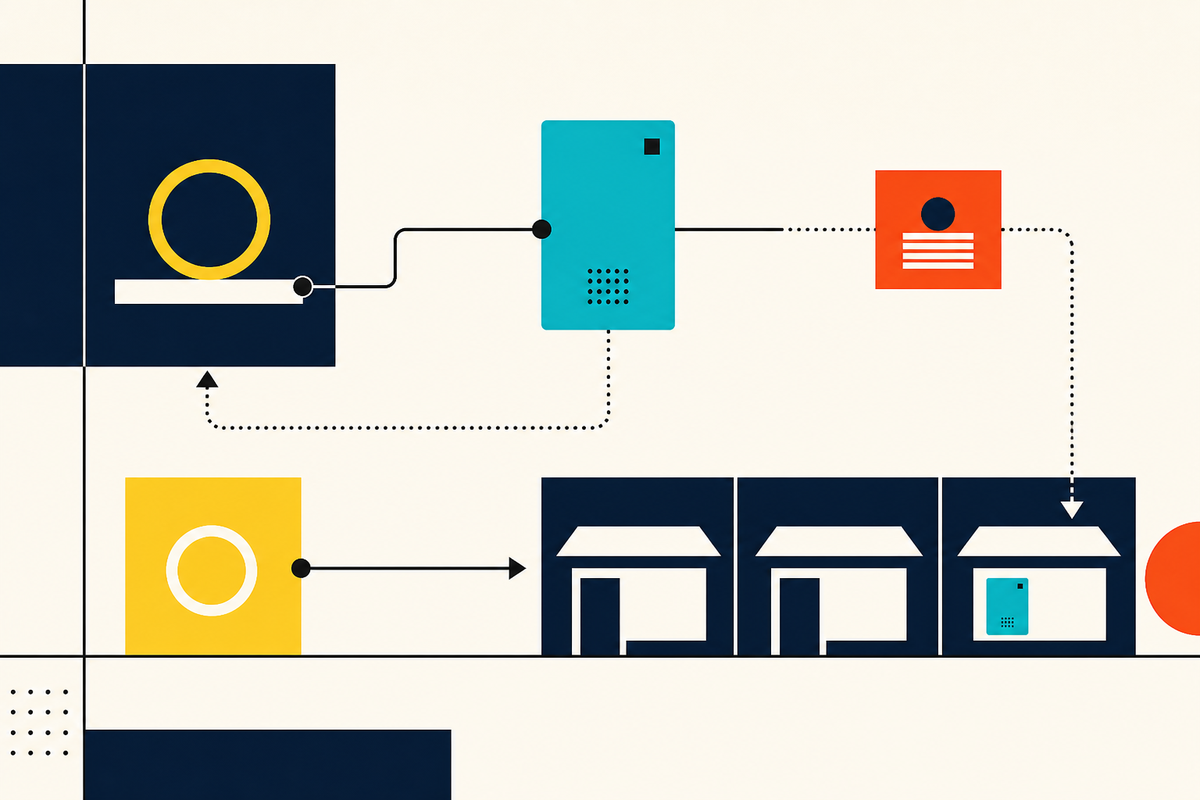
The loan and the shelf are one machine
EZCORP is easy to misfile. Calling it a lender misses the glass cases. Calling it a retailer misses the loan book. Its core trick is that a single physical asset can support either side of the business. When a customer redeems, EZCORP collects a pawn service charge and returns the item. When collateral is forfeited, the company records it as inventory at the lower of the loan principal or its expected net value, then tries to sell it. The company also buys merchandise outright and sends selected precious-metal items to refiners as scrap.
One object, several possible lives
The store tests condition, authenticity and local demand.
Cash is lent against the item's resale value, not a credit score.
The customer repays, extends where permitted, or lets the item go.
The item goes home or moves into secondhand inventory.
That structure solves two mundane but persistent problems. The first is timing. A household may own useful property and still be short of cash before payday, after a repair or during an uneven month. Pawn converts the property's resale value into immediate liquidity. The second is affordability. Another customer wants a laptop, tool or piece of jewelry without paying new-retail prices. The forfeited or purchased item becomes that shopper's bargain.
“We exist to serve our customers' short-term cash and pre-owned retail needs, helping them to live and enjoy their lives.”EZCORP purpose statement
Who walks through the door
The lending customer is not neatly captured by an old stereotype. The common denominator is less poverty than a need for speed and certainty. Some customers have constrained credit. Some prefer not to submit a conventional loan application. Some need a relatively modest amount and have a thing they can spare for a few weeks. The transaction is fast because the difficult question is concentrated on the object: what it is worth and how readily it could sell.
Across the aisle is a second constituency: budget-conscious and opportunistic shoppers. A used pressure washer has no emotional backstory to its buyer; it is simply cheaper than a new one. Jewelry and luxury goods add a treasure-hunt quality, while phones, gaming systems, instruments and tools make the assortment intensely local. Each store's inventory is a portrait of what people nearby own, need and value.
EZCORP has begun making that scattered inventory more visible. The EZPAWN online shop lets shoppers browse items by category and nearby location. EZ+ allows customers to manage eligible pawn payments and extensions, along with layaways and loyalty rewards, from a phone. These products do not eliminate the store. They remove trips and expose shelves that once existed only for whoever happened to walk in.
The difference is in the object
Banks and many fintech lenders predict a person's willingness and ability to repay. A pawnbroker prices a thing. That difference makes pawn accessible without converting the transaction into unsecured debt, but it does not make the work simple. The loan must be small enough to leave room for storage, labor, markdowns and selling costs if the item is forfeited. It must be large enough to win the customer's business. And thousands of pawnbrokers must make those calls consistently across wildly different merchandise.
Scale helps. EZCORP can spread technology, compliance, training and inventory practices across a network, while still relying on local knowledge. COO Blair Powell offers a telling example of the expertise involved: he joined as a Houston pawnbroker in 1989, worked through every field-level role and eventually became the company's top operating executive. EZCORP's own training language calls the discipline the “art and science” of pawnbroking. The phrase fits. A database can recall sale prices; a practiced employee can notice the replacement clasp, missing battery or regional taste that changes the quote.
The market around those decisions is fragmented. FirstCash is the closest scaled public-company competitor in the United States, but thousands of independent shops and regional chains still matter. For loans, alternatives include installment lenders, credit cards, bank overdrafts and help from friends. For merchandise, the competition stretches from neighborhood resale shops to sprawling online marketplaces. EZCORP's defense is the combination: many locations, immediate appraisal, cash on the spot, inventory already connected to a resale channel and a repeat-customer layer through EZ+ Rewards.
Growth by opening, buying and translating
The company began with 16 stores in 1989 and listed on Nasdaq in 1991. Mexico became an expansion market in 2007. Over time, brands such as EZPAWN and Value Pawn & Jewelry in the United States, Empeño Fácil and Cash Apoyo Efectivo in Mexico, GuatePrenda in Guatemala, and MaxiEfectivo in El Salvador and Honduras gave the operation local faces.
Its largest recent step was the Founders One transaction. In January 2026, EZCORP paid roughly $64 million for control of an entity tied to SMG, adding 105 stores across 12 countries under brands including La Familia Pawn & Jewelry and CashWiz. It bought the remaining minority interests through the third quarter and July. The bet is operational: apply EZCORP's systems, capital and store disciplines to a broader platform. It also bought a 12-store Texas chain and 33 stores in Guatemala during the fiscal year, while continuing to open locations from scratch.
The results have made the expansion visible. Fiscal 2025 revenue reached $1.2743 billion. Through the first nine months of fiscal 2026, revenue was already $1.2476 billion. Third-quarter pawn loans outstanding rose 33 percent from a year earlier, while merchandise gross margin improved to 38 percent from 36 percent. High gold prices helped jewelry scrap sales, though management separately reported strong growth excluding scrap.
A pawnshop prices the object instead of predicting the person. That small reversal changes the entire lending equation.
Useful, but not uncomplicated
Pawn's usefulness should not blur its costs. Service charges and annualized rates vary by jurisdiction and can be high relative to the dollars borrowed. A customer who cannot redeem loses an item that may carry more personal value than its appraisal captured. The business is also unusually exposed to regulation, local economic stress, gold prices, foreign exchange and the quality of countless store-level judgments. At the end of fiscal 2025, 62 percent of its U.S. stores were in Texas and Florida, concentrating both opportunity and legislative risk.
The labor behind the model is another constraint. A store can install better pricing data, but it cannot automate trust at the counter or knowledge across every product category. EZCORP says it employs roughly 8,500 people and organizes its culture around “People, Pawn and Passion.” In an April 2025 company survey, 89 percent of employees participated and the overall engagement score was 85. Those figures are self-reported, but they explain the emphasis on career paths, recognition and training. Turnover does not merely create a scheduling problem here; it can walk out with years of appraisal judgment.
There is also a quieter environmental case. Every used drill or phone sold is one more product whose useful life is extended. EZCORP reported that its brands recycled more than 5.6 million pre-owned items in 2022. “Circular economy” can sound like a conference-panel abstraction. Here it looks like a shelf of mismatched guitars, a repaired console and a ring waiting for a second owner.
That may be the cleanest way to place EZCORP in the market. It is not a software-first fintech, although software increasingly shapes the customer experience. It is not merely a specialty retailer, although merchandise sales are essential. It is infrastructure for converting possessions into liquidity and moving used goods toward their next use. The technology matters; the locations matter; the capital matters. But the durable expertise remains the moment at the counter when an employee looks at an ordinary object and decides what it can do.