In 2008, David Barrett had a card idea and a banking problem. He wanted a way to help unhoused neighbors buy food, using a card connected to his own money. Banks found the proposal uncomfortable. Expense reimbursement sounded safer. So he wrapped his technology in the least alarming application he could imagine: an expense report.
- The job: turn receipts into approved, reimbursed, recorded expenses.
- The opening: make life easier for employees, then win the finance team.
- The catch: automation needs a working policy and the right accounting connections.
The feature nobody meant to keep
Then the supporting act stole the show. In a founder interview, Barrett recalled that a partner’s paperwork problem led Mastercard to shut down the original card product immediately after launch. People, meanwhile, kept responding to the expense-reporting idea. The feature he had expected to discard became the thing worth building.
“I need to sound low risk. I need to sound boring.”
David Barrett, recalling his bank pitch at SaaStr
There is a useful distinction here for anyone making a product: the most interesting engineering problem and the most irritating customer problem can be different things. Barrett’s audience was volunteering evidence. Expense reports were familiar, disliked, and repeated. There was no need to teach people why losing a receipt was annoying.
Expensify grew around that irritation. Today its product range includes receipt scanning, approvals, reimbursements, corporate cards, travel booking, invoicing, and bill payment. Freelancers use it. Accountants use it. Businesses use it to collect employee expenses. The common problem is the distance between spending money and explaining where it went.
A receipt is a handoff problem
Consider a hypothetical business lunch. The meal ends; the administration begins. Someone needs the merchant, amount, date, category, business purpose, and perhaps a project code. An approver needs context. Accounting needs a record that fits the ledger. A receipt scanner handles the beginning of this journey. The handoffs determine whether the rest becomes work.
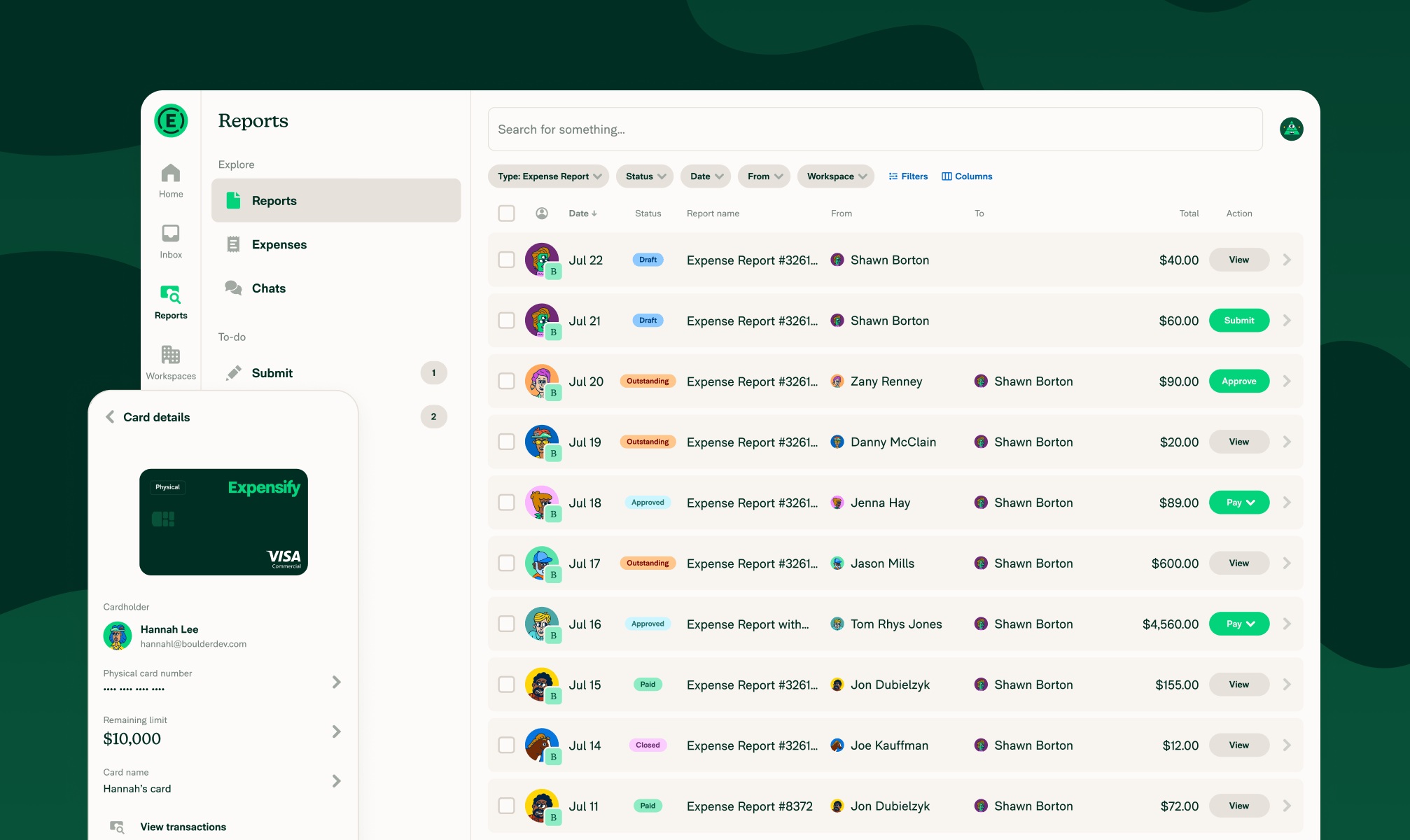
SmartScan reads receipt information from a photograph. The broader system routes reports, applies configured rules, supports payment, and connects expenses to accounting software. QuickBooks and Xero integrations serve simpler setups; Control adds connections such as NetSuite and Sage Intacct. Expensify sits upstream of the books, gathering the evidence the accounting system needs.
- 01CaptureReceipt + details
- 02CheckPolicy + coding
- 03ApproveReview + pay
- 04RecordSync to books
The customer stories make this concrete. IDEO.org, the nonprofit design organization, needed global currency support, fund accounting, corporate cards, per diems, and QuickBooks integration. It also needed people to submit reports in time to close the books. A technically correct record arriving late is still a late record. Expense software is partly a tool for building habits.
The company has built its own habits around working together at a distance. Its published benefits include flexible schedules and an extended overseas company trip called Offshore, with families welcome. Travel is part of the working culture as well as the product catalog. A business selling fewer travel chores has plenty of opportunities to encounter them itself.

Five dollars, with a billing unit
That employee focus helps explain Expensify’s route into companies. A person can begin with a personal reporting problem before the organization adopts a shared process. OpenView, which led a $17.5 million Series C in 2015, described using the software itself during due diligence. The buyer could experience the benefit directly.
Pricing eventually became a problem of its own. In May 2025, Barrett acknowledged that accumulated options had confused smaller customers. Collect returned to a flat $5 per member monthly for eligible new workspaces, without an annual commitment or required card. Here was another signal worth hearing: customers wanted less buying homework.
Illustrative current Collect subscription, before applicable taxes. Members count even when they have no expense activity.
The billing unit matters. Control’s standard annual US subscription is $18 per committed member monthly, potentially reduced to $9 with qualifying card usage. Overage rates and a twelve-month commitment change the calculation. A seasonal team should work through headcount before choosing a plan.
The card returns. The numbers get complicated.
The Expensify Card arrived in 2019, bringing the company back toward its original territory. Subscriptions sell software access; card spending generates interchange economics. Yet customers can also connect existing card programs. Among alternatives including SAP Concur, Ramp, Brex, and Navan, that flexibility is a practical consideration for a company with banking arrangements it wants to keep.
Scale needs careful labels. Expensify says it serves more than 15 million people worldwide. Its Q2 2026 results reported 640,000 paid members, down 2% from a year earlier. Revenue fell 5% to $33.9 million, while card interchange rose 12% to $5.9 million. Wider product coverage has not removed the pressure to retain paying users.
Different revenue streams, different directions. Bar lengths show the magnitude of each percentage change.
Keep the chore small. Let the product grow.
The next expansion is conversational. New Expensify centers collaboration on chat; its app repository is public. September 2026 brought an Anthropic integration for querying expenses through Claude. October brought Campfire ledger sync. These are additional ways to reach and move the same financial records.
In an October 22 update, Barrett described Concierge configuring workspaces and managing expenses, while identifying full interface coverage as a future goal. That distinction matters. An assistant that answers questions still needs dependable actions, permissions, and explanations before finance can hand over a recurring chore.
The lesson readers can copy is modest: choose one repeated irritation, follow every handoff, and test whether the person doing the work returns voluntarily. For buyers, try a complete expense cycle before committing. If your approval policy is unresolved, your bank feed unsupported, or your required ledger connection absent, a good scanner cannot finish the job.
Expensify’s original surprise remains useful. People may admire the ambitious part of a demonstration and pay for the ordinary part. Pay attention when they ask about the ordinary part twice.