A hotel budget contains a small invitation to misbehave. Give an employee a ceiling of $450 a night and a $420 room looks perfectly sensible. The company might prefer the $258 room. The traveler, who gets the better bed but never receives the saving, has another calculation. TripActions built a business around this gap between the person choosing and the person paying.
- TripActions became Navan in 2023, bringing travel, cards, and expenses under one name.
- Its hotel rewards give employees a personal reason to spend less.
- The pandemic exposed travel dependence and accelerated an existing payments business.
01 A ceiling becomes a target
In the founders’ account, one early provocation was wonderfully ordinary: Cohen reached Odesa in 2013 and discovered his hotel reservation had disappeared. The agency was closed. A digital booking tool could record a trip yet offer little help when the trip went wrong. The gap between purchasing travel and actually traveling would become part of the company’s brief.
Founded in 2015 by Ariel Cohen and Ilan Twig, TripActions approached corporate travel as a problem with several owners. Employees wanted a quick booking and help when plans broke. Finance wanted visibility. Travel managers wanted policy followed without spending every afternoon enforcing it. Serving only one group would leave the others reaching for another tool.
Navan Rewards makes that balancing act visible. A hotel search displays a “price to beat,” calculated using location, dates, and demand, below the company’s policy limit. Book beneath it and eligible travelers earn rewards after the trip. Navan funds those rewards; employees can put them toward personal hotel stays. Saving the employer money acquires a pleasant consequence.
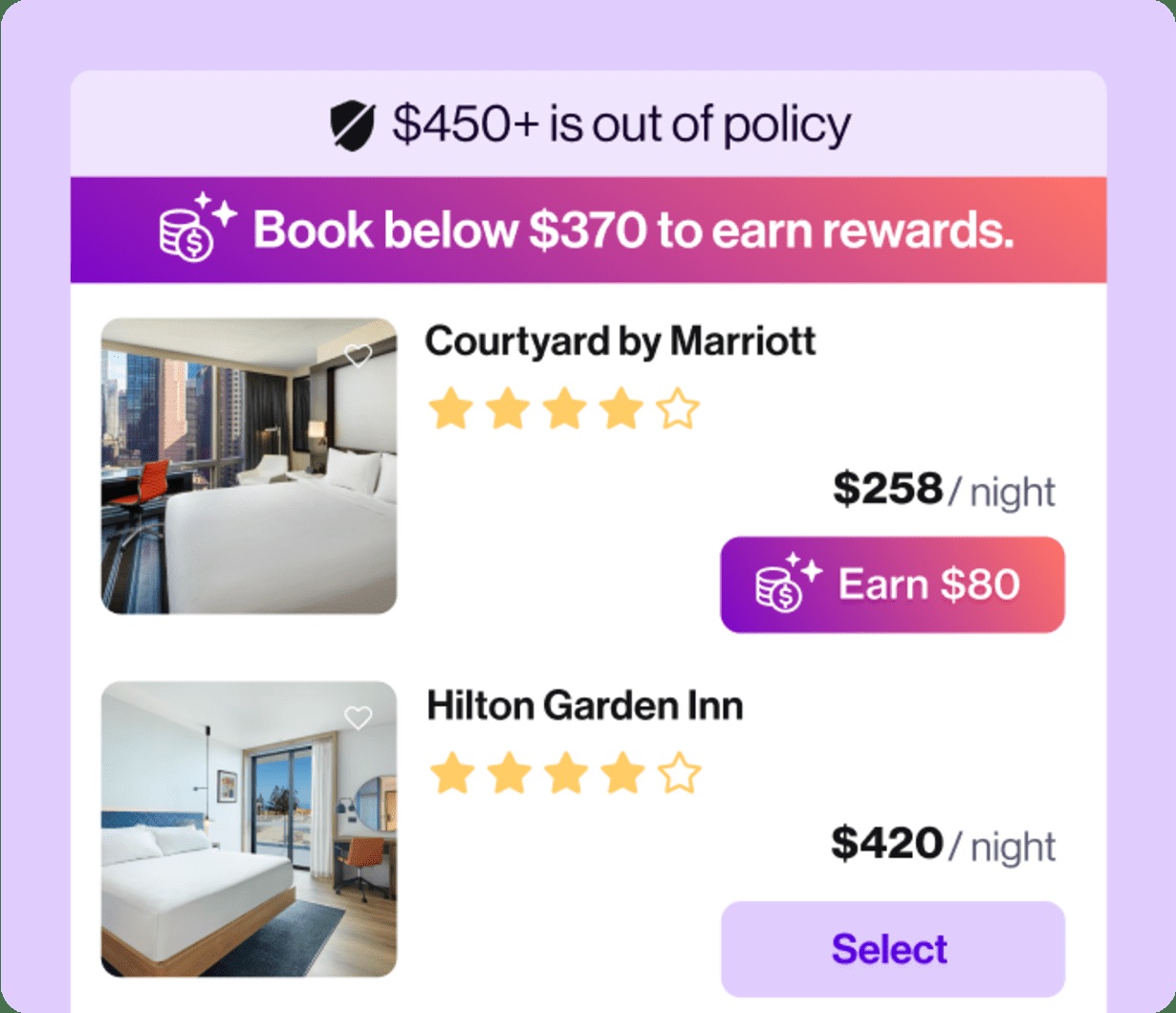
The detail worth copying is the placement. The incentive appears while someone is choosing a room. A quarterly memo asking everyone to be economical arrives far from that decision. Navan puts the consequence beside the price. The reward and the company’s preferred behavior share the same screen.
02 Then the flights stopped
There was, however, a larger dependency hiding underneath the booking interface. Corporate travel software needs corporate travel. In March 2020, the pandemic reduced that activity to almost nothing. TripActions cut nearly 300 jobs. An organization built for rapid expansion suddenly had to plan for a world in which its main transaction barely happened.
Liquid, its payments product, had launched on February 25, before the shutdown. That chronology matters. The crisis accelerated an adjacent business already underway. Employees still bought things for work, even when they stopped boarding planes. Payments and expenses offered activity beyond the itinerary.
“Our product team has actually been busier than before.”Ariel Cohen, speaking to Business Travel News, March 2020
The company raised $125 million in convertible-to-IPO financing that June, led by Greenoaks Capital with participation from Vista Credit Partners. It said the money would support Liquid, enterprise sales, and European operations. Financing bought room to keep building. The layoffs show the human price of making that room.
03 Follow the transaction
The resulting company is easier to understand by following a purchase. A traveler books a flight or hotel within policy. A payment creates a transaction record. Expense tools help classify, reconcile, and report the spending. Finance sees activity closer to when it happens, rather than reconstructing the trip from a pile of receipts afterward.
Navan combines flights, hotels, rental cars, and rail with expense management, corporate cards, reporting, and 24/7 travel support. Its users include travelers, executive assistants, accountants, and travel managers. Public company materials describe more than 10,000 customers. The expertise spans software, travel distribution, payments, and the service work required when an itinerary falls apart.
In February 2023, TripActions became Navan and consolidated its offerings into one application. Later that year, Navan Connect extended expense automation to eligible existing Visa and Mastercard corporate cards. A company could keep its banking relationship. That removed another obstacle to adopting the software: replacing a card program can be a substantial project of its own.


What does it cost? Navan Business advertises free travel software for companies with up to 300 employees. Expense is free for the first five monthly expensing users, then $15 per expensing user per month. Enterprise pricing requires a quote. Free access still leaves actual travel purchases to pay for.
Navan earns supplier booking fees, customer usage fees, expense subscriptions, and revenue associated with its issued corporate cards. It does not collect interchange on cards enrolled through Connect. The model ties much of its income to activity flowing through the system.
04 The receipt is only the beginning
Navan occupies a crowded intersection. SAP Concur, American Express Global Business Travel, and BCD Travel compete around corporate trips. Ramp, Brex, and Expensify compete around expenses and payments. Navan’s pitch joins those workflows with traveler incentives and service. Buyers still have to compare inventory, implementation, support, and their own accounting requirements.
Year ended January 31, 2026. Revenue and losses describe different sides of the same business.
Building the combined system required substantial capital. A 2021 Series F brought $275 million. Navan completed its IPO in October 2025. For fiscal 2026, it reported $702 million in revenue and a $398 million GAAP net loss, alongside its first full year of positive operating cash flow and free cash flow. Cash generation and accounting profit require separate readings.
Expansion continues. In September 2026, Navan announced its acquisition of BoomPop, adding event-planning capabilities. That takes the company further into the messy work surrounding a trip: bringing groups together, arranging venues, and coordinating spending.
05 Copy the incentive, test the fit
The transferable lesson is practical: identify who chooses, who pays, and what each person gains. Then make the economical choice rewarding at the moment of action. The approach needs adoption, usable inventory, and a target that feels credible. If employees book elsewhere, the platform loses visibility. If a company rarely travels, the integration effort may outweigh the benefit. Begin with the actual trips and transactions. The policy document can wait.