Erica Jain’s first paying customer needed something more useful than another promising conversation. A credit-card request would do. Jain had been calling and emailing prospective users while her co-founder built the product beside her. Someone finally nudged her to ask for payment. The customer said yes. A decade later, that customer was still there.
It is a small beginning for a company whose later announcements would contain millions of dollars. It is also a revealing one. Jain’s account of building Healthie keeps returning to the same arrangement: customers have work to do, software should help them do it, and a business earns another day by keeping that bargain. The first sale made the arrangement pleasantly concrete.
She co-founded Healthie with Cavan Klinsky in 2016. In October 2024, the company announced a $23 million Series B led by TCV. Between those dates came school, an accelerator, early enthusiasm, a rebuild, and a long stretch of learning how to operate without continually raising another round. Her story has plenty of movement. Its defining feature may be her willingness to give things time.
The first sale required a question
Jain arrived at entrepreneurship with experience of established institutions. She graduated from Duke University in 2011 and worked at Boston Consulting Group from 2011 to 2015. She also worked with the Clinton Health Access Initiative in East Africa. By the time she began building Healthie, she was studying at Wharton. There was a fairly legible professional path available. A young software company offered rather less legibility.
She has said that starting a company itself had not been her original ambition. Her early method was to talk to people about the work they were trying to get done. Administrative tasks consumed time. Tools were scattered. The founders began working on software that could bring recurring tasks together. The research happened through conversations with the people who might actually use it.
During the summer of 2016, Techstars NYC gave the young business three months of concentrated attention. Jain valued the strategic sessions, workshops, and advisers willing to challenge the founders. Dorm Room Fund also backed the company. Asked why she accepted its money, she supplied an answer refreshingly free of venture vocabulary: “Because no one turns down $20,000.”
Behind the joke were relationships with Dorm Room Fund partners Steve Weiner and Jeff Ellington, whom she credited with encouragement and advice. The campus environment had supplied peers and connections; the accelerator supplied a more demanding rhythm. Jain and Klinsky left school to keep building. The work now had paying users attached to it, which tends to improve the seriousness of any timetable.

The awkward business of starting again
Early traction can make a young company look reassuring from the outside. Inside, every new feature leaves something behind. A shortcut, a dependency, a repair that works for now. At Healthie, the accumulation became a problem. The team could ship things users wanted while making the underlying system harder to maintain. Success had brought its own maintenance bill.
In 2018, Healthie rebuilt its platform and released its GraphQL API for other developers to use. An API gives another team a way to build software that communicates with the platform. That opening broadened the company’s role: other businesses could use its underlying capabilities in products of their own. For Jain, the foundations became part of what the business was selling.
The choice introduces a useful complication into the usual startup advice about moving quickly. The first product helped the founders learn. Its limitations then demanded another kind of work. Rebuilding required acting on knowledge the early version had made possible. There is a difference between discovering that people want a product and having the structure to keep serving them as demand changes.
Jain has continued to revisit that episode years later. It belongs beside the financing milestones because it helps explain what the financing could eventually support. Growth puts pressure on whatever already exists. A stronger platform gave the company something more dependable to grow around. The visible business and the less visible engineering work had to catch up with each other.
- 2016Co-founds Healthie
Techstars NYC - 2018Platform rebuild
GraphQL API - 2024$23M Series B
Led by TCV - 2026Ten years
Still building
Money, when the company could use it
Jain’s public argument about fundraising is practical. Founders should understand why they are taking capital and what it will permit them to do. Healthie raised seed money in 2017, then went years before another round. She has described profitable operations through much of that period. Customer revenue provided both resources and a reason to keep attention close to the product.
At TechCrunch Disrupt in 2023, she joined a discussion about bootstrapping. Her advice was to appreciate the period before substantial outside capital: the time available to understand customers, develop a product, and establish operating habits. That period can be six months or several years. Her point was that it has value of its own, beyond being a waiting room for a larger check.
Healthie did eventually take institutional money. The 2024 round brought TCV alongside existing backers. By then, the company reported one billion API calls each month from developers building on its platform. The pairing matters: there was capital to deploy and an existing system in use. The money entered a business with demands already arriving from customers.
“We joke, we are 7 years into our 13-year overnight success story.”
Erica Jain, 2023
The joke contains an admission about pace. A company can be years old when its growth begins attracting wider attention. Those earlier years still count. They contain the customer knowledge, mistakes, and operating decisions that make later opportunities usable. Jain’s version of patience involves doing the work while waiting. It is a fairly busy form of patience.
Eight values were five too many
As the company grew, another problem became more interesting to Jain: the company itself could get in the way. Her concern is internal inefficiency. Slow decisions, excess process, and repeated discussion can consume the time needed to deliver something. An organization can become very accomplished at arranging its own activity. Customers may have a different view of what counts as progress.
She has described a concrete edit to Healthie’s culture. The business once had eight values; it reduced them to three. Respect. Resilience. Reliability. Each is short enough to remember without consulting a presentation. The point was to make the principles usable, particularly when circumstances make them harder to follow. A list has to survive contact with an actual decision.
Her descriptions of customer attention are similarly specific. She reviews support tickets, takes detailed feedback from calls and emails, and supports making the product roadmap visible to customers. These are working habits with places on a calendar. They create ways for a complaint or suggestion to reach the people deciding what gets built.
The leadership question changes as a team expands. Two founders can share information across a desk. A larger organization needs ways to carry it between functions without losing the original problem. Jain keeps returning to that connection between customer experience and internal structure. The company’s processes have a purpose beyond keeping colleagues informed: they should help colleagues make useful decisions.
The reading list gets smaller
There is a lighter way into Jain’s thinking about leadership. Asked about books, she has pointed to the ones she reads with her children. “I think the world needs to read more children’s books.” She mentioned stories about making mistakes and making things. She appreciates the clarity of the lessons and their insistence on being a decent person.
It is an amusing addition to a founder’s reading list. Her published preferences also include The Hard Thing About Hard Things, a title with rather more boardroom recognition. Together, the choices make sense. Company building contains hard decisions, and the people making them still need a working sense of how to treat one another. The shelf has room for both.
She has also spoken about learning to take breaks. In the early days, she thought she could hurry through the marathon of building a business. Experience supplied a less accommodating answer. There is always more a founder could do. Without boundaries, that fact can claim every available hour. Rest gives a person some chance of returning with a fresh view.
That admission adds texture to the public milestones. Endurance involves the person as well as the company. A ten-year ambition needs ordinary days that can be repeated, colleagues who can carry responsibility, and room to think beyond the next task. Jain’s account makes space for learning those habits along the way. Nobody receives them automatically with the CEO title.
Ten years in, still showing up
In 2026, Healthie marked its tenth anniversary. Its public plans included further investment in automation, data products, and the mobile experience. It also formalized support for nonprofit organizations through Healthie for Good. The next chapter brings new products and a broader ecosystem, with the same underlying obligation to make the existing platform work for the people using it.
Recognition has arrived along the way. Jain was named to Rock Health’s 2025 Top 50 in the Builders category, followed by further leadership recognition in 2026. Such milestones give the career visible punctuation. Her own explanations dwell on the continuing work between them: listening, deciding, delivering, and keeping an organization capable of doing those things again tomorrow.
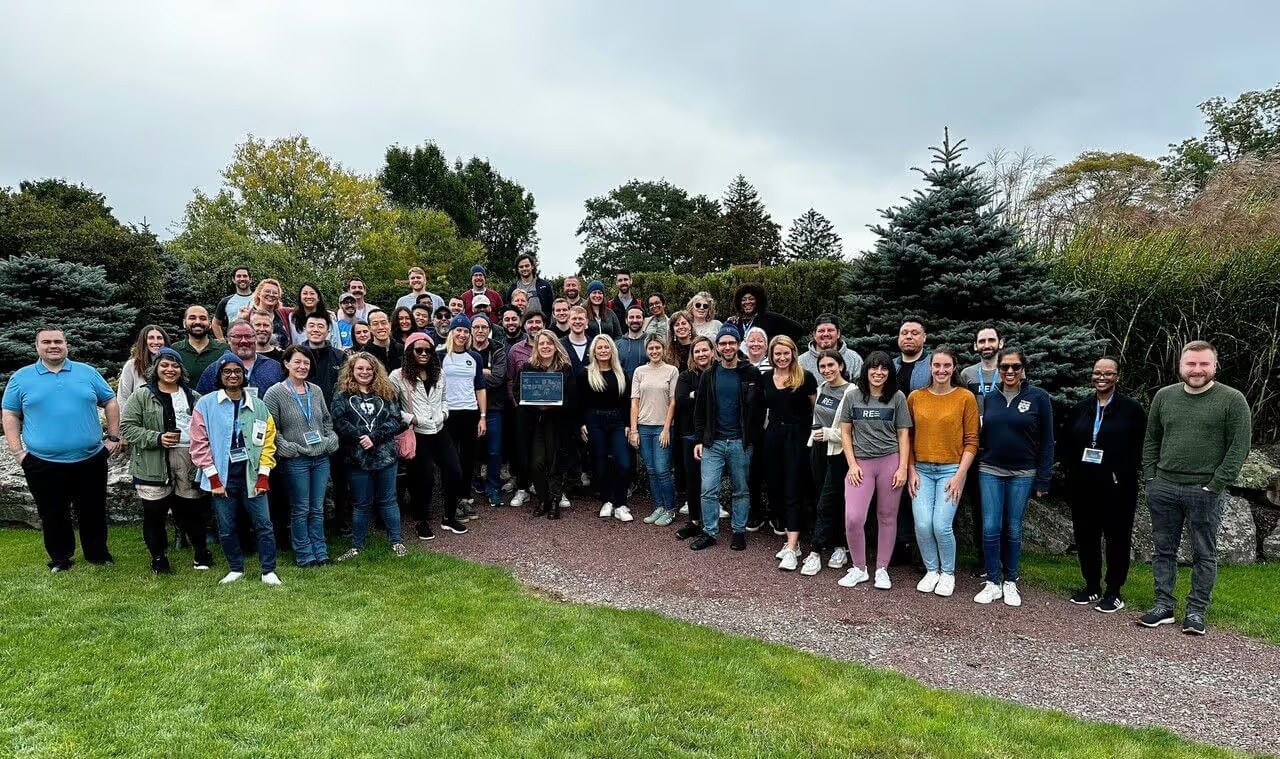
The first customer offers a fitting measure of the distance traveled. A credit-card request became a working relationship that lasted. Much changed around it: the platform, the team, the capital available, the number of decisions requiring attention. For Jain, the next opportunity still rests on the same question that made the first sale matter. Has the company made something useful enough to keep?