Dan Engel went looking for customers in software and gaming forums. He was the CEO of FastSpring, a business that handled online sales for software companies, and he was willing to show up where those companies complained. The job title helped. People accustomed to dealing with a distant payment provider could suddenly have a conversation with the person running a competing one. The sales pitch began with the rather inexpensive act of being available.
There is something pleasingly unceremonious about that approach. A chief executive answering forum posts does not make for much of a corporate portrait. It does, however, give a prospective customer a useful sample of the service. Engel understood that the person selling software had already done the difficult work of making something. Collecting the money ought to bring relief.
FastSpring, which he co-founded in 2005, grew from $30,000 in initial funding into a business reporting more than $100 million in annual revenue. Engel served as its first CEO until 2013. Today he runs Santa Barbara Venture Partners, where the same question follows him into investment meetings: how, exactly, will this company win and keep its customers?
A teenager with an unusually old mentor
Before the software companies came the investment firms. Engel pursued financial internships starting in high school, including one at Smith Barney. During college he spent four years working alongside a value investor at Merrill Lynch. His early education in business involved people who looked closely at what an enterprise earned, rather than merely admiring what it might become.
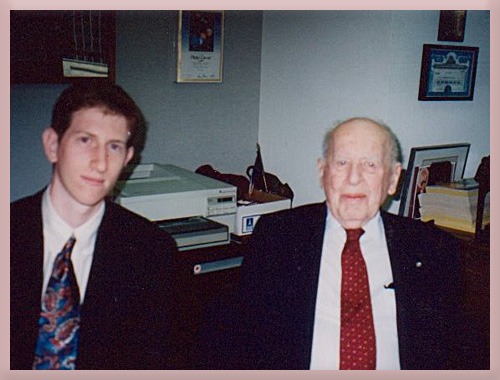
At nineteen, he sought out Philip Carret, the longtime Pioneer Fund manager. An archival photograph shows the young Engel beside the elderly investor, both in jackets and ties. It is an appealing introduction to a future internet entrepreneur: a young person interested enough in an older discipline to go and meet one of its practitioners.
Engel graduated from Tulane University in 1998 with a finance major. The internet was already pulling his attention toward a different sort of business. At college he had started GrapeApe.com, a magazine subscription venture. A fund manager’s career and an online newsstand might seem unlikely neighbors. Both required a judgment about what people would pay for.
The gorilla before the shopping cart
GrapeApe had a name borrowed from a cartoon gorilla and a suitably large appetite. When its online newsstand launched in 1999, it offered more than 1,400 magazine titles. Customers could order subscriptions, track them, renew them, and send them as gifts. There were renewal reminders and a service for finding back issues. A corporate program grouped magazines for organizations.
Even here, the details of acquiring a customer were visible. The business offered commissions to websites that referred magazine buyers. Readers could rate publications to help other visitors choose. Under the cartoon branding sat a fairly serious attempt to make subscriptions easier to buy and manage.
The venture failed. Engel has spoken about that failure publicly, including at a Santa Barbara founder panel in March 2026. He went on to become an entrepreneur in residence at Idealab at twenty-four. His career had acquired something a tidy biography can obscure: experience of wanting a business to work before knowing how to make it work. The gorilla did not survive, but the interest in online commerce did.
Four months inside Google
Engel subsequently worked on customer acquisition for GoToMyPC and GoToMeeting. In 2003 he joined photo software company Picasa as vice president of market development. Google bought Picasa in July 2004, bringing Engel into a company about to go public. He handled online advertising for AdSense and AdWords from Santa Barbara.
That would have been a perfectly respectable place to settle. Engel stayed only four months. He had never intended to work at a large company, and he left with stock that could help finance his own ventures. The Google connection also supplied a useful calling card. As he put it in 2008: “Mentioning Google makes people pay attention.”
He was already involved in Morpheus Software, a digital animation business. Running a software company gave him a close view of the machinery behind a sale. Payment methods, merchant accounts, advertising measurement, and the connections between them all consumed time. Every hour spent assembling that machinery was an hour unavailable for the product or the customer. FastSpring would sell an escape from that work.
- 1998Tulane
Finance graduate - 2003-04Picasa → Google
Customer acquisition - 2005FastSpring
Co-founder & first CEO - 2020SBVP
Founder & managing partner
Four founders, four different states
The founding group came together through a chain of introductions. Engel knew Jason Foodman; Foodman knew Ken White; White knew Ryan Dewell. Engel’s initial idea involved an upsell product for shopping carts. Foodman pointed out that they would need control of the cart itself. That objection helped turn the conversation toward building the underlying commerce service.
The four worked from different states. In the early years they relied on email and instant messaging, with remarkably few calls. Each had previously been a CEO, and each took responsibility for a part of the business. White handled support, Dewell development, and Engel sales and the chief executive’s duties, with Foodman also working on sales and other responsibilities.
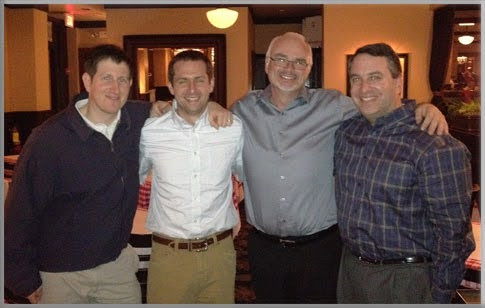
A company selling around the world could be run without everyone sharing an office. In 2005, that was an organizational choice with fewer familiar precedents than it has today. For Engel, it widened the pool of people the business could hire. It also suited a group of experienced founders who knew how to get on with their own work.
The work after “buy”
FastSpring took responsibility for the unglamorous sequence that follows a purchase: shopping cart, payment, tax, fraud detection, and digital delivery. Its customers sold software, games, and other downloadable goods. The service also made the transactional part of a website look consistent with the rest of it. A buyer could finish a purchase without having to think about the infrastructure underneath.
By 2011, the business was serving customers including Random House, Smith Micro, and Realmac Software. Subscription commerce offered another avenue for expansion. Its SaaSy offering addressed vendors charging customers repeatedly, rather than selling a download once. The checkout was becoming a continuing relationship.
The growth attracted the attention of the rankings compilers. Deloitte’s 2011 Technology Fast 500 placed FastSpring thirteenth in North America, recording 17,468 percent revenue growth over the award’s measurement period. Those figures describe an earlier stage of the company. They also explain why this modestly staffed commerce operation became an object of interest well beyond Santa Barbara.
The CEO was in the conversation
Engel’s forum appearances gave customer service a public face. In an industry where software vendors could feel stuck with expensive contracts and unresponsive providers, a conversation with a founder had commercial value. The team knew vendors personally and had heard their complaints over time. Those relationships supplied both potential customers and a practical account of what the product needed to do.
Support remained close to the founders. White continued talking directly to customers even as the team grew. Engel’s account of the business repeatedly returns to that proximity: the people making decisions could hear what happened when those decisions reached a merchant.
He carried the interviewing habit into Mobile1st, a company he co-founded in 2015 to improve mobile web performance and commerce. For that venture, he described conducting twenty-five potential customer interviews, each lasting roughly forty-five minutes to an hour. He asked about problems, demonstrated a product, and asked what people would pay. That is a substantial calendar commitment for a question often answered too quickly in a pitch deck.
Changing seats, keeping the question
FastSpring accepted an investment from Pylon Capital in 2013, its first outside investment since founding. Engel moved from CEO to senior vice president of marketing and remained on the board. The other co-founders stayed with the business. The change brought in additional management as the company entered a different phase.
Engel eventually moved into venture investing, including roles at NGEN Partners and OCV Partners. In 2020 he founded Santa Barbara Venture Partners. Its inaugural fund closed at $11 million in 2022. The proposition made use of his operating experience: invest in companies with demonstrated demand, then help them reach more customers.
The fund assembled investors and advisers with experience at companies including Citrix, Procore, AppFolio, and RingCentral. Some brought marketing expertise; others knew partnerships, sales, or finance. For an entrepreneur, that promised access to people who had wrestled with the practical work of expanding a business. A check could arrive with introductions to people able to help spend it usefully.
A little distance from the noise
By January 2026, Engel said SBVP managed about $75 million in assets and could draw on more than one hundred limited partners, largely sales and marketing executives. He described a preference for software businesses with recurring revenue and strong customer retention, including companies in overlooked markets. His stated ambition included returning cash to investors along the way, as well as achieving long term investment results.
In March, at the Cabrillo Pavilion, he joined Sonos founder John MacFarlane and Seek Thermal co-founder Bill Parrish for a conversation about building companies. Engel made a case for Santa Barbara’s relative quiet. Distance from the startup centers offered room to think, while San Francisco remained available when a visit was useful. His advice to younger founders included choosing the right partners.
“I think there are great advantages to being a little bit away from the noise”
Dan Engel · Santa Barbara founder panel, March 2026
That is a fitting place to leave him: close enough to the technology industry to know its habits, far enough away to choose his own. His companies have changed, as have the people sitting across the table. The work still comes back to a conversation with someone who might buy, someone who already has, or someone who can explain why they never will.
More from Engel’s corner of the internet
- WEBSITE & ARCHIVEEngel Ventures
- FOLLOWDan Engel on LinkedIn
- HIS FIRMSanta Barbara Venture Partners
- WATCH / LISTEN / READ · 2025Twenty years of FastSpring, with its first CEO
- YOUTUBE · UC SANTA BARBARAEngel on building a remote organization
- INTERVIEW · MIXERGYHow Dan Engel built FastSpring with $30K
- FROM THE ARCHIVE · 2008The founders who left Google to build
- THE CONVERSATION CONTINUES · 2026Santa Barbara founders compare notes
- INVESTING · JANUARY 2026Engel on the next chapter at SBVP