The first paying customer of SupportBee sold drills and cutters. The company was called Drills and Cutters, which at least spared everyone a branding workshop. Hana Mohan remembered it years later because, after people had been using her software without paying, this was the business that reached for its wallet. A fairly nontechnical team had found a tool built by someone who wrote about single-page applications. Somewhere between the code and the cutting equipment, a business had begun.
Mohan had been publishing technical posts and sharing them on Hacker News. Some early users arrived that way. She also experimented with pages for people searching for alternatives to Zendesk. She could not remember precisely how Drills and Cutters found SupportBee. She did remember that it was still a customer when she told the story in 2020. In a profession devoted to the next thing, there is something pleasing about remembering the first invoice.
By that interview, SupportBee had around 450 customers and roughly $45,000 in monthly recurring revenue. It had never raised investment. Those numbers describe a particular moment, rather than today's business. They also explain why Mohan's later decision to seek venture capital deserves a closer look. She had already demonstrated that she could build a software company without it.
Her next venture, MagicBell, would take her through Y Combinator's Winter 2021 batch. The change was deliberate. So was her continued respect for the smaller company. Mohan's career makes room for both a reliable subscription business and a larger ambition, with experience supplying the reasons to move between them.
Half a million listeners, one awkward inbox
Before the help desk came the music. Mohan and Nithya Rajaram built Muziboo, an online community where people could upload songs and discuss them. The community grew to more than half a million members. Musicians had a place to share their work; the founders had a growing pile of questions to answer. Gmail was doing a job it had not been designed to do for a team.
Mohan had studied at IIT Guwahati, attending from 2001 to 2005, and worked at Tejas Networks and Bandspeed before becoming an entrepreneur. Building things herself suited her. With Muziboo, however, making the product was only part of the work. People needed replies. Those replies needed coordination. A shared inbox could leave colleagues uncertain about who was handling a conversation or whether someone had already answered.
SupportBee grew from that daily inconvenience. Work began in 2011, followed by a public launch in 2012. Its premise was straightforward: make customer support feel familiar to people who already used email, while adding the collaboration a team needed. The founders' own experience gave them a specific problem to solve before they had a market to persuade.
Mohan's explanation of the product stayed close to the working day. A team could connect its inbox and begin using SupportBee gradually. Someone handling support constantly could work in the dedicated interface. A colleague answering an occasional assigned question could continue replying through email notifications. Introducing new software did not require everyone to abandon their habits on the same afternoon.
She described customer support as a team sport. That phrase has consequences: a reply should not depend entirely on the person who happens to be at their desk. Conversations also hold useful information about the company itself. Mohan encouraged leaders to review recurring questions and feedback, and to carry that knowledge into the tools where the team planned its work.
- MuzibooA music communityNeeded shared customer support ↓
- SupportBeeAn email help deskNeeded a notification system ↓
- MagicBellNotifications for other products
The price of a quieter business
In its early years, SupportBee charged according to ticket volume. Mohan later concluded that this made growth harder to understand. A customer's business could expand without its support email increasing predictably. Pricing by users gave SupportBee a clearer view of whether the customer was growing, while letting revenue expand with the team. The unit on the invoice was also a way of learning about the business behind it.
Her later writing on B2B software gives other unglamorous details their due. Early adopters may welcome attention from the founders and tolerate an unfinished ecosystem. Later buyers expect something more complete. Writing a blog post can acquire customers without a cash payment, but the founder's time still has a cost. An integration can make a product more useful precisely because the customer already relies on another tool.
These are lessons from a company that had to support itself. They concern who buys, what they expect, and how subscriptions accumulate. There is little ceremony involved. The reward is that, eventually, a business can pay the people doing the work and give its founder choices about where and how to live.
Mohan used those choices. In November 2020, she wrote that she had spent stretches of the preceding decade living in Vietnam, Medellin and Barcelona. SupportBee had operated fully remotely since 2015. Her base in Barcelona, her cycling, and her enthusiasm for reading belong in this story because independence was among the things she wanted entrepreneurship to provide.
A notification becomes a company
The next idea was waiting inside SupportBee. Mohan and Josue Montano, who worked there as a front-end engineer, spent months building notifications into the product. They could find services for sending an email or a push notification. They wanted more of the surrounding experience handled for them. Having repeatedly built that machinery, they saw the possibility of offering it to other teams.
They founded MagicBell in late 2020. Its notification inbox could be embedded in web and mobile products. Real-time delivery, synchronization, preferences and different delivery channels formed parts of the same job. The appeal to another developer was practical: spend less time assembling the notification system and more time on the application people had actually come to use.
That origin also explains the continuity between her ventures. Muziboo exposed a support problem. SupportBee exposed a notification problem. Each company supplied a close view of work that might otherwise remain an unnoticed chore. Mohan was already using the systems she wanted to improve, with enough repetition to recognize what other builders would encounter.
MagicBell launched on Product Hunt in November 2020 and found early paying customers. Y Combinator followed in Winter 2021. By July 2022, Mohan reported about 100 paying customers and a team of 11. She was pursuing an infrastructure business with a different cost structure and a different ambition from the help desk she had bootstrapped.
Permission to change the financing
Mohan had applied to Y Combinator before without reaching the interview stage. In her account of the eventual experience, she identified mistakes she had made: explaining only the customer's use case, trying to sound impressive, and failing to seek feedback from people who understood the application process. The successful application required a clearer account of what the company could become.
The remote batch also offered a larger example of something she already knew. She had worked remotely for years; now she could watch hundreds of people connect through online communities, office hours and organized introductions. Time zones remained a constraint. Still, the experience gave her a way to imagine operating a larger remote company.
Her funding decision followed a similar adjustment in perspective. Software required more than new features. Security, operations and hiring all consumed resources. By September 2021, MagicBell had raised a $1.9 million round. Mohan wanted to invest earlier in people who could do important jobs well, rather than making every unfamiliar discipline another task she had to learn herself.
Money did not automatically supply those people. She had expected recruiting to become easier once there was funding in the bank. Applicants did not simply materialize. The surprise is useful because she tells it without polishing away the mistaken expectation. Having built one functioning company did not make the second an exercise with the answers already printed at the back.
Her advice became more flexible, treating capital as a resource to choose according to the task. Choosing a financing model could follow the problem, the required investment and the founder's goals. A previous choice could remain worthwhile even after circumstances changed. That leaves a little less room for startup tribalism, and a little more room for arithmetic.
“Capital, I'd tell my past self, is just another tool.”Hana Mohan
A seat at the table, and someone listening
Mohan became the first openly transgender woman to go through Y Combinator. She has spoken publicly about being a founder and a transgender woman, and about the difficulty of finding peers who shared that experience. When she posted an open invitation for questions on Indie Hackers in 2020, part of her purpose was to be available to someone facing a similar absence of connections.
Her writing about workplace equality starts with her own decisions. She acknowledges that she once thought hiring women when suitable candidates appeared was sufficient. She now argues that owners of small businesses can take a more active role in creating opportunities, including for women of color and transgender women. The size of a company need not prevent its owner from examining who gets a chance.
At MagicBell, she and Montano described a team built to work asynchronously across time zones and an ambition to create a workplace they wanted to join each day. Their account allowed for imperfection. That matters. A founder can set a direction without announcing that every difficult question about work has already been settled.
In summer 2022, Mohan spent three nights at a Connect Ventures retreat in Noto, Italy. There were 20 founders, the investment team and coaches. She had chosen the fund partly because she wanted a European founder community. The retreat included workshops on listening and leadership; her account paid attention to the conversations and to meeting other female founders.
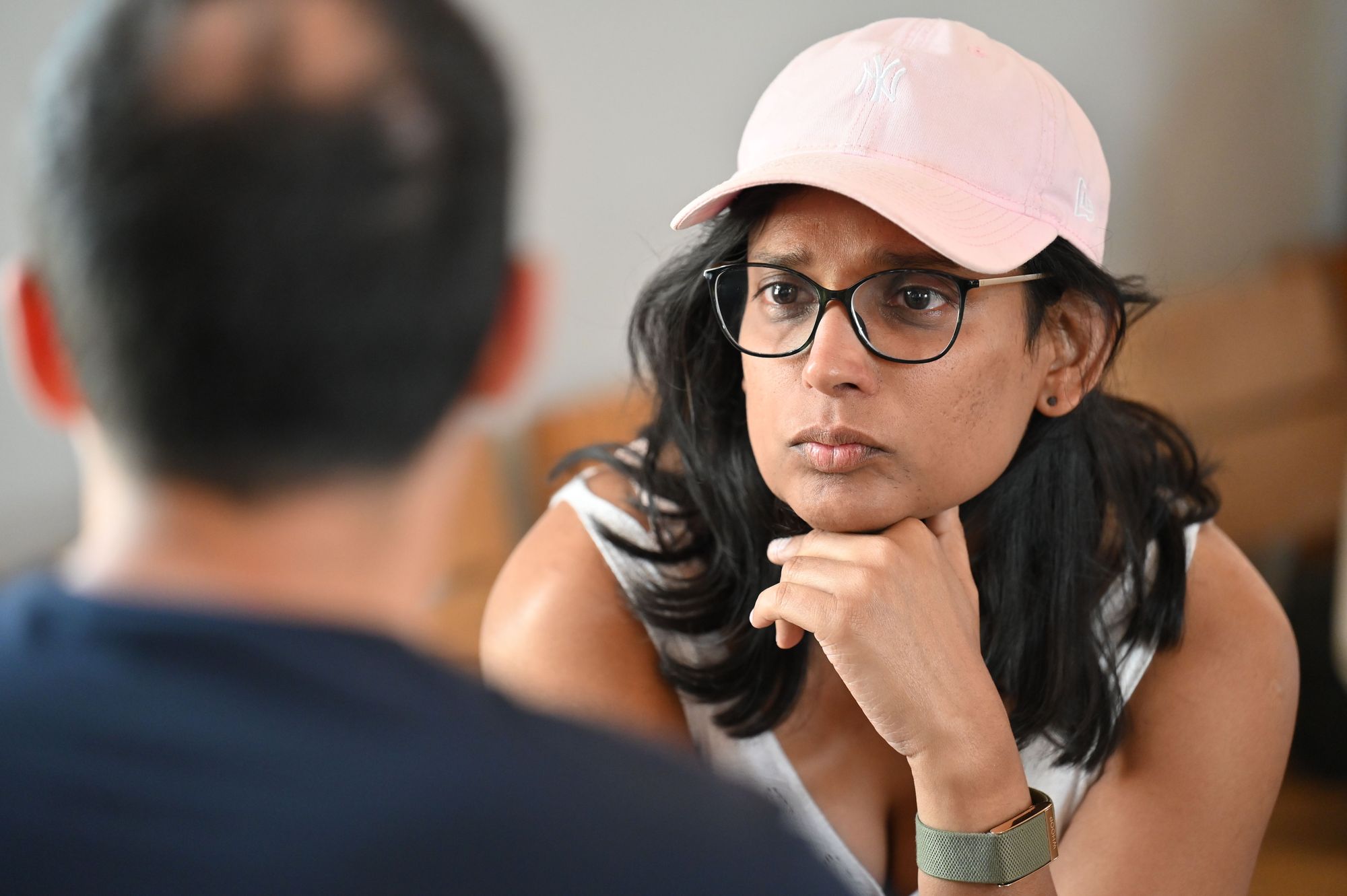
A photograph from the retreat catches her practicing active listening, chin resting on her hand. After all the inboxes, notifications and applications, here is a conversation that needs no interface. She wanted independence from entrepreneurship, then room to pursue a larger company. Along the way, she also sought people she could learn from. The next useful idea might arrive through a customer email. It might arrive when she lets someone else finish speaking.