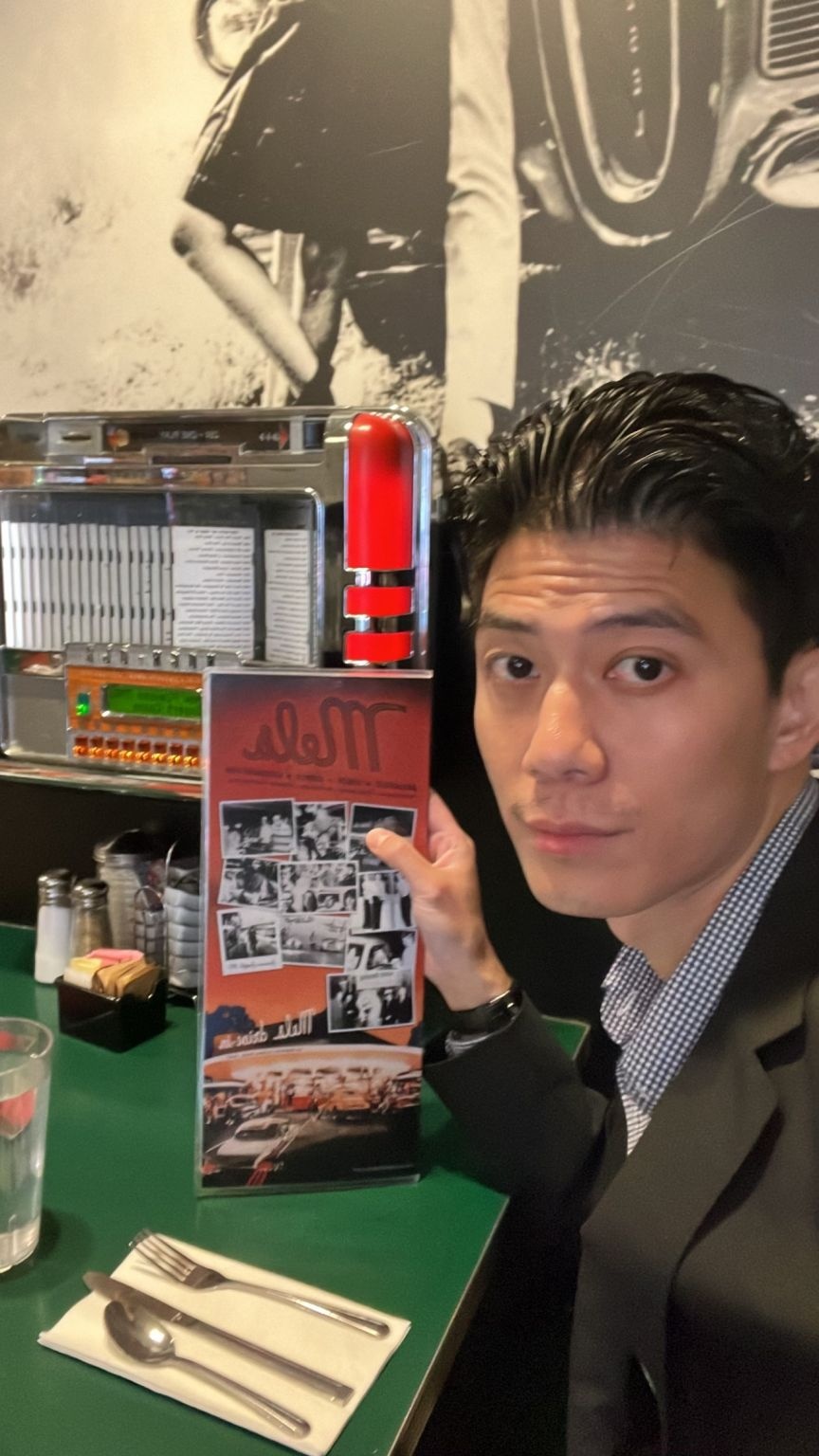
Edward Chiu’s first job in technology ended with steak and eggs. In 2011, two months after moving to San Francisco for a role at Bloomspot, he was laid off. He went to Mel’s Diner and cried over his meal. Years later, he returned to that episode in public, complete with a photograph from the booth. Startup careers acquire plenty of polished origin stories. His came with a menu.
He had already sold high-efficiency toilets and steam boilers. Technology offered a different future. Losing that first job pushed him toward learning to code, a decision that would help him move from selling products to understanding how they were made. Eventually, he would help build software around the work of looking after customers.
A demo before a company
By 2013, Chiu was explaining cloud software onstage. At RailsConf, he and PJ Hagerty presented Engine Yard Cloud, walking developers through getting an application into production. Chiu handled the demonstration; Hagerty covered support. The division was practical. Somebody had to show what the software could do, and somebody had to explain what happened when its users needed help.
The recording has the small complications that make a demonstration feel real. Chiu comments on the venue’s internet connection. He walks through configuration choices and shows a server failover. The audience is being asked to trust a system with work it cannot afford to lose. A good explanation has to reduce uncertainty without pretending the underlying machinery is simple.
Seen alongside his later career, the appearance is an early glimpse of a recurring concern: helping a customer get from buying access to doing something useful. There is considerable distance between those two events. Chiu’s subsequent business would live in that distance.
The first hire tells the story
At DigitalOcean, Chiu built and led customer success. The job put him close to the unglamorous details of software ownership: business reviews, requests for product changes, and outages that did not consult anyone’s calendar. He described getting up at three in the morning to deal with customer problems. A diagram of a customer journey rarely includes a bedside clock.
He also experienced the tools from the operator’s side. The internal software developed around that work helped form the basis of Catalyst. When he began the company, his first hire was a designer. That choice provides a more useful introduction to his priorities than a long list of product adjectives.
Design affected whether a busy person could understand the next action. A system might contain the necessary information and still make finding it a small expedition. Chiu had done enough of those expeditions to care about the route. The interface belonged near the beginning of the company’s decisions.
- 01Do the workCustomer success at DigitalOcean
- 02Build the toolsMake customer information usable
- 03Build the companyCatalyst, co-founded in 2017
An origin sequence, not a scale or performance chart.
By the public launch in April 2018, Catalyst had raised $2.4 million in seed funding led by True Ventures. Edward was CEO and Kevin Chiu was COO. The launch described a product intended to help companies manage customer success at greater scale. Investor Phil Black singled out the brothers’ attention to essential features rather than adding functionality for its own sake.
That is an unusually useful piece of praise for enterprise software. Every feature creates something else to learn, configure, explain, and maintain. The temptation to add another one is easy to understand. Buyers ask for things. Competitors display things. A restrained product requires decisions about whose working day matters most.
In July 2019, Accel backed Catalyst’s Series A. Partner Vas Natarajan connected the investment to a gap: companies had developed substantial tools for acquiring customers, while the work after the sale still depended on cumbersome systems. He also emphasized the founders’ direct experience running sales and success at DigitalOcean.
The investment case and Chiu’s working history fit together. Existing customers needed attention, and the people providing it needed better software. Chiu had reached a market argument by way of a job description.
The brother in the next chair
Kevin Chiu had followed Edward into technology, then to New York, and eventually to DigitalOcean. Before they were co-founders, they had worked in the same company. Their history made Catalyst a family business as well as a software business, with all the extra meaning that puts into a conversation between two people.
Kevin has described Edward as an early influence on his career. He has also described the difficulty of founding with a sibling. Admiration does not settle questions of authority, feedback, or how two people should divide responsibility. Shared history can make a disagreement easier to understand and harder to leave at the office.
That helps explain why the brothers’ partnership is more interesting than a charming line in the company biography. They brought related experience to different responsibilities. They also had to develop a professional relationship around a family relationship that already existed. Nobody gets to design that starting point from scratch.
Growth from people already in the room
Chiu’s argument broadened as Catalyst developed. Customer success could help a business grow through people who already used its product. During a September 2024 podcast conversation with Jason Noble and Jason Whitehead, the subject was customer-led growth: retention, expansion, advocacy, and the continuing value a customer receives.
The distinction has consequences for a normal operating meeting. A renewal asks whether somebody will stay. Expansion asks whether the product has earned a larger place in their work. Advocacy asks whether that person would put their own credibility behind a recommendation. Those are related decisions, each requiring more than the original contract.
For Chiu, existing customers belonged in the discussion of future revenue. That made customer success a concern for the wider business. A team charged with keeping relationships useful would need the ability to act on what it learned, alongside the responsibility to deliver results.
“will this create an impact?”
Edward Chiu’s test for Catalyst’s community work, 2023
Catalyst also invested in a community around the profession. Its Coaching Corner connected experienced customer success leaders with people trying to advance. A compensation report offered information that could be useful even to someone who had no intention of buying the software. Chiu described judging those efforts by the difference they made.
There was a commercial logic to that generosity: useful work introduced people to Catalyst. It also raised the standard for what the company had to provide. A mentoring connection must be useful to two actual people. A report must answer a question somebody cares about. Community is a pleasant word that becomes rather demanding once calendars are involved.
His long-term ambition at Catalyst was to build a revenue platform that helped organizations grow through their existing customers. The everyday version of that ambition was specific: make the information easier to use, make the next action clearer, and give teams a reason to come back.
A competitor becomes a colleague
In February 2024, Catalyst merged with Totango. The companies had competed for customer success buyers. Chiu became co-CEO alongside Alistair Rennie, with Chiu focusing on go-to-market functions. He named colleagues leading marketing, sales, customer success, technology, and product. The announcement replaced a simple founder narrative with a larger cast.
Chiu was explicit about a difficulty behind the decision. Catalyst’s identity as a startup could make some businesses hesitant to buy. Its product had attracted customers; the organization still had to persuade larger enterprises that it was a dependable choice. Totango brought experience with the kind of enterprise buyers Catalyst wanted to reach.
That is a revealing admission from someone who had spent years explaining a product’s usefulness. Buying software involves judging the vendor too. A prospective customer must consider the people, continuity, and support behind the demonstration. Chiu had spent much of his career on the other side of those questions.
Catalyst merges with Totango. Chiu becomes co-CEO.
Chiu publicly announces his departure as Catalyst CEO.
Work-Bench, an investor since 2018, described the combined companies as serving nearly 600 organizations at the time of the merger. That figure belonged to the businesses together. It suggested the breadth of relationships the new organization would need to manage, alongside the work of bringing products and teams together.
Then, in January 2025, Chiu announced that he was no longer Catalyst’s CEO. His recollection included the first customer in 2017, when code was being pushed while the application broke during onboarding. He also thanked the employees, investors, and advisers who had helped build the company. The polished product had required some distinctly unpolished beginnings.
His career since industrial sales has involved learning enough about a problem to take on a different role. Sales led toward code. Customer success led toward product. Founding eventually led to joining a competitor, and then leaving the CEO chair. The pattern allows for ambition and revision in the same biography.
Back at Mel’s, the photograph is wonderfully ordinary: a menu, a jukebox, a person in a booth. The later story contains investors, software, and a merger. Its starting question is small enough to fit at the table: having learned how something works, what could you do differently next?
Follow the conversation
Writing, conversations, and the companies along the way.
- Edward Chiu on LinkedIn
- Edward Chiu on X
- Edward Chiu’s Medium writing
- Catalyst website
- Watch: the Totango merger conversation
- Watch: Engine Yard Cloud at RailsConf
- Listen: customer-led growth, September 2024
- Read: software, design, and the first hire
- Read: Work-Bench’s founder conversation
- Read: the January 2025 departure announcement