Before the pandemic, training Roland’s salespeople meant getting people into the same room. The electronic instrument maker had teams around the world. Travel cost money. Sessions occupied blocks of time. A new hire arriving later could miss the accumulated knowledge. Then lockdowns made the whole arrangement impossible. Roland needed a different way to teach people how to sell.
- Epignosis makes TalentLMS, eFront, TalentCards, and TalentHR.
- Its central bet: make workplace software easier to start using.
- Its useful lesson: finance experiments from something customers already buy.
The week that replaced the roadshow
According to Roland’s published case study, its team had TalentLMS running within a week and developed about ten courses in that first week. Later, after work became hybrid, the company kept the online approach. Salespeople could train when their schedules allowed. Distribution partners and music-store staff could use a separate portal. The classroom had acquired opening hours that suited its students.
“We would’ve never delivered that much training.”
Corin Birchall · Roland
TalentLMS belongs to Epignosis, a workplace software company with Greek roots and a San Francisco headquarters. Its proposition becomes clearer through Roland’s problem: training has to coexist with the job people are being trained to do. Scheduling, access, and administration can determine whether useful knowledge reaches anyone at all.
A second product, paid for by the first
The first audience was different. Co-founders Dimitris Tsingos and Thanos Papangelis originally pursued an online school for Greek students preparing for university entrance exams. That plan encountered obstacles and changed direction. The original Epignosis dates to 2003; the Epignosis LLC chapter and TalentLMS launch date to 2012. Those dates describe different stages of the same long experiment.
The founders took eFront toward international customers through open-source distribution. Papangelis later recalled that early attempts to attract investors had gone nowhere. By 2009, the business was profitable. Revenue from eFront supplied resources to build TalentLMS. The next product arrived with a paying business underneath it, giving the team room to experiment.

There was money involved, of course. In a 2019 account, Tsingos put total investment before profitability below €1 million. Later, the funding story changed: PeakSpan identifies a $12.5 million Series A partnership beginning in 2017. The sequence matters. Customer revenue had already made experimentation possible before growth investors arrived.
The cloud product also changed what a buyer had to do. Contemporary launch material emphasized turning existing presentations, documents, and videos into courses, with fewer settings to negotiate. Epignosis retained eFront. It could offer a simpler starting point without asking every enterprise customer to accept the same constraints.
Tsingos returned as CEO in 2025. His leadership biography describes the company through the ancient Greek idea of the polis: people joined by shared purpose and mutual responsibility. The careers page supplies more everyday details, including flexible schedules and a training budget. Both belong to the employer’s account of its culture. Together, they show how a company selling employee development describes its own workplace.
Four products. Different workdays.
TalentLMS handles employee onboarding, compliance, customer education, and partner training. Administrators organize courses, assign learning, run assessments, and examine progress. Its expertise lies in bringing those everyday training tasks into a manageable system. A department with material scattered across documents and recordings can give that material a sequence, an audience, and a record of completion.
The other products recognize that work does not happen in one standard setting. eFront offers enterprises self-hosting or managed private-cloud deployment and extensive customization. TalentCards delivers short lessons to smartphones, including offline access, for people whose jobs keep them away from desks. TalentHR, launched in 2023, manages employee records, time off, and onboarding, with a native TalentLMS connection.
The business model is subscriptions, with free entry plans and paid tiers. TalentLMS pricing varies with user allowance, features, billing period, and optional content. A buyer can begin with a free account; the pricing page advertises no setup fees. Ready-made courses, including TalentLibrary and an OpenSesame option, address another expense: somebody has to produce the lessons.
In a market that includes LearnUpon, Docebo, Absorb, and Litmos, Epignosis emphasizes accessible setup and distinct tools for distinct requirements. Buyers should compare the workflow they actually need. A team requiring control over hosting has a different purchasing problem from a manager trying to publish an onboarding course this afternoon.
The scarce thing is time
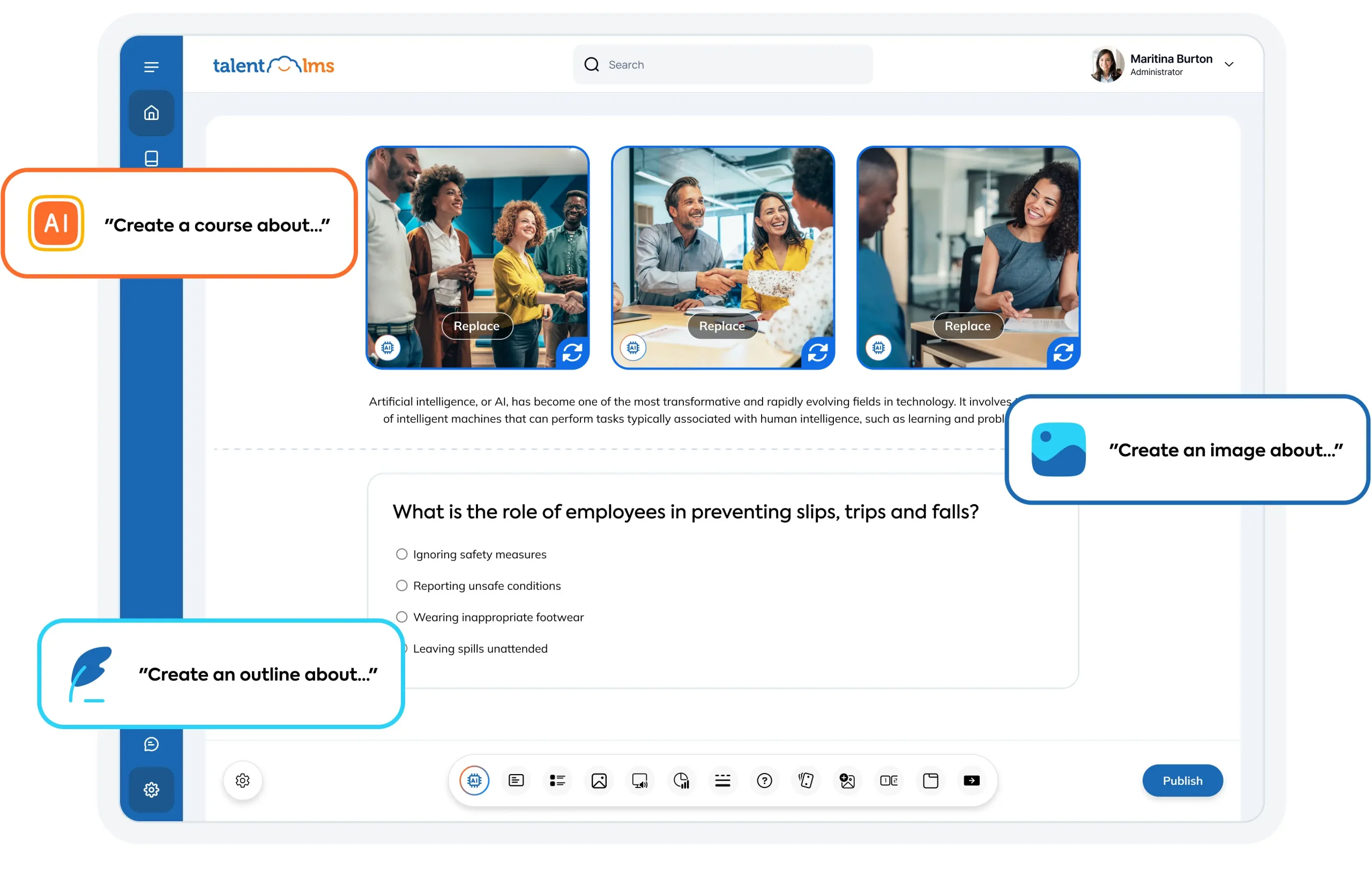
In September 2026, TalentLMS announced prompt-based video and avatar-video generation inside TalentCraft, alongside automations that assign subsequent learning. Its release reported more than 22 million learners across 12,000-plus organizations. Those are company-reported figures. The wider Epignosis website also advertises 70,000-plus learning organizations; the measures should not be treated as interchangeable.
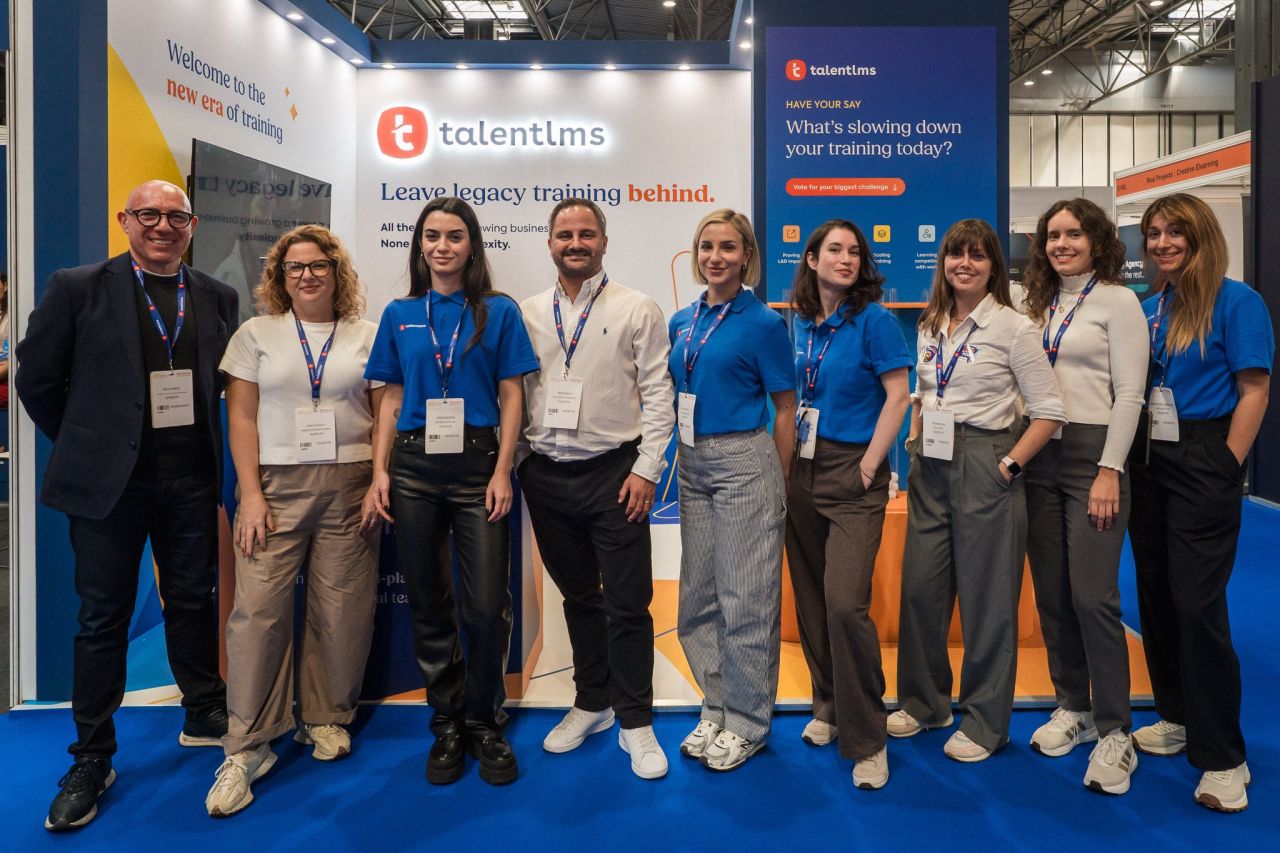
A smaller number is more revealing. At World of Learning in Birmingham that October, TalentLMS polled around 230 booth visitors. Lack of time came first among the offered training barriers. This was an informal event poll, with a self-selected audience. Still, its answers help explain the company’s attention to authoring speed and administrative chores.
For a buyer, the useful experiment is modest: take one recurring training problem, publish a short course, and watch what happens. Check access, completion, understanding, and the time spent administering it. A cheap subscription becomes expensive if the material is wrong, the integration is awkward, or employees have no time to learn.
The same test should include a real learner, a real administrator, and the systems they already use. Ask the learner to find an assigned lesson without help. Ask the administrator to update it and retrieve a completion record. These are practical buying checks, rather than reported results. They turn the company’s promise of simplicity into something a customer can inspect before committing to a larger rollout.
Software can distribute a safety lesson; supervised practice may still be necessary. AI can draft a procedure; someone qualified must check it. Epignosis’s history suggests a discipline readers can borrow: preserve what already works, reduce the effort needed to try the next thing, and let actual use tell you what to build next.