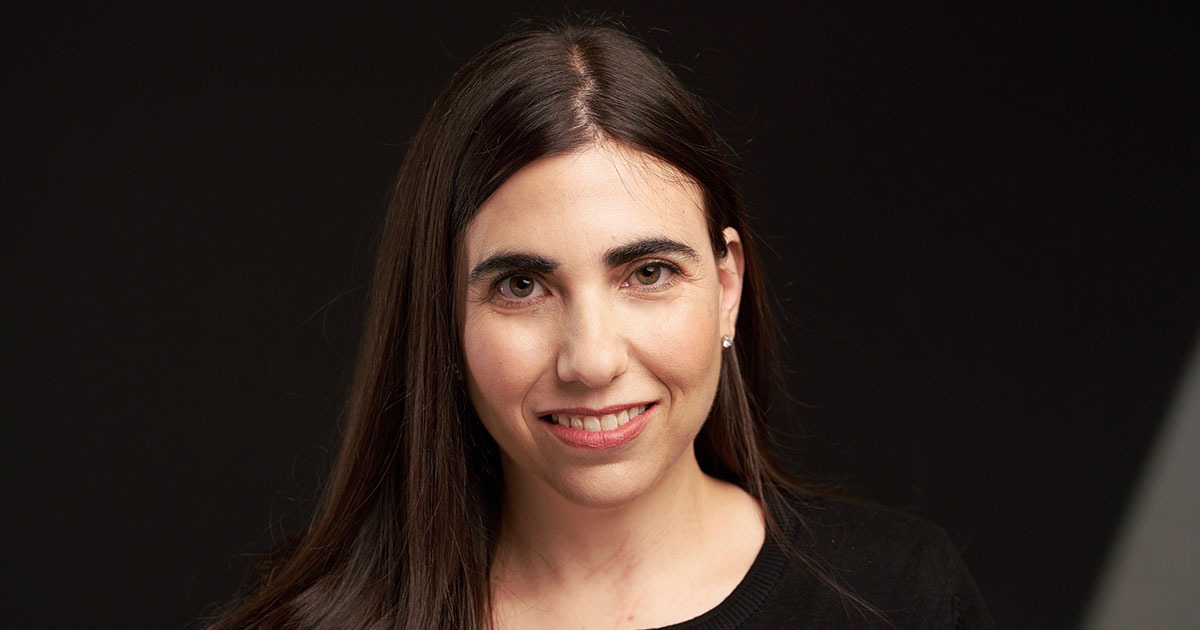
Somewhere between "how to remove a stripped screw" and "how to forgive someone who hurt you," Elizabeth Douglas decided this was the work worth doing. wikiHow gets both questions. Hundreds of millions of them per month, in 18 languages, from every corner of 230 countries. Douglas has been running the machine since around 2017, and running parts of it since 2009, and her approach to that scale is exactly what you'd expect from someone who studied computer science at Stanford and then went back for an MBA: she built systems, hired for kindness, and stopped chasing noise.
She joined wikiHow as Chief Operating Officer in 2009 - while pregnant with her first child, a fact that tends to surface in interviews not as a complaint but as a detail. She was building two things at once. That compression of timelines would become a kind of personal signature. By 2013 she was President and COO. By ~2017, CEO. The growth line on the traffic chart tells the rest: more than 1,500% in the years she's been there, from a niche wiki to one of the twenty most-visited English-language websites on Earth.
"My passion for creating products that help people lead better lives has guided my journey."
- Elizabeth Douglas, ValiantCEO interviewBefore the How-To
Stanford produced a lot of tech CEOs in the early 2000s. Elizabeth Douglas was not one of the loud ones. She graduated with a CS degree around 2000, went to Apple as a User Experience Engineer, and quietly became president of Women at Apple - an internal organization for a company that then, as now, had complicated feelings about the question. She was watching how products felt to the people using them, not just whether they worked. That specific attention - to the emotional texture of technology - has a pretty direct line to the platform she now runs.
She left Apple for Yahoo! Answers as Director of Product, then moved to Intuit as a Group Product Manager. Each move was toward something messier and more human: from polished hardware to crowdsourced Q&A to personal finance. She was pattern-matching toward a particular kind of problem. wikiHow was not a departure from that trajectory. It was its logical conclusion: a platform that exists entirely to answer the question "but how, specifically, do I do that?" for anyone alive.
On Running a Platform that Doesn't Yell
The internet has very few places where the explicit goal is to be genuinely helpful without monetizing your attention or stoking outrage. wikiHow is one of them. Douglas has called it "the nicest place on the internet" without irony. The business model runs on advertising revenue, but the editorial philosophy runs on a different fuel: judgment-free, step-by-step, expert-reviewed guides for anyone who needs them. That includes the person Googling "how to talk to someone with dementia" at 2 a.m., and the kid who wants to know how to tie a tie before his first job interview.
Maintaining that character at 150 million monthly visitors requires actual infrastructure. wikiHow's expert co-author process, which Douglas championed after the platform faced a significant traffic drop, pairs community-submitted articles with credentialed specialists who review and improve the content. The result is something between Wikipedia's collaborative model and a traditional editorial process. It worked. The traffic recovered. The quality improved. The scars became features.
"Challenges are fleeting, people move on, and better days always lie ahead."
- Elizabeth DouglasLeadership Without the Performance
Elizabeth Douglas talks about emotional intelligence the way some CEOs talk about quarterly targets - as if it were the actual key metric. In multiple interviews she has argued that being an effective CEO requires high emotional intelligence above most other competencies. Her management philosophy prioritizes collaboration over competition, kindness over brilliance, and humility over status. She hires people who are good at all three. The Comparably rating - a perfect 100/100 CEO approval score, placing her in the top 5% of similarly-sized companies - suggests the team noticed.
She manages the pressure of scale by compartmentalizing it deliberately. When asked about stress, she talks about exercise, music, and her dogs. She has created personal bookends to her workday: mornings with her daughters before work begins, evenings where work stops. The discipline isn't work-life balance in the aspirational-podcast sense. It's operational. You can't run a platform that helps people manage difficult moments in their lives if you can't manage your own.
"Being a mother has given me a second sense of responsibility to my team."
- Elizabeth Douglas, Authority Magazine"Being an effective CEO really requires high emotional intelligence."
- Elizabeth Douglas"Failure, while uncomfortable, has always been an opportunity for growth in my experience."
- Elizabeth Douglas, ValiantCEO"Spend your hours, minutes, even seconds being productive."
- Elizabeth DouglasThe Mission, Still Expanding
wikiHow's stated mission is to empower every person on the planet to learn how to do anything. The key word is every. That's what the 18 languages are for. That's what the 230-country reach is about. And that's what keeps the guides calibrated toward clarity rather than expertise - toward "here is what you do, step by step" rather than "here is the nuanced professional landscape of this topic." Douglas has described this as building a judgment-free resource. The implicit assumption is that asking a question - any question - should be safe.
She brought wikiHow through the COVID-19 pandemic, transitioning the team to remote work and maintaining culture through virtual events and deliberate personal connections. The platform, which answers practical questions for hundreds of millions of people, was particularly well-positioned for a period when everyone needed practical answers quickly. The traffic didn't dip. It climbed.
Personality, Captured in a Few Details
She manages stress with exercise, music, and dogs - not the usual CEO trio of golf, cigars, and stoicism. When a significant traffic drop hit wikiHow, her instinct was to investigate and improve, not to pivot or panic. She returned to Stanford to speak to the Women in Business program in 2018, running a fireside chat for students who were roughly where she was when she graduated. She talks about productivity as a near-moral value: "spend your hours, minutes, even seconds being productive" - but productivity, in her framing, includes time with her kids and recovery from the day.
She had her first child around the time she joined wikiHow. She had her second while running the company. The parallel timelines were not a distraction from the work. They were, by her account, clarifying - sharpening her sense of responsibility not just to the platform but to the people building it with her. "Being a mother," she told Authority Magazine, "has given me a second sense of responsibility to my team."
A Resilient Team Starts with Culture
Douglas's leadership framework is less about strategy decks and more about culture design. She has argued that a resilient team starts with a strong company culture where collaboration takes priority over competition. That shows up in hiring: she looks for kindness, empathy, and humility alongside capability. The result is a 200-person company that punches at the weight of platforms ten times its size - 150 million monthly visitors, served by a team that would fit in a mid-size office building. The leverage comes from the collaborative content model, but the stability comes from the culture she's built around it.
Under her watch, wikiHow partnered with the UN Verified Initiative on disinformation education and with behavioral science researcher Shawn Achor on happiness content. The platform is not just answering "how do I fix my sink." It's trying to be genuinely useful to the full spectrum of human problems, from the mechanical to the emotional. That scope is not a marketing strategy. It's the actual goal.