A water bottle can have a surprisingly complicated childhood. Before it became clear, tough and ready for a hiking trail, some of its raw material may have been plastic somebody else threw away. Eastman’s proposition begins there: take a troublesome material apart, recover its chemical building blocks, and give a manufacturer something useful to work with. The bottle looks ordinary. The supply chain has changed.
- Eastman sells the ingredients inside familiar products, from reusable bottles to laminated glass.
- Its Kingsport plant breaks waste polyester into building blocks for new materials.
- The commercial test includes reliable operation, willing buyers and affordable feedstock.
A business born from a missing ingredient
George Eastman had encountered the raw-material problem long before anyone talked about circularity. During World War I, Kodak struggled to obtain chemicals and other photographic supplies from overseas. A camera business could have customers, factories and inventions, yet still be held up by an ingredient it did not control.
In 1920, Eastman bought an unfinished wood-distillation operation in Kingsport, Tennessee. Tennessee Eastman would supply chemicals for Kodak. The origin matters because it establishes a habit: look behind the finished product and ask where its ingredients come from. Today, the uncomfortable ingredient is often fossil feedstock; the overlooked alternative is waste.
The business became independent in 1994. Its name still sounds photographic, but its customers now inhabit transportation, construction, packaging, textiles, medical products and consumer goods. Eastman mostly supplies other companies. You encounter its work wearing someone else’s label.
The ingredient gets the job
Consider the range. Tritan is a clear, durable copolyester used in reusable drinkware and other products. Saflex is the interlayer inside laminated glass, with versions designed for acoustic performance and head-up displays. LLumar and SunTek supply window and protective films. Naia brings cellulosic fibers to clothing and home textiles. Less visible solvents, additives and intermediates serve industrial production.
The business model follows the material: sell to a manufacturer, converter or brand; help it meet a specification; support the application. A bottle maker needs clarity and impact resistance. An automotive glass supplier has different requirements. The useful expertise combines chemistry with understanding how a customer will actually process and use the product.
There is history behind that emphasis on execution. Eastman received the Malcolm Baldrige National Quality Award in 1993. The award assessed management practices, customer focus and operating results, rather than honoring a particular product. That distinction suits a materials supplier. A clever formulation earns its place only when a factory can deliver it consistently and a customer can turn it into something that works.
Competition changes with the job. Saflex faces suppliers such as Sekisui and Kuraray. Film alternatives include XPEL and 3M. For recycled plastics, virgin resin and mechanically recycled material can also compete for the same purchasing decision. Eastman’s argument depends on the application: can its material deliver the required properties with a different feedstock?

Unzip the polyester
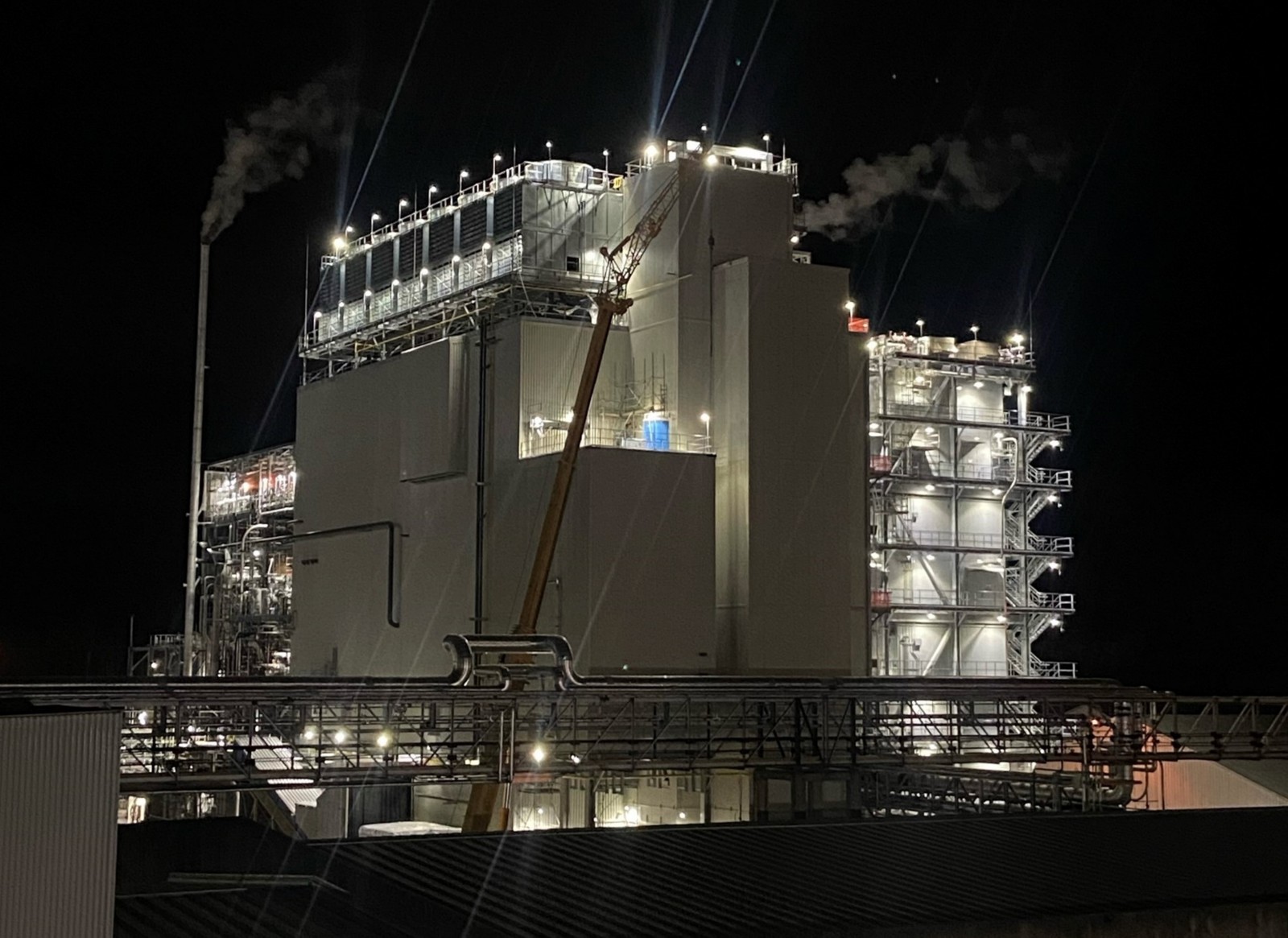
Mechanical recycling sorts, cleans and remelts plastic. For a suitable, clean stream, that can be an effective route. Eastman’s polyester renewal process targets harder cases, including colored or otherwise difficult polyester waste. Methanolysis breaks the polyester into its original chemical building blocks. Those can be purified and used to make new material.
- 01Waste polyesterSuitable difficult PET
- 02Break it downMethanolysis + purification
- 03Make it againBuilding blocks to materials
The plant cannot collect its own dinner. Eastman’s agreement with Rumpke connects collection and sorting to chemical processing. Rumpke committed to supplying its stream of difficult and colored PET packaging waste. That is an instructive partnership: a sophisticated reactor still needs someone to find, separate and deliver the right rubbish.
Nor does every Renew product follow the same route. Naia Renew uses Eastman’s carbon renewal technology, a distinct process. Its standard formulation combines 60% sustainably sourced wood pulp with 40% certified recycled waste material through mass balance accounting. Treating all “advanced recycling” as one machine misses the machinery.
The percentage needs a footnote
Tritan Renew offers up to 50% certified recycled content, allocated using ISCC mass balance. Nalgene uses it in Sustain bottles. Mass balance tracks qualifying recycled inputs and allocates their contribution to outputs within a certified system. It does not mean someone has counted recycled molecules inside each bottle.
“the recycling infrastructure does not exist to be able to properly recycle Tritan, Tritan Renew”
Eastman’s Tritan FAQ
There is another distinction the company’s own FAQ makes unusually plain. A product can use recycled inputs while lacking a widely available collection route at the end of its life. For a buyer, those are separate questions. Ask about the material’s origin, then ask where the finished item can actually go.
The plant works. The spreadsheet has questions.
In 2021, Eastman announced approximately $250 million of planned investment in the Kingsport molecular recycling facility. That was the announcement estimate. Initial on-spec production and revenue arrived in March 2024. By that autumn, management was reporting more downtime than expected during the ramp-up. A production milestone had not abolished the operating problem.
Performance improved. Eastman reported more than 2.5 times as much Kingsport recycled-content production in 2025 as in 2024, alongside approximately $60 million in incremental earnings. Its second-quarter 2026 release said circular-platform revenue doubled in the first half. These measure different things; none is a claim that the entire company became a recycling business.
Company sales fell from $9.382 billion in 2024 to $8.752 billion in 2025. Expansion also faced a funding reversal: the Department of Energy terminated the Longview recycling project’s award in May 2025. Eastman’s June 2026 filing disclosed an appeal. Meanwhile, its sustainability report described exploring more capital-efficient capacity options as Kingsport’s operating capability improved.
For someone choosing a material, this creates a useful buying sequence. Start with the application: a textile fiber, a clear container and a glass interlayer are different engineering problems. Then discuss the appropriate grade and processing requirements with the supplier. Finally, examine the environmental claim separately from the performance specification. A durable product may justify keeping material in use longer; a recycled-input certificate answers a different question about where its ingredients began.
The lesson a product team can copy is precise. Match the material to a real performance requirement. Check the recycled-content accounting. Secure a credible route for supply and disposal. The economics become difficult when cheap virgin resin, reluctant buyers, unreliable waste supply or costly new capacity pull in the other direction. Eastman has made the chemistry tangible. Selling the next batch remains part of the experiment.
Follow the material
Eastman website ↗ · News & stories ↗ · Investor updates ↗