Peter Huntsman liked driving the truck. He liked the other drivers, the refineries, the people making things. At nineteen and twenty, hauling petroleum products offered an education he wanted to keep taking. The university classroom had already lost the contest. A chemical company, it turned out, offered rather more opportunities to get your hands on the subject.
There was, of course, a complication with any account of this as an ordinary apprenticeship. His father was Jon Huntsman Sr. The family name would eventually be printed on the enterprise Peter ran. He has never needed much prompting to acknowledge the advantage. In 2004, he put it with a dry economy: “I’m sure nepotism has a value.”
Now, after more than a quarter-century as chief executive, he is supporting a transaction that would put another person in that job. The proposed merger with Olin would make Ken Lane CEO and Peter Huntsman non-executive chairman. It is a curious destination for a story about inheriting responsibility: a plan to divide it differently.
The family name rode in the cab
Born in Los Angeles in 1963, Peter Riley Huntsman grew up in a family whose business and public lives would become unusually intertwined. His father built the chemical company. His brother Jon became governor of Utah and a United States ambassador. Peter’s route ran through oil deliveries and operating businesses. The shared surname concealed very different daily calendars.
He began at Olympus Oil in 1983. In 1987 he joined Huntsman Polypropylene as a vice president, later becoming senior vice president and general manager. His responsibilities also extended into chemical and packaging businesses. By 1994, he was president and chief operating officer. These were years spent learning how materials, purchasing, transport and customers fit together.
On July 1, 2000, he became chief executive, keeping the president’s title. The announcement described seventeen years inside the organization, including management work in polymers, purchasing and logistics. His father remained chairman. The change had the familiar shape of a family succession, but the assignment was concrete: Peter would take responsibility for business operations.
His account of leadership is refreshingly willing to lower the temperature around the title. He wants capable colleagues, differing opinions and room for people to question him. “My ideas aren’t any better than anybody else’s,” he said in 2021. A boss called Huntsman inviting an argument at Huntsman is at least a promising start.
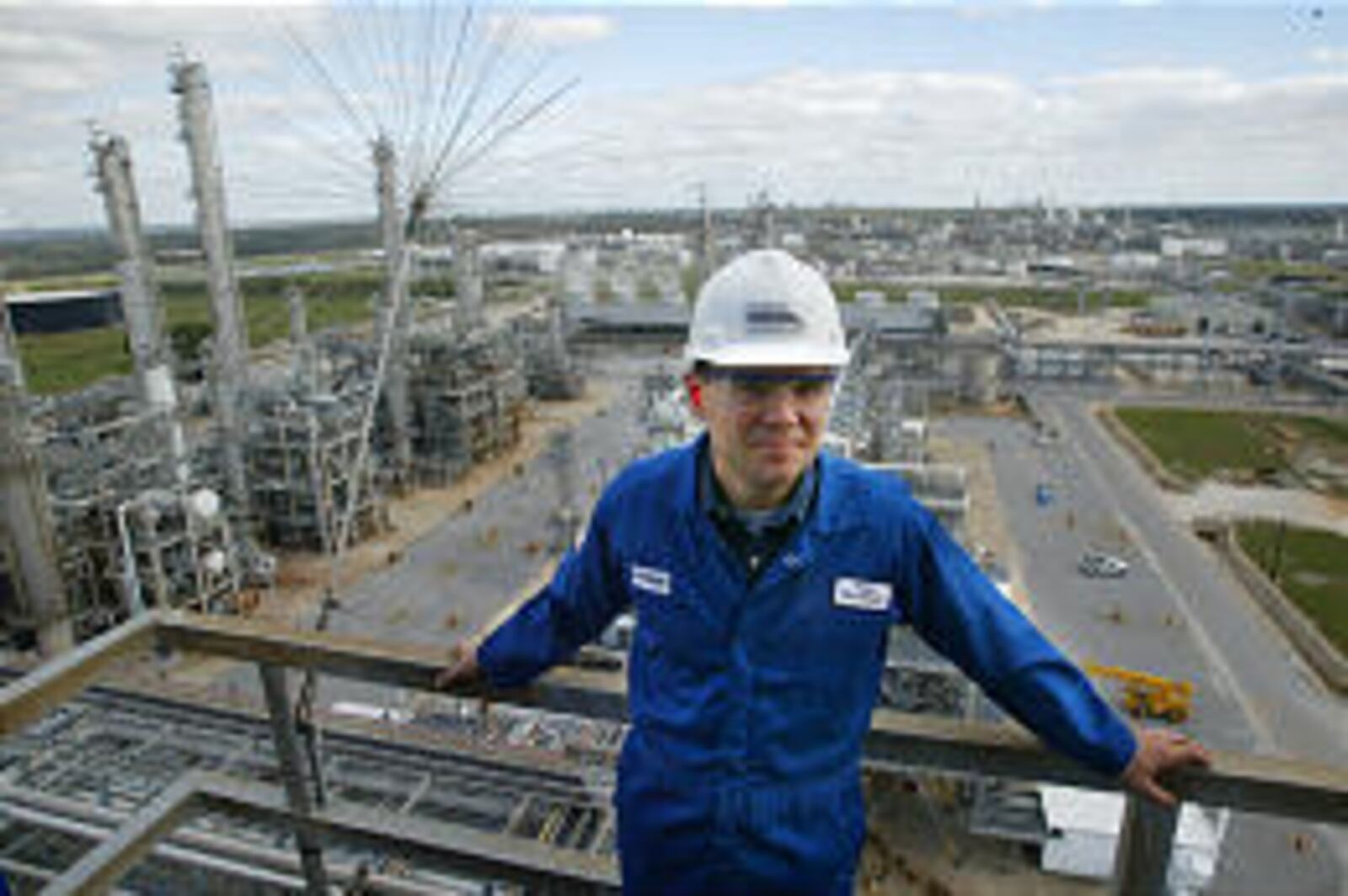
The gas bill arrives
The early years in the top job supplied a brutal test. After his appointment, natural gas costs surged while demand weakened. The family business came close to being unable to meet its obligations. The predicament had little interest in the distinction between founder and successor. A plant needs energy whichever member of the family signs the checks.
The restructuring cost the family 49.9 percent of its equity. An investment fund took $1.1 billion of debt off the books; the Huntsmans retained a narrow majority. Jobs were cut. The account is less comfortable than the usual succession story, and more revealing. Keeping the business alive required giving up a large part of its ownership.
That experience belongs beside the truck-driving origin. Working close to production can teach an executive what a business does. A financial crisis teaches how quickly its room for maneuver can disappear. Huntsman had inherited access, then received an industrial education with an unforgiving timetable. The machinery did not pause while the balance sheet was repaired.
A deal can fail. The job continues.
Another apparent ending arrived in 2007. Huntsman agreed to a sale to Basell, then accepted a higher offer from Hexion, backed by Apollo. The second transaction ran into antitrust scrutiny, the credit crunch and litigation. By 2009, the chief executive who had expected to become chairman of a combined business was still running Huntsman.
A December 2008 settlement with Hexion and Apollo brought $1 billion. Huntsman explained the decision in practical terms: a prolonged appeal could leave the company winning in court without collecting the money. Cash received during a downturn had a particular usefulness. It could support an actual business while the argument about an unrealized combination finally ended.
The episode adds a useful wrinkle to the current merger story. Huntsman has already occupied the gap between an announced future and a completed transaction. Those are different places. In one, executives describe the organization they intend to create. In the other, people must make that organization work. His career has repeatedly required him to keep operating in between.
- 1983Olympus Oil
- 1994President & COO
- 2000Chief executive
- 2018Board chairman
- 2026Olin merger proposed
An egg carton’s improbable descendants
Ask Huntsman to explain the company and he can go back well before his own appointments. In a January 2025 interview, he told the story through his father’s packaging experiments: eggs breaking in transit, plastic containers seeking customers, soup bowls that failed to sell and a clamshell tried as a place to put jewelry. Industrial history occasionally resembles a cupboard full of purchases that seemed sensible at the time.
Hamburger packaging eventually supplied a market. The company moved further into plastics production and, through acquisitions, into other materials. Huntsman uses the distance between those containers and aerospace applications to explain the chemical industry’s development. It gives an abstract business a visible journey. The material starts as something protecting lunch and ends up helping make an aircraft.
He makes a related argument about using resources. In a 2023 interview, he pointed to the demand for devices and products that are lighter, stronger and more durable. He described competition as a pressure to reduce the inputs needed for the same result. The argument is characteristic: begin with a physical object and follow the engineering and economics inside it.
It also helps explain his frustration with broad corporate language about the future. His public arguments return to production, materials and the conditions needed to manufacture them. These are the subjects on which his experience gives him something specific to say. Whether an audience agrees with his policy conclusions, the perspective comes with a factory attached.
An illustration of the company’s changing applications, rather than a scale or revenue comparison.
Recognition arrived along the way. He received the Petrochemical Heritage Award in 2008, seven years after his father had received it. The shared honor makes an appealing family footnote, although the years between the two awards contained enough business trouble to discourage any tidy idea of an effortless inheritance.
In January 2018, Peter added the board chairmanship to his executive responsibilities. The 2026 proxy describes a leader with decades of operational experience and relationships across customers, suppliers, unions and communities. Those relationships are part of what the proposed next role would preserve: experience and oversight, with day-to-day executive authority assigned elsewhere.
The argument travels
His work outside the company has given those arguments a wider circuit. He chaired the American Chemistry Council’s board in 2022 and joined the board of its European counterpart, Cefic, in 2023. These positions connect the operator’s concerns to an industry trying to influence the rules, costs and infrastructure under which its members produce.
His public interviews have returned repeatedly to Europe’s energy costs and manufacturing competitiveness. The concern is consistent with a career in which energy prices once threatened the family business. He argues for conditions that allow companies to keep making things locally. It is an industrialist’s view, with the interests and experience that description implies.
Other connections reach further back. By May 1994, Huntsman had made more than thirty trips to Armenia, overseeing a concrete operation and the family’s relief efforts. That is an unusual item to find next to a promotion announcement. It places him in the practical work of getting supplies and production organized, far from a Texas office.
The public record has its quieter details too. He and his wife, Brynn, have eight children. A company podcast introduces him as a culinary hobbyist. His board and advisory work has included the Cynthia Woods Mitchell Pavilion and Interfaith of The Woodlands. The professional life is international; some of its commitments remain close to home.
A different chair at the table
The proposed Olin combination brings his industrial arguments into a new corporate arrangement. Announced in June 2026, it would pair Olin’s upstream production capabilities with Huntsman’s downstream materials and formulations. The companies expect a business headquartered in The Woodlands. Huntsman would keep a boardroom role while Lane assumed responsibility for running the combined operation.
Shareholders approved the merger proposals on August 25. The preliminary results were emphatic: about 99 percent of votes cast at Huntsman and 97 percent at Olin supported the transaction. Those percentages describe votes cast, rather than all outstanding shares. The distinction matters when large numbers are doing persuasive work. Approval moved the plan forward; it did not complete it.
Shareholders said yes
Approximate share of votes cast in favor of the merger. Figures announced by the companies; other closing conditions remain.
On September 11, the companies announced the expiration of the United States antitrust waiting period. Additional regulatory approvals and other closing conditions remained. The announced timetable pointed to the first half of 2027. As of October 2026, Huntsman was still chairman, president and chief executive of the company bearing his name.
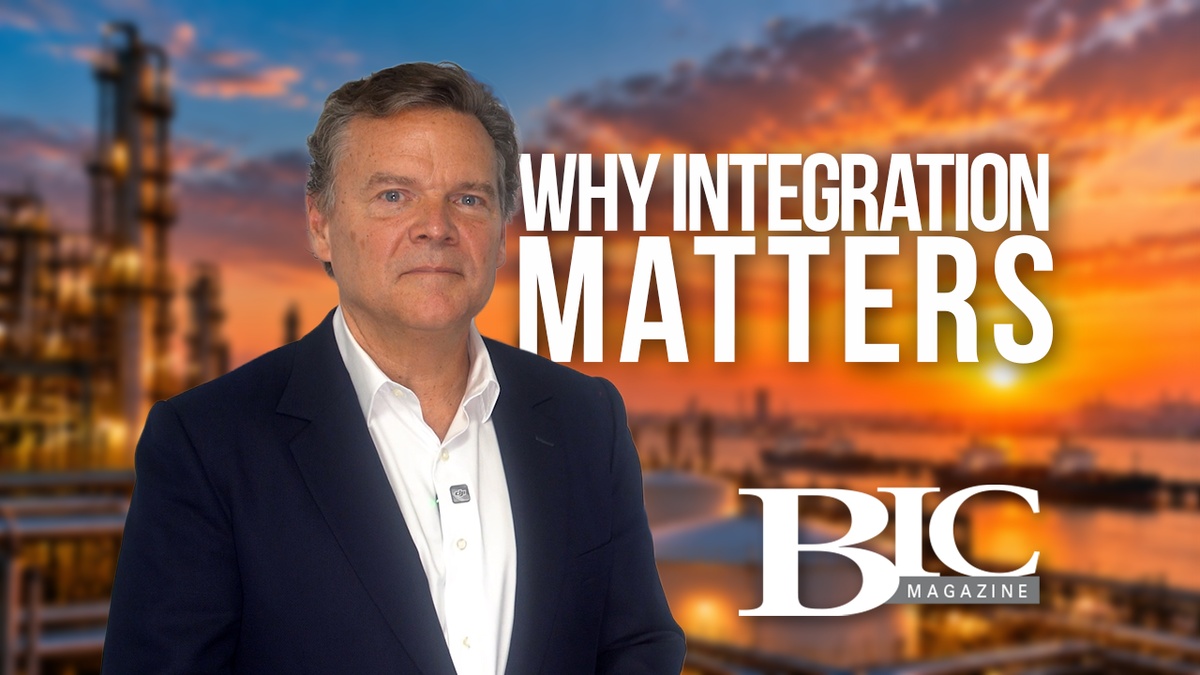
In a recent conversation at the Gulf Coast Industry Forum, he discussed scale and integration, but also the people who would have to work together. After all the business of combining industrial assets, he landed on a rather human concern.
“The most important chemistry is going to be that human chemistry.”Peter Huntsman · BIC Magazine interview, 2026
That is a fitting thought for this particular handoff. A surname can last on a business while the work around it changes. Huntsman has driven the truck, run the operations and occupied the executive chair. The next arrangement would ask him to contribute from a different seat. There is plenty left to make work.