Consider the wrapper around a pair of cleaning gloves. It must look presentable, protect its contents and survive manufacture. Add recycled plastic, and an apparently modest assignment acquires awkward questions. Will the film smell? Will its color stay consistent? Will it behave on the production line? These were practical obstacles for Ecoplast, an Indian film supplier serving Sri Lankan packaging maker Lanka Plastic. Dow’s account of their collaboration begins here, among the details a shopper might never notice.
- The product: materials other businesses turn into packaging, buildings and everyday goods.
- The method: combine chemistry with customer trials and industrial production.
- The tension: better materials still face factory costs and chemical-market cycles.
Working with Dow’s REVOLOOP recycled resins, the companies adjusted film design and processing. The finished glove packaging incorporated 30% post-consumer recycled plastic. The achievement was a wrapper that could do its ordinary job with a different material recipe. That is a useful introduction to Dow: a company whose work frequently becomes visible only when something goes wrong.
01 / AN EXPERIMENT THAT STUCKThe third company was the keeper
Herbert Henry Dow’s career offers an early version of that obsession with process. His first company went bankrupt. At his second, Midland Chemical, he used electrolysis to extract bromine from brine. He wanted to extend the approach to chlorine and bleach. His backers resisted diversification and removed him from control.
In 1897 he founded The Dow Chemical Company. Chlorine chemistry gave the new enterprise its opening. By 1913, he was announcing a departure from bleach and concentrating on chlorine’s usefulness as a raw material. The interesting habit was already there: examine an industrial process, then ask what else its chemistry could make possible.
“If you can’t do it better, why do it?”
HERBERT H. DOW / COMPANY HISTORY
The modern public parent, Dow Inc., emerged from the DowDuPont separation in 2019. That distinction matters. The historical company’s long list of businesses is not a reliable shopping list for today’s Dow. Its current focus is materials for packaging, infrastructure, mobility and consumer applications.
02 / FROM PELLET TO PACKAGEA factory rehearsal, before the expensive performance
Dow sells polyethylene resins, silicone materials, polyurethane ingredients, coatings and intermediates. Its buyers include packaging converters, building-product manufacturers, automotive suppliers and consumer-product formulators. They take Dow’s output and turn it into something another customer can use. The relationship is industrial, technical and often several steps removed from a shopping basket.
Consider two product families. INNATE packaging resins help engineers tune film performance; selected grades support polyethylene structures designed for recycling. DOWSIL building products include silicone sealants for structural glazing and weathersealing. A pouch and a building joint have different requirements. Both make the material’s behavior part of the finished product’s performance.
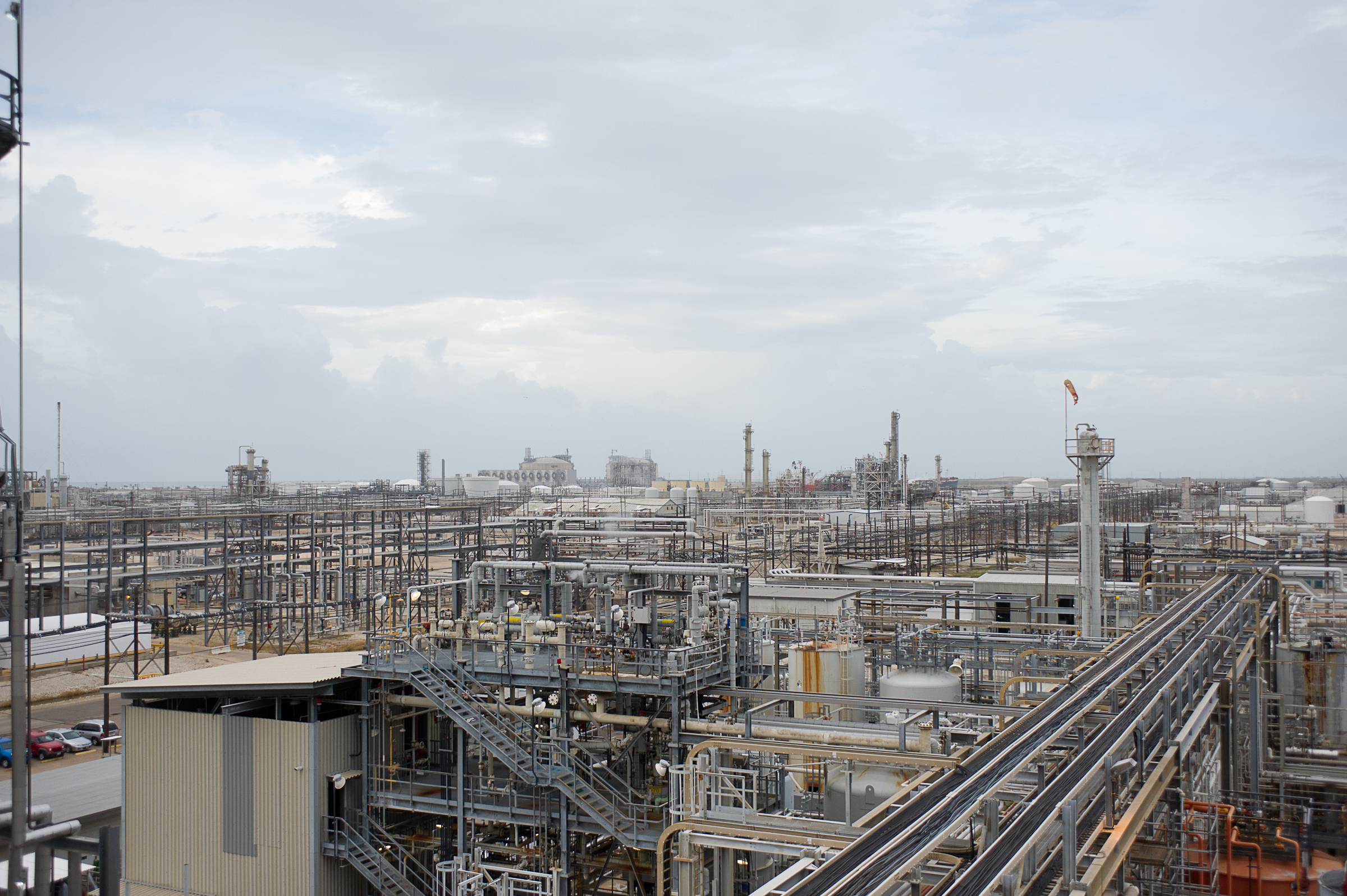
Through Pack Studios, customers can work with Dow specialists on prototypes, fabrication and testing. Converters, equipment makers and brand owners can examine the same problem together. Nestlé Purina is among the collaborators Dow names. A promising recipe gets a rehearsal before a manufacturer commits to producing it at commercial scale.
Here is the transferable idea: test the customer’s process alongside your product. A resin specification cannot settle every question about a finished package. For a manufacturer exploring Dow, a productive starting point is the application, processing equipment and required performance. Those constraints give the technical conversation something concrete to solve.
Dow earns revenue by selling materials, directly and through distributors. Integration connects feedstocks and intermediates to downstream production. Its competitive pitch combines that manufacturing base with application expertise. Alternatives vary: LyondellBasell and SABIC overlap in plastics; BASF and Covestro compete in polyurethane-related markets. A buyer compares particular grades, supply arrangements and performance, rather than choosing one chemical company for everything.
03 / THE RETURN JOURNEYThe circle needs a route home
Recycled content is one route to changing a material’s footprint. Another is redesigning a package so its layers are easier to recycle. The distinction matters: incorporating recovered plastic and making tomorrow’s package recoverable solve different parts of the problem. Neither description establishes that a local waste system will collect and process the finished item.
Dow and Procter & Gamble announced a development agreement in 2024 to pursue dissolution-based recycling for difficult plastic packaging, focusing on polyethylene. Their expertise meets at the point where discarded packaging might become useful feedstock again. This is a development effort; the announcement alone does not establish commercial output or successful economics.
Distribution belongs in the story, too. In June 2026, Dow and Univar Solutions announced an agreement covering Decarbia low-carbon products with product carbon footprint certificates. Better chemistry needs customers who can obtain it and assess its claims. In practical terms, the experiment must travel through a supply chain.
04 / THE BILL COMES DUEEven chemistry has a cycle
Customer expertise cannot remove commodity exposure. Dow reported $39.968 billion in 2025 sales, down from $42.964 billion in 2024. A company can improve a material while prices, demand or operating costs make the business harder. Technical progress and financial progress keep different schedules.
Estimated one-time costs for Transform to Outperform, including severance associated with approximately 4,500 roles. Targeted operating EBITDA improvement: at least $2bn. A target is not a realized saving.
Karen Carter became CEO in July 2026, succeeding Jim Fitterling, who moved to Executive Chair. She joined Dow in 1994 and previously ran Packaging & Specialty Plastics. Her experience connects customer relationships with the manufacturing economics now under scrutiny. The company describes safety, integrity and respect for people as cultural foundations; restructuring puts those commitments under practical pressure.
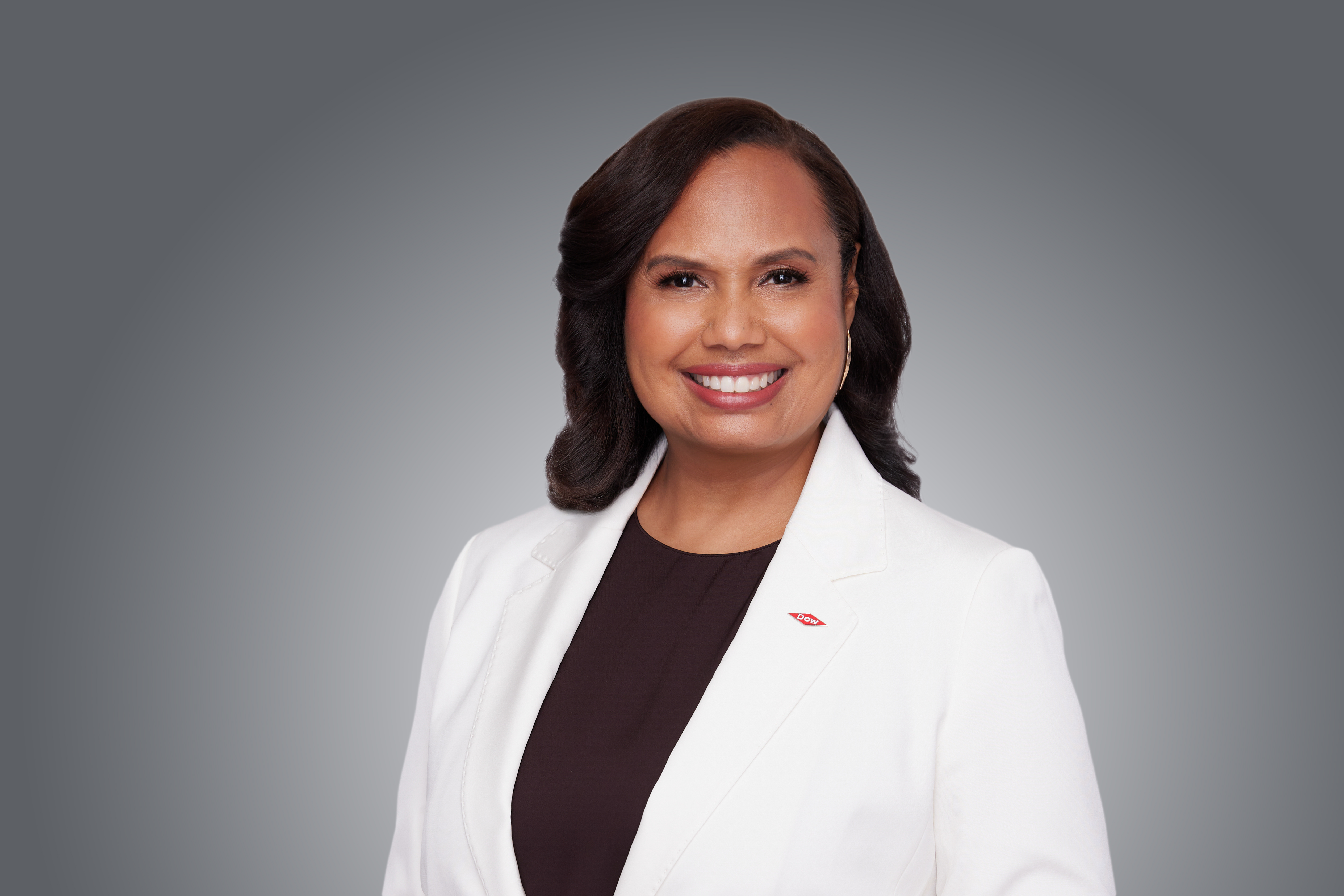
Second-quarter 2026 sales reached $12.092 billion, up 20% year over year. Local prices rose 20%; volume fell 1%. Those figures explain why revenue alone is an incomplete scorecard. The company sold into better pricing conditions without a corresponding expansion in physical volume.
Return to the glove wrapper. Its success required a workable resin, a converter’s knowledge and a package acceptable to its market. Dow’s opportunity sits in those connections. Its constraint is that every useful connection must eventually pay its way through a factory.