The interesting part of an artificial hip is the part most of us would struggle to name. Between the moving surfaces, a polymer bearing helps the joint do its work. Celanese supplies GUR ultra-high molecular weight polyethylene for orthopedic applications. It also supplies VitalDose EVA for controlled drug delivery. One material helps a replacement joint move; another helps an implant release medicine. These are small differences in chemistry with rather large consequences for the person carrying them.
- Materials for medical devices, vehicles, electronics and coatings.
- Two engines: engineered polymers and acetyl chemicals.
- An $11 billion acquisition. A continuing drive to reduce debt.
Celanese occupies an unusually intimate place in industrial life. You may never buy anything with its name on the box, yet manufacturers can build its materials into the things you drive, touch or receive in a hospital. Understanding this company means looking beneath the finished object, to the decisions somebody made before there was an object at all.
The first thing to disappear was the customer
In 1918, the Dreyfus brothers had a problem. Their wartime paint contracts had been cancelled. Henri and Camille Dreyfus had developed cellulose acetate chemistry, including coatings for aircraft. Peace removed the urgent buyer. Their response was to concentrate on acetate fibers. The American predecessor of Celanese was incorporated that year, with a production site taking shape in Cumberland, Maryland.
This origin offers a useful way to read the company: a manufacturing process can outlive the market that first paid for it. The brothers changed the application. Today’s Celanese works across a much wider collection of applications, but the central question remains recognizable. What else can this chemistry do?
Two businesses. Different reasons to call.
One answer begins with the Acetyl Chain. Celanese makes acetic acid, vinyl acetate monomer and downstream materials used in adhesives, paints and coatings. Its integrated network connects feedstocks, intermediate chemicals and finished product families. Here, plant reliability, logistics and the ability to move production through the network matter alongside the molecule. A customer needs a dependable shipment as well as the right specification.
The other answer is Engineered Materials: polymers selected for jobs where ordinary plastic will not necessarily do. Hostaform and Celcon POM serve precision components; Vectra liquid crystal polymers address demanding electronics applications; Santoprene combines rubberlike behavior with thermoplastic processing. Celanese bought that last business from ExxonMobil for $1.15 billion in 2021.
These are business-to-business sales. Customers include component makers, device manufacturers and industrial formulators, with distributors also connecting products to buyers. Alternatives depend on the chemistry: engineering resin suppliers compete for material specifications, while acetyl producers compete on cost and supply. Celanese’s pitch is the combination of a broad materials portfolio, application development and manufacturing reach. Whether it wins still comes down to a particular part, price and qualification.
Then came the $11 billion bill
In November 2022, Celanese completed its purchase of most of DuPont’s Mobility & Materials business for $11 billion in cash. The transaction brought engineering thermoplastics, elastomers, brands, intellectual property and production assets. At announcement, Celanese expected roughly $450 million in synergies and total debt below three times EBITDA within two years of closing. Those were expectations, not results.
The later numbers tell a more difficult story. In 2025, net sales fell 7% to $9.544 billion amid weak demand in automotive, construction, paints and coatings. Celanese reported a $786 million operating loss. Its adjusted EBIT was positive, but that measure excludes specified items and should not be confused with operating profit.
The response became visible in capital allocation. Celanese cut its quarterly dividend by about 95% beginning in early 2025 and prioritized debt reduction. In February 2026, it sold Micromax to Element Solutions for approximately $500 million. In August, it agreed to sell another 19% of Nutrinova to Mitsui for about $152 million, with closing expected in the fourth quarter. The documented change was from buying breadth to releasing cash. It does not establish what any executive privately thought.
DuPont materials acquisition. Cash purchase.
A waste stream gets another job
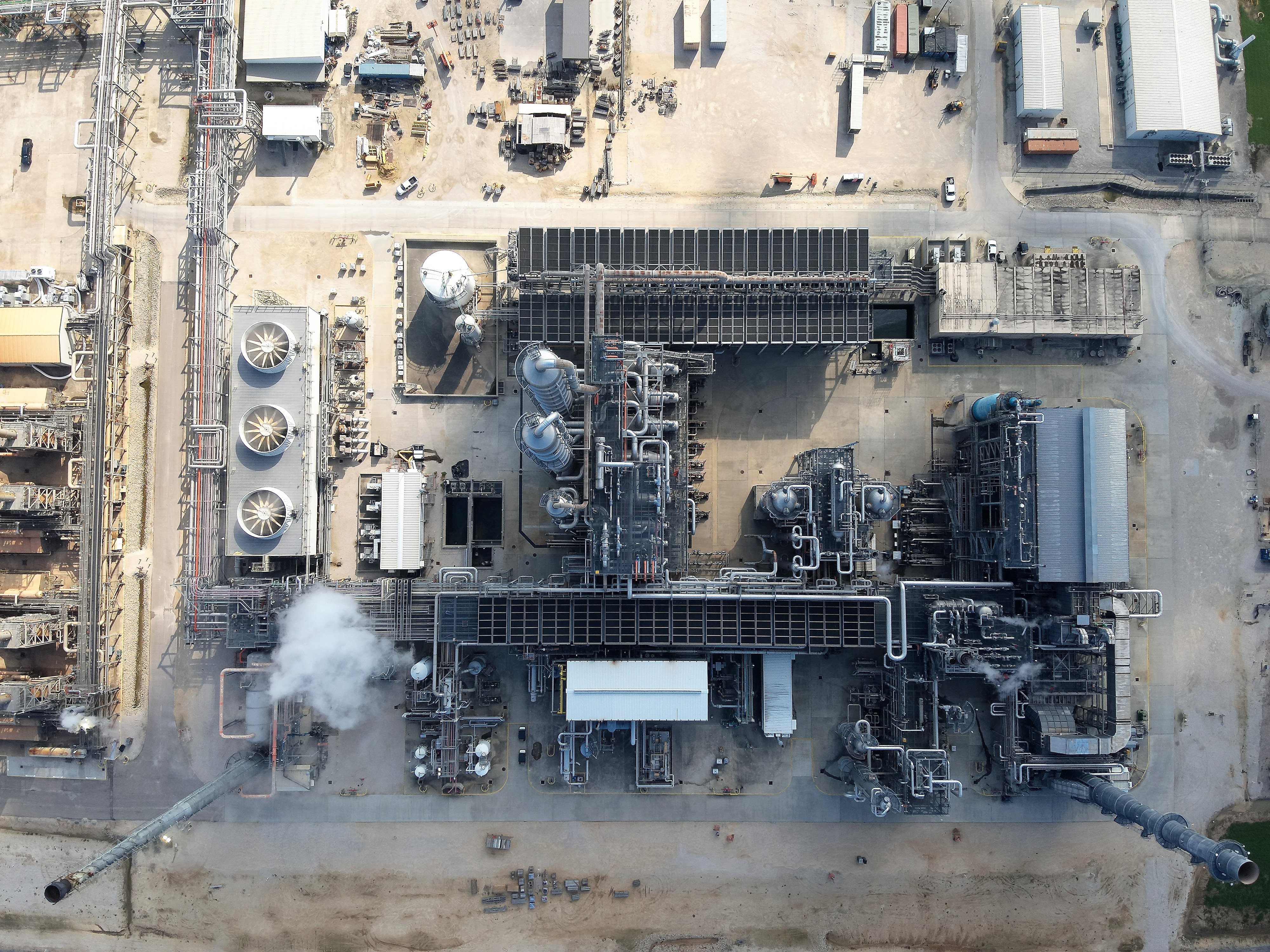
At Clear Lake, Texas, Celanese and Mitsui’s Fairway Methanol venture added another route through the chemistry. In January 2024, Celanese announced carbon capture and utilization operations designed to take industrial CO2 emissions and produce methanol. The announced annual expectations were 180,000 metric tons of captured CO2 and 130,000 metric tons of lower-carbon methanol. These are project expectations, not a statement of measured annual output.
By June 2026, there was a specific customer example. Aisan Industry Kentucky had adopted Celanese POM ECO-C for fuel pump modules supplied to an unnamed North American automaker. Celanese described the material as a drop-in choice retaining performance without changing existing designs or production processes. The carbon accounting uses mass balance. That distinction matters: the claim follows allocated inputs through a production system, rather than tracing individual captured molecules into one fuel pump.
captured per year
methanol per year
From replacement hips to robot joints
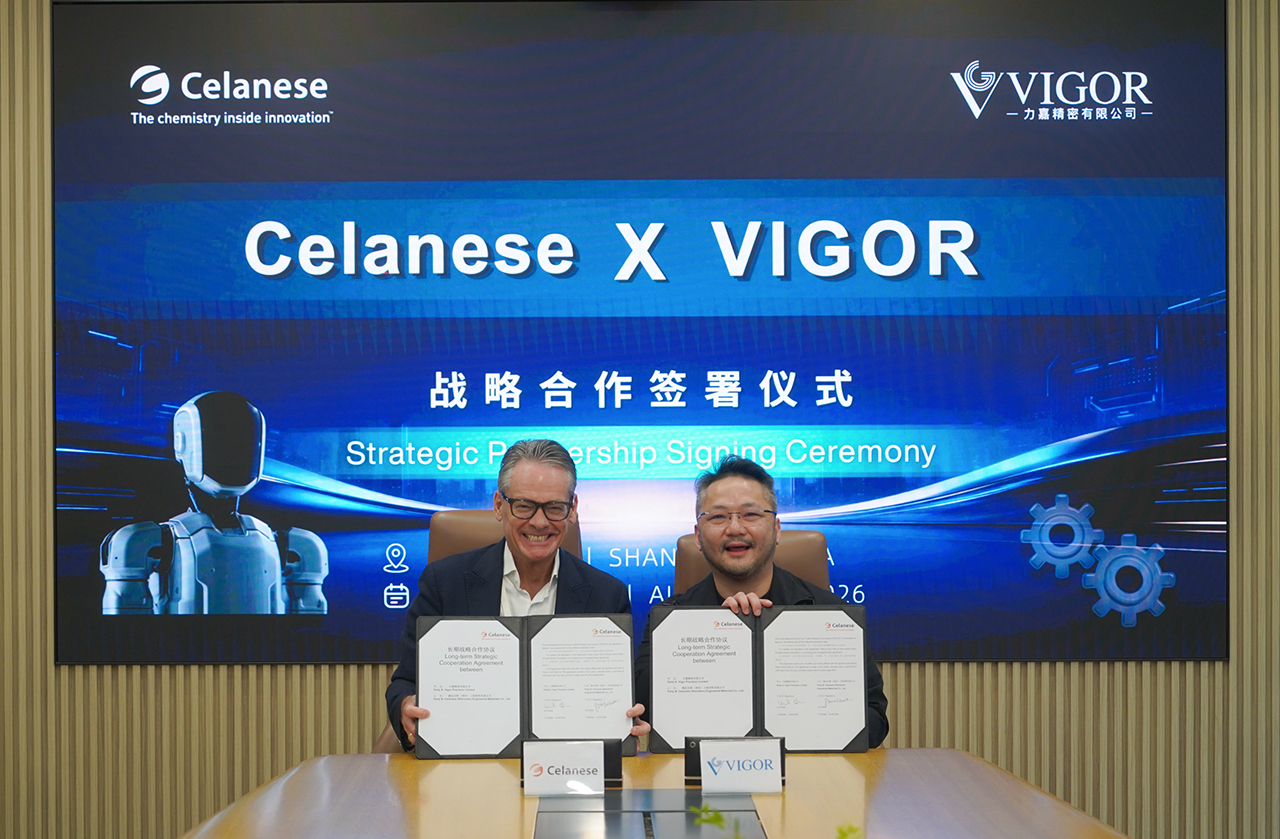
In August 2026, Celanese and VIGOR signed a partnership targeting lightweight plastic joints for humanoid robots. Celanese would contribute materials and technical support; VIGOR would bring precision gear design and manufacturing. It is a development and commercialization agreement, rather than proof of a finished robot business at scale.
The company states safety and quality among its core values. For customers choosing materials for moving joints, those priorities have a practical meaning: reliable performance must survive manufacturing and use.
The connection to medical components is revealing. In both cases, the material must earn its place inside a demanding mechanical system. A robot may be the headline attraction. The commercial work is selecting, molding and qualifying a part that moves reliably.
“Robotics is an increasingly important growth area for engineered materials”
Todd Elliott / August 2026
Start with the part, then the polymer
For an engineer, the practical entry point is AskChemille.com, launched in April 2025. The material selection platform searches properties and specifications, suggests comparable grades and connects users with engineering support. Start with operating temperature, loads, chemical exposure and processing requirements. Use the search to narrow candidates, then ask for data, samples and application testing. A recommendation is the beginning of qualification.
The transferable lesson is to keep the customer’s application in the room with the chemistry. The limits are equally concrete. A polymer must meet the actual mechanical and regulatory requirements; a lower-carbon option needs credible accounting; an integrated plant network still faces energy costs and weak demand. October 2026 LCP price increases, attributed to raw material and logistics pressures as well as demand, make that last point plain. Even a carefully chosen material comes with an economic environment attached.