A wrist is a surprisingly crowded place to start a company. There is room for a watch, perhaps a bracelet, and a finite amount of patience. Dustin Freckleton has spent years trying to earn a piece of it. Before he became co-founder and CEO of Happy Health, before the ring and its miniature electronics, he was asking people to make space for a band called LVL.
In September 2016, the campaign went live on Kickstarter with a $50,000 target. It cleared that target on its first day. At the time, early supporters could pledge roughly $100 toward a device expected to retail for about $200. The arithmetic was inviting. A relatively modest payment bought a place near the front of a technological future.
Freckleton had already been building BSX since 2012. His earlier product, Insight, was aimed at endurance athletes. LVL was intended for a broader audience, and he was considering both selling a product and licensing the underlying technology. Putting an actual device into the market, he explained, would give the company a reference point for those licensing conversations.
That distinction matters. A prototype can demonstrate an invention. A product has to survive other people's routines, their expectations, their tendency to put things in drawers. A licensing partner can admire a sensor. A customer must find a reason to keep wearing it. Freckleton was trying to cross both thresholds with the same small object.
By October 2016, the campaign had passed $1 million. The tiny patch of wrist had attracted a considerable amount of money. It would also become the setting for a much less photogenic part of the business: waiting.
A beautiful object still needs a shipping date
The proposed LVL band had the sort of appearance that could make complicated electronics seem entirely reasonable. A slim black module sat inside interchangeable straps. The design firm frog worked with BSX on the product. Leather gave it an everyday familiarity; a full-color touchscreen and a connected smartphone app supplied the technological argument.
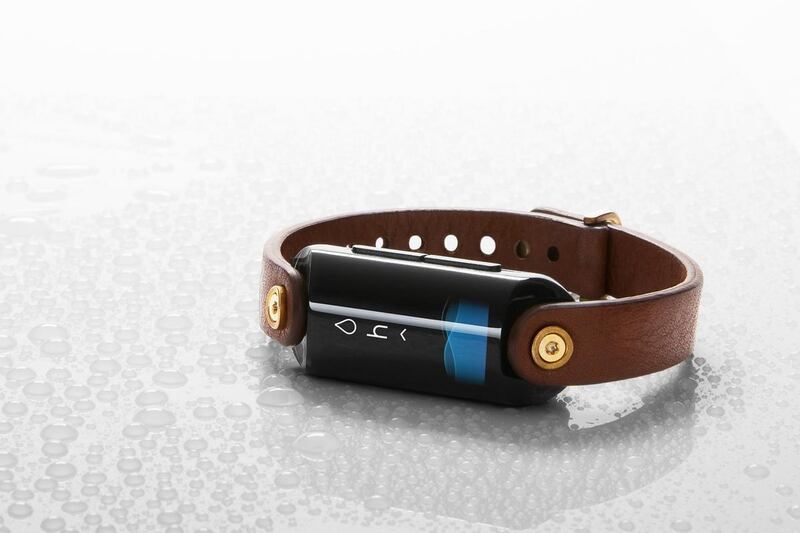
The materials were doing some of the persuasion. A wearable goes shopping with its owner. It goes to work. It must look tolerable beside whatever else the owner has decided to put on that morning. A device that makes sense in a demonstration can become an unwanted accessory when someone has to wear it all day.
The launch materials promised retail availability in early summer 2017. By August of that year, backers were being told to expect summer 2018 at the earliest. Getting the technology into the intended form was part of the difficulty. A year is a long time to someone who has already paid.
Some supporters asked for refunds. The gap between an attractive campaign and an overdue delivery had become public. Freckleton acknowledged that the team had fallen short on regular updates. The company had offered people a future date, and now it owed them an explanation of the present.
There is a peculiar feature of crowdfunding: success makes the audience larger before it makes the factory more capable. More pledges bring more people who deserve an answer. The campaign's reception was real. So was the delay. Any account of Freckleton's career has to leave room for both.
The investors had factories in mind
In August 2017, LVL Technologies announced a $6.75 million Series A led by Samsung Catalyst Fund, with participation from Maxim Integrated Products and other investors. The announcement said the money would accelerate production and manufacturing. It identified Freckleton and Nithin Rajan as the company's founders and Austin as its headquarters.
The choice of investors had an industrial logic. The company explicitly pointed to design and manufacturing expertise, wearable technology experience, and consumer-electronics supply chains. Alongside the money came organizations accustomed to the difficult trip between a component and a finished object.
A financing announcement and a customer's delivery notice belong to different calendars. In this case, the investment arrived while the product was already late. That makes the moment more revealing than a tidy account of money raised might suggest. The company had won institutional backing while still needing to satisfy people who had supported its first public promise.
LVL was acquired in 2019. Backers were subsequently offered refunds. Some received their money back; others were still waiting when renewed offers arrived. The acquisition supplies a corporate milestone; it does not, by itself, settle the story for everyone who had ordered a band. The two records sit beside one another.
For a founder, an acquisition can become a compact line in a biography. For the people on the other side of a preorder, the important unit is often much smaller: a shipment, a reply, a returned payment. Freckleton's earlier company left behind all of those questions as well as its technology.
- 2016The campaign
Demand - 2017Funding + delay
Manufacturing - 2019Acquisition
A new chapter
An investor becomes a co-founder
One relationship carried forward. Sean Rad, the Tinder co-founder, had invested in Freckleton's previous company. The two became friends and eventually worked together on Happy Health. The connection gives the later venture a history longer than its public debut: an investor had watched Freckleton build before joining him as a co-founder.
When Happy announced its ring in August 2022, its founding group included Freckleton, Rad, Sue Smalley, Paul Berns, and Robert Nelsen. The company also announced $60 million in financing led by ARCH Venture Partners. Freckleton was CEO. The product had moved from the wrist to the finger.
Even the physical details made the shift tangible. The launch described a ceramic exterior, resin inside, platinum electrical pads, water and impact resistance, and battery life of up to three days. Customers would receive a sizing kit before the ring itself. Electronics had become jewelry, with all the fuss about fit that jewelry entails.
A ring removes some decisions and introduces others. There is no strap to tighten by another hole. The size has to be right. The user still has to charge it. The apparently simple object carries a queue of practical questions, and the answers become part of the product whether or not they appear in its publicity photographs.
Freckleton's work had acquired a new shape and a new group of collaborators. The basic commercial question remained familiar: how do you persuade someone that this particular small object deserves a place in daily life?
The small things people notice
By October 2026, Freckleton was describing a competitive market in which devices fought for the same spending and attention. His account was unusually literal about the limits: companies also competed for space on the body. Buying more advertising was an expensive way to settle that argument. He wanted a more distinctive offering.
“Where do we have an unfair advantage?”
Dustin Freckleton / on competing as a smaller company
That is a useful admission from someone whose business depends on sophisticated hardware. Another capability does not automatically make a product easier to choose. A shopper can be surrounded by features and still struggle to explain why one device belongs in the basket.
An even more telling detail is his account of digital ring sizing. People were excited by the ability to get the fit right without the customary inconvenience. Freckleton said that reaction had initially frustrated him, given the other technical work the company had done. The modest-seeming step was what caught people's attention.
The episode is funny because the customer's priorities are so reasonable. An engineer can spend years solving a difficult problem inside a device, only to discover that the person buying it is delighted about a simpler way to order the correct size. The customer has a finger. The customer would like the ring to fit.
For Freckleton, that response became part of a broader realization about friction between steps. It supplies a useful way to read the career: the miniature object is only one part of the work. Everything around it can determine whether someone ever gets far enough to appreciate what is inside.
Home has its own measure of success
There is another account of Freckleton that fits poorly into a financing announcement. In 2017, he described watching his father return home after long working hours and give his attention to the family. His father had a demanding schedule. What stayed with the son was the quality of the time available afterward.
Freckleton was then photographed with his wife, Crystal, and their three daughters. The picture offers a different arrangement from the familiar founder portrait: people leaning together outdoors, children occupying the foreground, the company nowhere in sight. It belongs to a particular moment in the family's life, rather than a permanent inventory of its members.
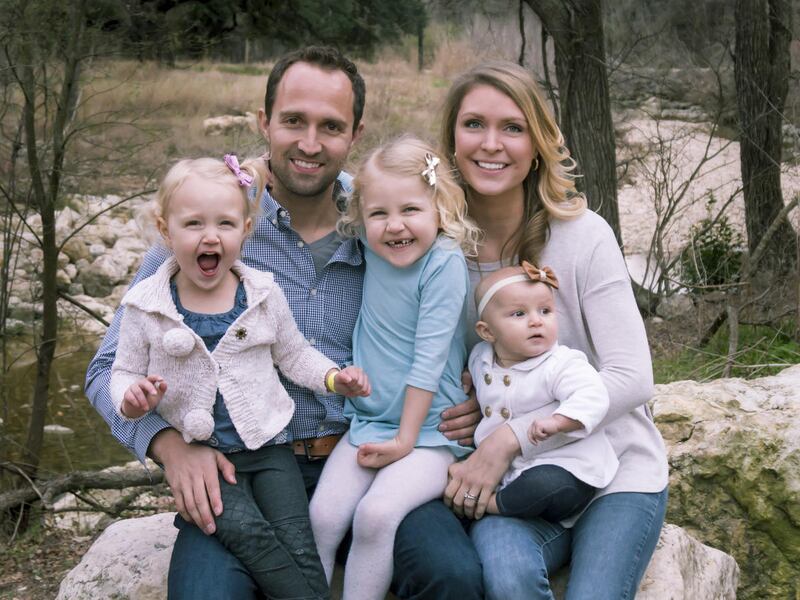
He said he wanted his own family to receive that same attention. His daughter, asked what her father liked best, would answer that he liked spending time with them. It is a small domestic test, conducted by someone with little use for a cap table.
The contrast gives the business story some proportion. A crowdfunding total can climb quickly. Manufacturing can run late. A ring can contain years of work and still be judged first on whether it fits. At home, the question can be more direct still: are you here?
Freckleton's public career includes ambitious objects, patient engineering, disappointed backers, established investors, and friendships that became working partnerships. Its most human detail may be the standard he borrowed from his father. A founder can spend years trying to make technology occupy less space. The people waiting at home are allowed to ask for more of him.