Duke Rohlen’s first business had pool tables. In 1992, he and his childhood friend Maurice Werdegar opened the Blue Chalk Cafe in Palo Alto, serving Southern-style food in a place designed to be lively. Left at Albuquerque followed. Its name came from Bugs Bunny’s unreliable sense of direction. It is a pleasing beginning for a career that would involve rather more consequential decisions about which turn to take.
Today, Rohlen is the founder, CEO and managing partner of Ajax Health. His working world includes private equity partners, acquisitions and companies with international commercial operations. The restaurant chapter belongs in the foreground, though. Before the deals became large enough to attract attention, he was already working through the everyday problem of getting people to make a business function.
A restaurant offers a fairly unforgiving introduction. Customers arrive with expectations. Employees have different talents and temperaments. Yesterday’s successful service buys remarkably little credit for tonight’s dinner. There is something useful about that setting for understanding a repeat entrepreneur: a good performance comes with an obligation to produce another one.
A friendship with a balance sheet
The enterprise grew. Ajax’s account of Rohlen’s early career puts the restaurant company at nine units and approximately $20 million in annual revenue. Those are substantial operating responsibilities for a first venture. The story begins with an actual business, complete with employees and customers, rather than an idea waiting for someone else to execute it.
The academic steps are straightforward: a bachelor’s degree from Stanford, followed by an MBA from Harvard Business School. Rohlen belongs to Stanford’s class of 1990 and Harvard’s MBA class of 2001. Between those dates sits the restaurant experience. His education therefore includes an interval in which the answers had to work outside a classroom.
Consider the kinds of transitions his later career required. Joining an existing company calls for learning its habits. Taking responsibility for it calls for deciding which habits deserve to survive. Starting another company calls for persuading people that the next project deserves their time. Rohlen has repeatedly moved among these jobs, carrying relationships from one to the next.
The names that keep coming back
His career includes an entrepreneur-in-residence role at Alta Partners and several positions at FoxHollow Technologies before he became its president. FoxHollow eventually combined with ev3. The July 2007 announcement valued the proposed cash-and-stock transaction at approximately $780 million; the acquisition closed that October. It was a company entering a larger organization, with a broader distribution footprint and a different set of possibilities.
CV Ingenuity followed. Rohlen co-founded it and served as CEO before its acquisition by Covidien in 2013. He then co-founded and led Spirox, acquired by Entellus in 2017, and co-founded EPIX Therapeutics, where he was chairman and CEO before Medtronic acquired it in 2019. Read in a list, these names can sound like separate entries. Look at the people, and the continuity becomes more interesting.
Doug Koo, now an Ajax managing partner, served as CFO at CV Ingenuity, Spirox and EPIX. He also served as CFO at Cortex, another company Rohlen led. Their working relationship has crossed several corporate names and several changes of ownership. An organizational chart records where someone sits today. This history records how often people have chosen to work together.
That distinction matters to the personal story. A sale can close a chapter for shareholders while leaving the central operating relationships intact. Rohlen’s career gives the impression of a company-building practice whose participants can regroup. The legal entity changes; accumulated experience travels with the people.
The expensive business of getting distracted
At CV Ingenuity, Rohlen made a deliberate choice to concentrate on the United States rather than pursue European expansion alongside it. He has described focus as a practical way to preserve capital. Each additional direction creates another claim on money and attention. Refusing an attractive possibility can be part of the work of making the chosen possibility happen.
His company-building framework gives equal standing to three components: technology, business model and team. The combination is revealing. Technical promise alone leaves unanswered questions about organization and economics. An elegant business model still needs people who can execute it. An able group needs a coherent objective. Each component makes demands on the others.
There is a social requirement inside this financial discipline. People need to understand the choices. Rohlen’s emphasis on transparency extends to employees and directors, including explaining why money is going toward one objective rather than another. Focus imposed without explanation is merely a restriction. A team that understands the reasoning has a better chance of carrying it into daily decisions.
He has described successful exits as bittersweet. The reaction fits the recurring team: people have invested effort in building something together, and a transaction changes their relationship to it. A good sale can still involve relinquishing a company they care about. The number on the announcement does not settle every feeling in the room.
Buying a destination for the next idea
Ajax’s subsequent approach adds a larger organizational question. At a 2024 investment panel, Rohlen explained that his background was in operations and that investing grew out of frustration with the venture model. After building companies for eventual buyers, he began considering ownership of the businesses for which new products would be built.
The approach uses an established commercial company as a base. Ajax assesses gaps in its portfolio, then considers licensing, acquisitions and development to address them. Cordis and the independent accelerator Cordis-X became a setting for that work. Rohlen is CEO of Cordis-X and serves on the Cordis board. There is an intended commercial destination earlier in the process.
The organizational separation is central to his argument. Established businesses and developing ventures have different tasks and incentives. Connecting their work requires deciding where each responsibility belongs. A large company’s existing commercial operations can support products developed by a smaller organization; the smaller organization can concentrate its resources on the assignment it has taken on.
Portfolio needs
Dedicated teams
The risk has hardly disappeared. The arrangement instead makes questions about fit and distribution part of the initial design. Rohlen’s work has moved from leading individual ventures toward arranging the conditions in which several ventures can operate. That is a different scale of management problem, even when the preference for a focused assignment remains familiar.
A working relationship survives the deal
The pattern continued through Cortex. In December 2023, Ajax announced its establishment with a $90 million investment led by KKR and Hellman & Friedman. Rohlen served as CEO. Boston Scientific announced an agreement to acquire Cortex in November 2024, and Ajax’s current biography lists the company as acquired.
By March 2025, Ajax, KKR and Boston Scientific were collaborating on another company, FlowMod. Philippe Marco was named CEO. His earlier roles included president and chief operating officer at EPIX and CV Ingenuity. Once again, the next company brought back a participant from earlier chapters. For Rohlen, a completed transaction could also become a starting point for another working relationship.
Ajax’s current responsibilities also place him as executive chair of Maverix Medical, chair of Puzzle Medical and a board member at XII Medical. These roles demand different forms of involvement. Their common thread is the work of selecting people, organizing capital and keeping an enterprise moving toward a defined objective.
“Elite is not a static condition.”Duke Rohlen · Beyond the Finish Line, 2024
The homework is to imagine yourself older
Alongside the companies sits Ajax DRIVE. Its published curriculum takes participants through the life of a business, from an idea through public ownership and private equity. Rohlen appears as an instructor and guest speaker. The program mixes operating questions with questions about personal habits, ambition and the kind of career someone hopes to build.
One assignment asks participants to write the alumni-magazine article they would like to read about themselves in 25 years. It is a shrewd reversal of the usual classroom exercise. Rather than summarize someone else’s career, they have to decide what they want their own to amount to. Five hundred words can become surprisingly demanding when the subject is your future.
The guest list creates a small reunion of Rohlen’s own working life. Koo appears, as does Werdegar, his restaurant co-founder. Cordis CEO Scott Drake joins a session about managing a large company. The curriculum puts different stages of business in conversation with one another, giving participants access to people who have worked through them.
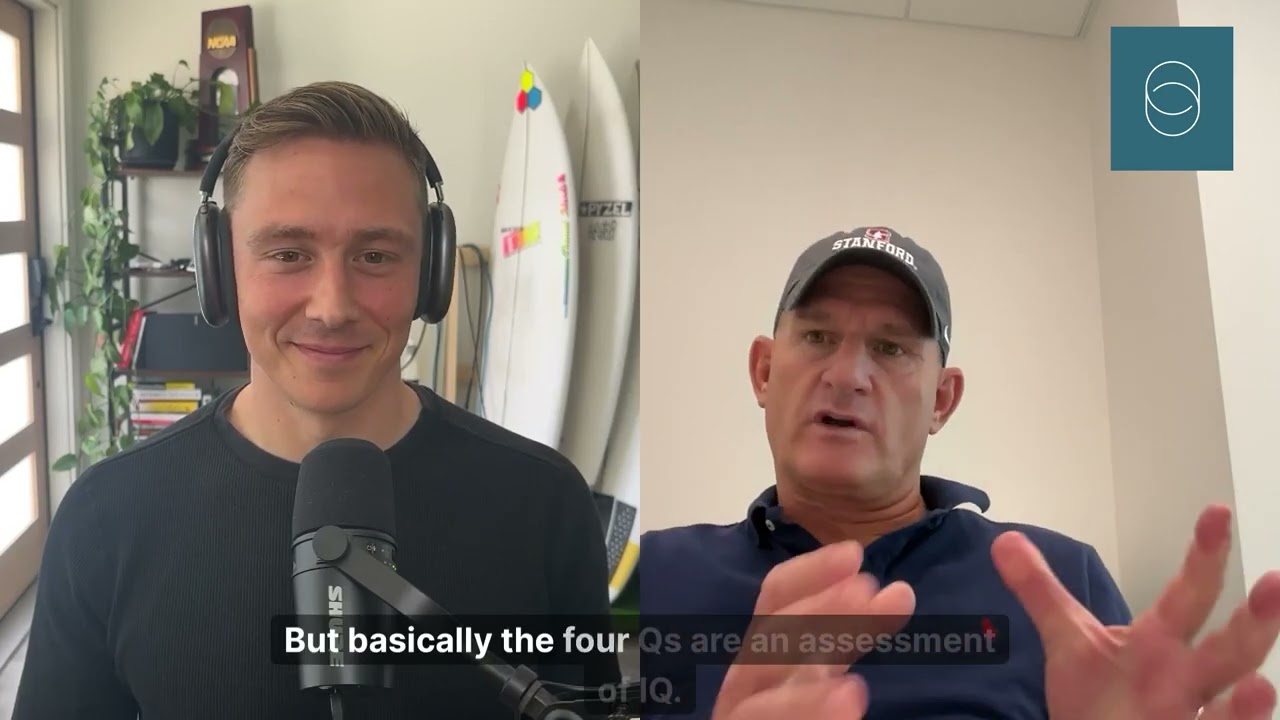
Rohlen’s connection to Stanford extends beyond a degree. He is listed among the co-chairs of his class’s reunion campaign and serves on the athletic department’s board. He is also a trustee of the United States Ski and Snowboard Association. In his conversation with Dave Nolan, the subjects include teamwork, resilience, humility and continued learning. Competition remains part of the vocabulary.
His description of his father, Stanford scholar Thomas Rohlen, offers another point of connection. He remembered his father’s persistent interest in what motivated people and how they understood fulfillment. It is a fitting question to place beside a career spent recruiting colleagues, regrouping after transactions and asking students to imagine the people they hope to become.
The Blue Chalk Cafe is a long way from the current portfolio. Yet the old partnership turns up in the classroom, and the repeated colleagues turn up in the next company. The story’s continuity lives there: in people willing to take on another assignment together. Rohlen has made a career of arranging the next performance. The cast has had reasons to return.