Alon Joffe has a job that comes with a small structural problem. A founder is expected to make himself useful everywhere: with investors, with customers, with the people building the product. If he succeeds too thoroughly, the company begins to require him everywhere, too. The calendar fills. Decisions queue. An organization that was supposed to grow starts taking the shape of one person’s available afternoon.
Joffe’s career offers several ways into that problem. He has worked in venture investment, studied business and law, and become the co-founder and chief executive of Eleos Health. His public story includes funding announcements and a Forbes Israel 30 Under 30 appearance. But it also contains something less ceremonial: a wish that he had made more customer visits, and an account of colleagues organizing themselves when he could no longer be present.
Those details are worth keeping in the foreground. Money and recognition give a career its public punctuation. The ordinary decisions between them explain rather more about how someone works. In Joffe’s case, a useful place to begin is with the other people in the room.
A company with more than one center
Eleos has three co-founders: Joffe, Dror Zaide and Alon Rabinovich. The company’s leadership page lists Joffe as chief executive, Zaide as chief business officer and Rabinovich as chief technology officer. The division puts several kinds of responsibility into view before anyone starts polishing a lone-founder legend.
A founding partnership is easy to compress into a photograph. The harder task is keeping its separate contributions visible as the business becomes known by a single spokesperson. Joffe’s title makes him the obvious subject of the headline. It does not make the company a solo undertaking.
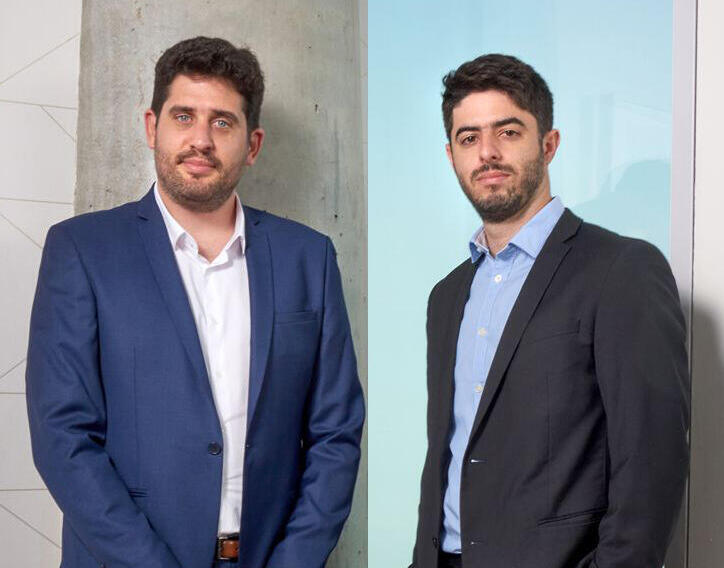
This is the first useful distinction in his story. The person who explains a company to the outside world and the people who make it function are connected by a great deal of daily work. A profile gets more interesting when it follows those connections instead of cropping everyone else out.
Changing sides of the table
Before Eleos, Joffe worked on the investment team at New Era Capital Partners. That places him on the evaluating side of company building before he took the operating seat. His university education combined business and law at the institution now called Reichman University, formerly IDC Herzliya. He also participated in its Zell Entrepreneurship Program in 2018–2019.
The sequence matters without requiring an elaborate theory about his personality. Investment work involves assessing a business. Leading one means remaining responsible after the assessment is over. A promising plan acquires salaries, customers, deadlines and a product that someone must support on a perfectly unremarkable Tuesday.
A legal education, meanwhile, sits comfortably beside the less photogenic parts of entrepreneurship: obligations, agreements and the consequences of a decision. There is no need to claim that a degree explains a founder. It does establish that Joffe arrived at the job with a background wider than a product pitch.
His public career also includes Forbes Israel’s 2022 recognition, shared with Rabinovich. It is a useful dated marker. The work that followed belongs to a different calendar, one measured in operating years rather than the brief shelf life of an announcement.
The long way to a useful answer
Before the company had a product, the founding team conducted hundreds of interviews with prospective users. A 2026 speaker biography puts the number at 400. The scale of that effort gives the origin story a distinctly practical character: repeated conversations before a confident answer.
There is a considerable difference between asking someone whether an idea sounds good and understanding how their day actually goes. The first can produce encouraging words. The second exposes interruptions, inherited habits and work that already occupies every spare minute. A proposed improvement has to find somewhere to live among all of it.
For Joffe and his co-founders, that listening became part of the company’s account of itself. It also supplies a useful test for the later business: how much of what the founders learned continues to reach the people making product decisions?
Prospective-user interviews by the founding team, as described in Joffe’s 2026 speaker biography.
The number is striking because interviews take time and invite contradiction. They make it harder to preserve a beautifully uncomplicated idea. Anyone can describe a market from a distance. Staying in the conversation long enough to hear inconvenient details is a more demanding beginning.
The practical details eventually appeared in the software. In May 2025, Eleos announced support for more than 150 languages and an offline mobile workflow that would synchronize when the user reconnected. These are concrete accommodations to the circumstances in which a product gets used. A connection can disappear. A conversation can happen in a different language. The working day continues regardless.
Those features give the listening story a useful second chapter. Interviewing people is an early activity; making room for their circumstances is continuing work. As the product reaches more places, the exceptions multiply. The founder’s original understanding has to remain open to revision, and the team needs a way to translate what it hears into decisions about what to build.
The visit that does not fit the calendar
In a reflection on 2022, Joffe named a regret: he wished the team had visited more customer sites. He valued meeting users, knowing them and seeing the problems they encountered firsthand. The admission is specific enough to be useful. It describes an activity that can actually be placed on a calendar, postponed or missed.
“Being in person and visiting them in person is really valuable”
Alon Joffe, reflecting on customer contact
There is a mild comedy to the founder’s schedule. A business grows by understanding its customers, then generates enough internal work to make leaving the office difficult. The meeting about customer understanding can become the very thing that prevents a visit.
Joffe’s regret suggests he recognized the distance that can open between a company and its users. A visit puts the product back into its surroundings. The person who built or sold it sees the other tasks competing for attention, the interruptions and the consequences of a supposedly small inconvenience.
For a chief executive, the value extends beyond collecting requests. It offers a check on the organization’s account of its own usefulness. A customer does not owe the founder a flattering interpretation of the product. That makes the conversation valuable, provided the founder has left enough time to hear it.
Permission to keep going
In late 2023, reserve duty took Joffe away from the company for an extended period. In a January 2024 interview, he credited the management team with running the business during his absence. Managers in the United States and Israel took responsibility. They created a forum to coordinate their work.
His description was plain: “They got together, set up a forum”. The account puts the emphasis on colleagues acting, rather than on a chief executive somehow remaining fully available in two places.
The episode makes founder dependence a concrete question. An absent CEO leaves decisions behind. Someone still has to make them. An organization’s ability to continue depends on what its people know and what authority they can exercise.

It would be too neat to turn a disruptive absence into a management formula. The narrower lesson is supported by Joffe’s own account: other people carried the work. His willingness to give them credit belongs in the story alongside his title.
Money buys the next set of decisions
In January 2025, Eleos announced a $60 million Series C led by Greenfield Partners. The round brought total funding above $120 million. Existing investors included F-Prime Capital, Eight Roads, Menlo Ventures and ION; new participants included the Michael & Susan Dell Foundation, Union Tech Ventures and Centerstone.
By then, the business had a substantial operating footprint. At the time of the round, Joffe put its customer count at about 130 organizations, and Eleos had 160 employees, roughly half in Israel. These are dated snapshots, but they help establish the scale of the management job.
The next public steps included additional leadership. In April 2025, Eleos announced appointments spanning growth, finance, research and development, and another specialist executive role. Travis Moore, Noa Heymann and Noam Cohen were among the leaders named. The announcement also set out an intention to grow the team to around 250 people during the year.
Read together, the announcements describe what funding has to become: people with defined responsibilities, teams that can absorb new colleagues and decisions about where effort goes. The bank balance is the beginning of that process. An organization has to do the rest.
Employees. Company-reported snapshots; the year-end total was published in Joffe’s annual reflection.
A founder at a greater distance
By the close of 2025, Joffe reported that Eleos had added 140 colleagues and grown beyond 250 team members. He also described a customer base exceeding 250 organizations across 39 states. The figures tell a story of wider responsibility, with more people using, building and supporting the software.
That growth changes the listening problem. The founder who once participated in early interviews now has an organization between himself and many users. More information arrives, but it arrives through more hands. Preserving the meaning of a customer’s experience becomes a job for the whole company.
The product direction continued to widen in April 2026, when Eleos announced additional AI agents across its platform. For Joffe, the continuing challenge can be read through the earlier chapters: understand the work, assign responsibility and keep useful information moving toward whoever can act on it.
There is an appealingly unglamorous ambition in that version of leadership. The founder remains accountable while making room for other people to be effective. His company can grow beyond the reach of his calendar. And a customer visit can still earn its place there.
Keep the conversation going
Follow Alon Joffe on LinkedIn, explore the company website, or watch his Non-Sterile interview on YouTube (Hebrew).