The most dangerous number in advertising is often the easiest one to print. Impressions look precise. Clicks march obediently across a dashboard. A platform reports that a campaign “performed,” which is a little like a restaurant reviewing its own soup. Then someone in the meeting asks whether the ads made people remember the brand, search for it or visit the site. The room discovers it has been rich in metrics and poor in answers.
DISQO built its business in that gap. The Glendale, California company measures advertising by connecting verified media exposure to the attitudes and digital behavior of consumers who have opted in to share both. Its shorthand is tidy: see, think, do. What did a person see? What did the person think afterward? What did the person actually do?
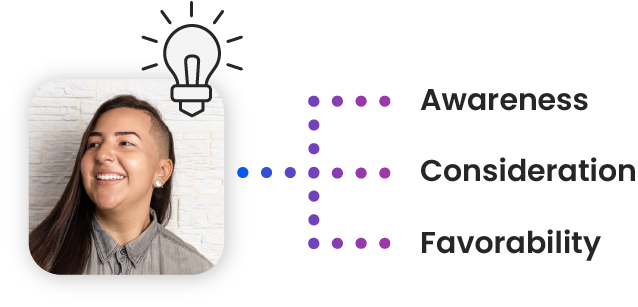
That makes DISQO part software company, part research operation and part referee. Brand Lift measures changes in awareness, favorability, consideration and intent. Outcomes Lift looks for incremental behavior such as search, site visits and category exploration. The newer AI Search Lift watches another doorway in the customer journey: whether exposure makes someone more likely to ask ChatGPT, Gemini or Perplexity about a brand, category or competitor.
01 / The original irritation
Bad data was the first thing to fail
Co-founders Armen Adjemian, Armen Petrosian and Drew Kutcharian had worked together and known one another for years. In 2014, Adjemian later recalled, they saw fragmented data hurting market research and the companies buying it. They founded DISQO in 2015 around direct, first-party relationships with real consumers.

So the first failure in this story was not a disastrous launch or a brave pivot narrated after the fact. There is no well-documented public tale of DISQO's original product collapsing. The failure was the inherited method: samples of uncertain provenance, behaviors reconstructed from memory, exposure inferred from “opportunity to see,” and datasets stitched together after the fact. The founders' response was to control the input.
The measurement loop
The method is experimental at heart. DISQO identifies opted-in people exposed to a campaign, creates a comparable control group that was not exposed, gives both groups the same survey and compares the result. For behavioral outcomes, it connects verified exposure to permissioned digital actions. Tags work where tags are allowed; direct integrations and tagless approaches cover other environments; household-level signals bring linear TV into the same view.
“The deterministic nature of the relationships you've built is a game-changer.”David Rossitter, SVP of Analytics, VaynerMedia
02 / The widening lens
What changed was the size of the blind spot
DISQO began closer to the market-research plumbing. The business widened as consumer attention scattered across social feeds, connected television, streaming audio, publishers and e-commerce. Cookies and mobile identifiers became less reliable or less available. Each walled garden produced its own report. A company built to supply better consumer data found itself holding an asset with a second use: an independent view across the walls.
The product line followed. Brand Lift turned exposure into an attitudinal comparison. Outcomes Lift, launched in 2022, pushed farther down the funnel to search, visits and commerce behavior. The company now positions the combination as advertising outcomes intelligence, not a generic customer-experience suite. That change matters. “Customer experience” is a large neighborhood. “Prove what media caused” is a specific door with a budget behind it.
Its customers sit on three sides of advertising. Brands such as Ford, The Home Depot, IHG and Chipotle appear in company materials. Agencies use the platform to compare channels and defend recommendations. Media companies use it to prove that their inventory changed more than a click count. Warner Bros. Discovery selected DISQO for cross-platform Brand Lift and Outcomes Lift in 2023. Comcast Advertising put DISQO attribution inside its Outcomes+ television and streaming product in 2026. Vevo named it a preferred U.S. brand outcomes partner the same year.
Reported seed, Series A and Series B rounds. The 2021 growth round was led by Sageview Capital.
Paid pricing is not public. A self-serve Brand Lift product for media companies launched free in 2025.
The free product is a particularly copyable move. Media sellers often reserve independent measurement for large campaigns because each study eats margin. Remove the product charge, make setup self-serve, and measurement can travel down-market to campaigns that previously went untested. DISQO gets more usage and a stronger place in the publisher's workflow. The publisher gets evidence to carry into the next sales conversation. Free, here, is not charity. It is a bid to make the measurement habit routine.
03 / The moat and the catch
The scarce asset is permission, not pixels
A dashboard can be copied. A decade of direct consumer relationships is harder. DISQO's distinction is its opted-in audience and the person-level identity connecting exposure, answers and behavior. Competitors approach the same market from different starting points: Nielsen and Kantar bring established measurement franchises; iSpot is prominent in television; Upwave and LoopMe sell campaign lift; YouGov and Dynata bring panels and research infrastructure. The cheap alternative is the familiar one - accept native studies from each platform and assemble the story in a spreadsheet.
DISQO's argument is that the spreadsheet cannot standardize away incompatible methods. Its one-view proposition is strongest when a campaign crosses social, CTV, linear television, display and audio, because the comparison itself has value. Near-real-time reporting also changes the timing. A post-campaign report tells you what happened. A live pulse can tell you to change frequency, creative or channel allocation before the money is gone.
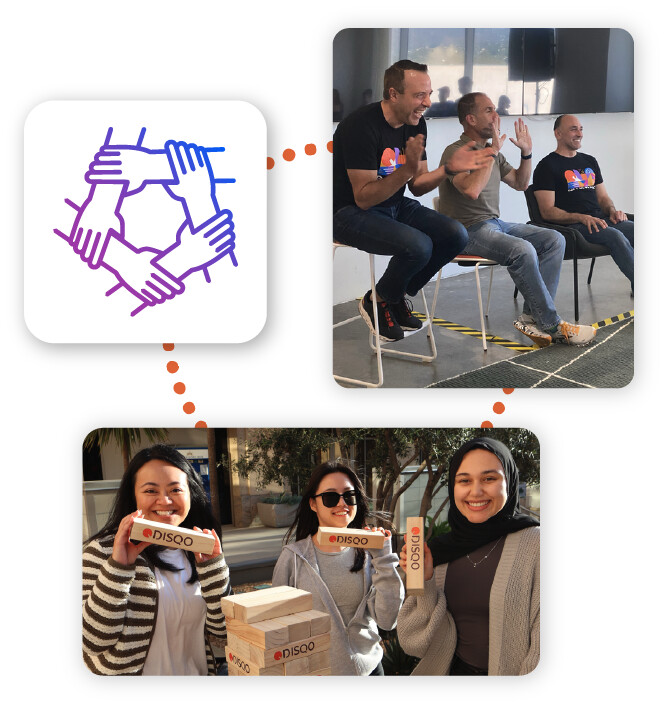
The company says its culture emphasizes winning as one team, customer focus and outsized impact. It has offices in Glendale, New York and Yerevan, and LinkedIn puts the workforce in the 201-to-500 range. Ad Age named DISQO to its Best Places to Work list for three years through 2025; Inc. included it in its 2025 list. An older engineering essay contains the more memorable cultural artifact: one growing team split into Purple Electric Penguins and Pink Puffy Penguins. Corporate values come and go. Penguin taxonomy sticks.
When the method will not earn its confidence
- The campaign or target audience is too small to produce a stable exposed and control sample.
- The opted-in panel does not represent the niche population the advertiser actually needs to understand.
- Exposure cannot be observed reliably, or control-group matching leaves meaningful differences between groups.
- The outcome happens offline or beyond the digital behaviors and surveys available to the study.
- A marketer needs a causal answer from a campaign design that cannot support one.
Those conditions do not make panel measurement useless. They define where rigor begins. Consent does not automatically guarantee representativeness. Deterministic identity does not rescue weak sample sizes. A bright dashboard can still encourage more certainty than the design deserves. Buyers should ask how exposure was captured, how the control was matched, which outcomes were observable and how many people sit behind every cut of the data.
04 / What to steal
Own the input your competitors rent
Build around a scarce input
DISQO's permissioned audience makes the software more useful and harder to reproduce as a feature.
Unify a fractured scorecard
The sale is not more metrics. It is one method that lets a buyer compare unlike channels.
Make the report actionable
Near-real-time results move measurement from campaign autopsy to in-flight decision support.
Use free as workflow capture
Remove a per-use objection where higher measurement frequency expands the market for the paid platform.
AI Search Lift is the latest expression of the pattern. The channel is new, but the product logic is familiar: observe permissioned behavior, verify exposure and compare the exposed group with a control. DISQO beta-tested the product in late 2025 and launched it in June 2026 after measuring campaigns in automotive, insurance, beauty and personal care, consumer packaged goods and travel. It does not tell a brand how often an AI answer mentions it. It asks a more specific question: did advertising cause people to engage with the brand inside an AI environment?
That distinction places DISQO next to, rather than inside, the rush toward answer-engine optimization. GEO tools grade visibility in generated answers. DISQO is trying to measure whether paid media changes human behavior around those answers. If AI interfaces become a meaningful discovery layer, that is a sensible new row in the outcomes table. If usage remains too thin for representative samples, it will run directly into the limits above.
The broader lesson is pleasingly unfashionable. DISQO did not respond to a fragmented market by adding another fragment. It found a common unit - a consenting person - and built products outward from that relationship. The company still has to prove that its audience, methods and integrations keep pace with every new screen. But it asks the right irritating question of every polished media report: what changed because the ad ran?