On a Friday night, Dennis van der Heijden was asked to approve a software purchase. The tool cost less than $50 a month. The decision had travelled all the way to the co-founder of Convert.com, a business whose purpose was to help other businesses make better decisions. Somewhere in this arrangement, a modest subscription had acquired the dignity of a state occasion.
Dennis could authorize it and carry on. Instead, the request bothered him enough to become a turning point. He had built a company in which an ordinary expense required his attention. Being indispensable had its rewards, presumably, but they included being interrupted on Friday nights. The organization was waiting for permission because he had arranged for it to wait.
His eventual response was to change how authority worked. Convert adopted Holacracy, a framework that distributes decision-making through defined roles. For someone who sold experimentation software, it was an unusually personal experiment. The familiar question of which website variation performed better had become a question about the founder himself: how much of the company really needed Dennis?
Half the leads, all the bills
The first problem was more immediate. In 2008, Dennis had moved from the Netherlands to Mexico and was running a business generating leads for software vendors. The financial crisis reduced those leads sharply. His costs did not politely follow them down. With a young family and an income source under pressure, he needed the visitors who still arrived to do more.
A WordPress plugin personalized content according to the keywords people had searched for. The idea was practical: make the offer more relevant to the person reading it. Dennis described doubling conversion rates. What began as a repair to his existing business suggested a product that other website owners could use. Convert’s roots sit in that 2008 problem; the platform’s founding is dated to 2009.
The developer was Claudiu Rogoveanu in Romania. An early plugin cost $50. Their working relationship grew, and Dennis eventually travelled to meet him. There was no grand unveiling in California. There were two people who had already learned to work together across borders, deciding whether this small piece of software could become something they owned together.
A name that needed explaining
Distance was built into the enterprise from the start. Dennis was in Mexico; Claudiu was in Romania. Dennis recalled sketching interface ideas on paper in Starbucks, scanning them, and emailing them over. A company devoted to improving digital experiences was being designed through a process with a faint aroma of the fax machine.
Its early name was Reedge, which introduced a separate usability problem: people struggled to say it. When interviewer Todd Chambers got the pronunciation right, Dennis joked that he was the first. The eventual Convert.com address was considerably easier to explain. Dennis’s account of securing it involved a domain valued at $100,000 and negotiating around the limited resources of a young business.
He was less clear-eyed about what money meant once investors supplied it. Reading startup coverage had made venture funding feel like arrival. In his later telling, the celebration came too early. Capital went out, progress lagged, and the business had to contract back towards its founders. A funding announcement had proved a poor substitute for a working business.
The customer behind the email address
There were more mundane puzzles to solve, too. By 2014, Convert’s sales team had more incoming leads than it could comfortably pursue. One shortcut was to give priority to people using work email addresses. An address from Gmail could get less attention. That looked efficient until it concealed someone with a serious project and a perfectly ordinary personal inbox.
Convert connected its lead channels to Nimble through Zapier. Social-profile information helped the team decide which contacts deserved follow-up. Dennis explained that disqualifying some leads let the salespeople call twice as many of the remaining prospects. He was precise about the distinction: that was an increase in calling capacity, rather than proof that profit had doubled.
This episode catches an earlier version of Dennis at work: interested in the machinery between a visitor arriving and a salesperson making contact. The details are unglamorous, which is part of their value. A growing company can waste its day chasing an impressive total. He was working on which names inside that total merited another conversation.
The difficulty of losing your own test
Dennis had also discovered an awkward property of experimentation: the result can be rude about your idea. After running more than a hundred experiments on Convert’s own website over five years, he described becoming attached to particular variations. A design he expected to win could produce an inconclusive result, or lose outright. Owning the testing company did not confer immunity.
He had another reservation about what testing could settle. Customers repeatedly mentioned service when explaining why they bought. Yet demonstrating its contribution experimentally would mean giving some prospective customers less of it. He was reluctant to cut service for half the trials just to measure the difference. There were limits to what he was willing to do for a tidy answer.
Both admissions make his interest in testing more interesting. He understood the discomfort of having a preferred outcome, and the temptation to treat every question as measurable on demand. His business asked customers to learn from evidence. He could describe, without pretending otherwise, the parts of that discipline he found hard to practise himself.
Choosing what to leave out
Privacy gave Convert another question about limits. In a 2018 essay, Dennis described encountering the coming demands of GDPR and recognizing that the company’s restrained approach to collecting data could become a direction worth choosing deliberately. The product had spent years chasing competitors. Here was a reason to decide what kind of competitor it wanted to be.
He wrote about grouping results rather than pursuing detailed individual profiles, and about offering Do Not Track choices. This was also a commercial decision: some buyers would want capabilities elsewhere. His essay even pointed prospective customers towards competing products when their requirements fitted those products better. A sales pitch that supplies directions to the competition has at least done some editing.
“I picked privacy,” he wrote. The useful word is “picked.” The choice gave him something specific to organize around after years of trying to catch up. It also meant accepting that a business could define a good customer more narrowly than anyone able to pay. That stance remains part of Convert’s public identity as an experimentation platform.
“I picked privacy.”
Dennis van der Heijden, 2018
A constitution, and someone to challenge him
To change the organization, Dennis needed help from Morgan Legge. They had met through an entrepreneurial gathering and stayed in touch. After seeing a talk about Holacracy, he asked her to investigate the framework and work out how Convert might adopt it. She was outside the company at the time, with experience in hiring, project management, design, and sales.
Her task required more than renaming meetings. She studied the constitution and the practice, then helped build a way of working in which people could act within their roles. Hiring changed with it. Initiative, clear communication, and the ability to accept feedback from colleagues became necessary working skills. An employee could no longer rely on a manager to translate every uncertainty into an instruction.
It is tempting to imagine that removing conventional bosses removes friction. Morgan’s account makes the adjustment sound more demanding. People must tolerate colleagues taking initiative and separate responsibility for a role from personal ownership of a patch of territory. Dennis had recruited someone capable of challenging him. The founder’s enthusiasm alone was never going to reorganize the company.
The experiment still has rules
Dennis’s interest in this arrangement also grew out of fatherhood. He was thinking about the world his daughter would inherit, and about treating the people working with him with the trust he wanted to extend to his children. That private question became part of Convert’s wider conscious-business approach, alongside a stated concern for how the company affected its community and environment.
By his 2023 Management Blueprint conversation, he was explaining both the testing mindset and this different allocation of responsibility. For a website owner, experimentation starts with measuring what happens after a change. For an organization, distributing authority still requires people to know what they can decide. Freedom has administrative work attached. Someone must make the responsibilities intelligible.
His present team biography offers a compact description of the job he has kept: “I spend time reading up on the challenges we’ll soon encounter, and removing obstacles for my colleagues.” It is an unshowy ambition for a co-founder. A useful day may end with somebody else able to proceed without asking him a question.
Off-camera, and occasionally up to mischief
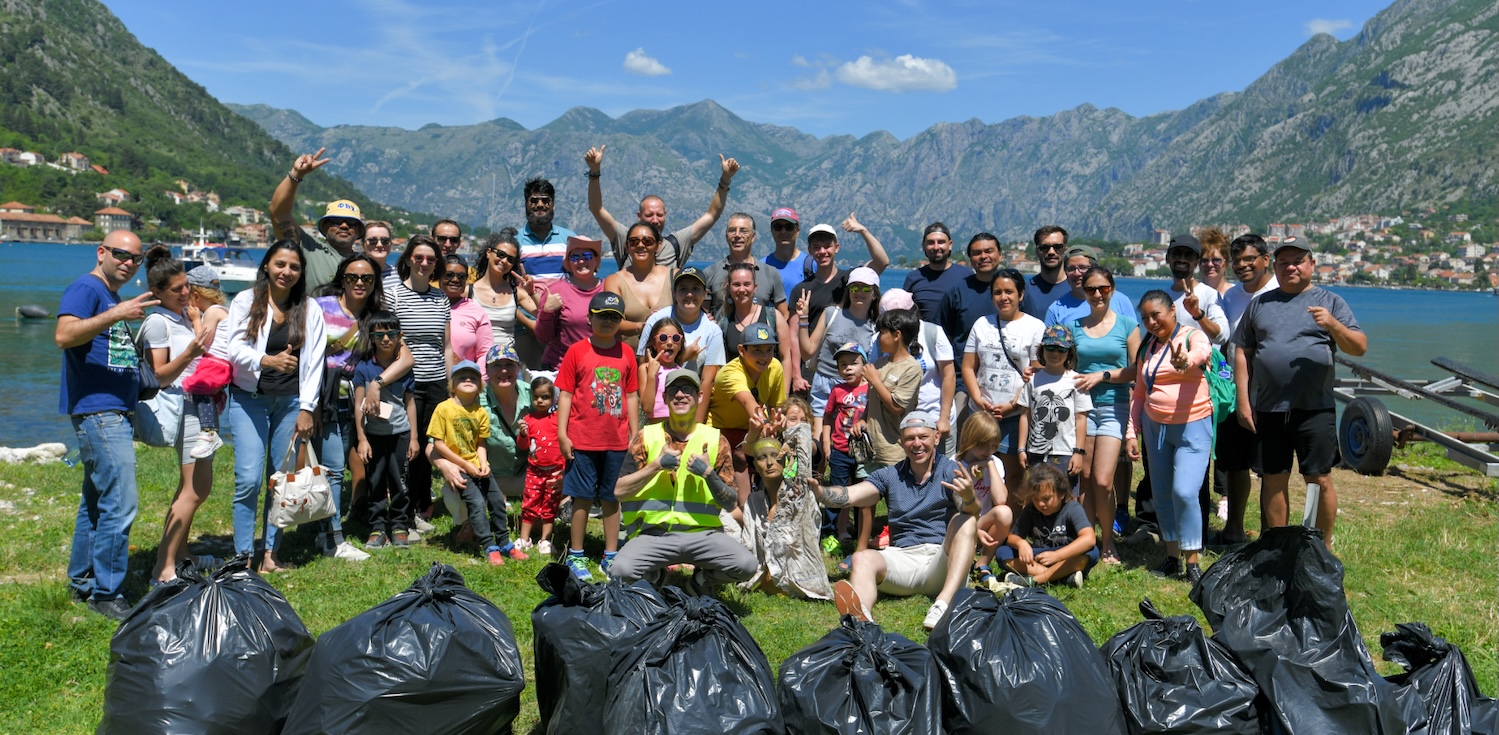
A distributed company still needs occasions when people share more than a screen. At Convert’s Kotor retreat, colleagues brought families, met in person, and spent time together around the bay. The planned balance was 20 percent work, 30 percent activities, and 50 percent free time. Dennis preferred individual conversations over coffee, with room to hear about people’s lives.
The group also joined a beach cleanup. In the photograph, the collected rubbish takes up the foreground; the software team and families stand behind it. It is a company picture with something concrete to show for the outing. Remote working can spread colleagues across countries. Picking up the same stretch of beach briefly gives them a shared address.
Earnestness has not entirely crowded out mischief. Dennis originated Convert’s 2023 April Fool’s plot suggesting that Google Optimize might return through GA4. Colleagues and experimenters including Craig Sullivan helped circulate plausible-looking clues before the reveal. The elaborate joke required planning, collaborators, screenshots, and timing. Even a prank, apparently, could acquire a project in Asana.
In a public London update in May 2026, Dennis was thinking about AI and the parts of customer relationships that remain human as tools change. He had been meeting colleagues and other experimenters in person. Years after that small purchase request, the direction is recognizable: keep testing the machinery, keep making room for the people, and try to avoid becoming the person everything must wait for.