Boston made a perfectly sensible case. Robert Fenton already had customers there. It was closer to Ireland, where he had started Qualio, and the time difference was easier to manage. Then he heard a venture capitalist describe Boston as runner-up to San Francisco for starting a software business. Fenton took the compliment as an instruction to go somewhere else.
He recalled the conversation years later with the amused certainty of someone who had already made the decision. If he was going to move thousands of miles, a few thousand more seemed a tolerable addition. San Francisco also offered a useful improvement in winter weather. In 2016, after bootstrapping Qualio in Ireland, he moved west.
The interesting part is what he did with that experience afterward. The founder relocated to improve his company’s prospects. His colleagues did not all have to relocate to improve theirs. Qualio kept its distributed approach, with engineering in Europe and people working across borders. A company can take quite a long journey without everyone buying the same plane ticket.
The westward decision
Fenton’s explanation for choosing the Bay Area was practical. He wanted to understand how global companies were built, and he found people willing to discuss how they had done it. Success looked less mysterious when the person associated with it would sit down and talk. For a founder learning a new trade, access to those conversations had value.
Yet leaving home also gave him a reason to question the usual geography of opportunity. Qualio’s recruitment message makes his position explicit: people should be able to pursue a career without uprooting their lives. He had made that choice himself. He wanted his company to offer others more room to choose.
“Culture and competency surpass geography.”
Robert Fenton
The phrase is a hiring principle with a personal history attached. It also creates obligations. If geography matters less, a company must get better at recognizing ability from a distance and helping people work together once they arrive. Removing the shared office leaves plenty of management still to do.
A problem worth taking apart
Long before California, there was rural north Cork. Fenton grew up interested in science and technology, reading whatever he could find. His father was a telecommunications engineer. Fenton remembers taking apart electrical components and putting them back together. Curiosity, in that household, came with pieces.
In 2004 he represented Ireland at the International Chemistry Olympiad in Kiel, Germany. He won silver in the All-Ireland selection competition and earned a place on the team. The international appearance followed. It is an early glimpse of someone willing to follow a subject well beyond the classroom.
He studied pharmacy at University College Cork, then worked in quality and research roles at Pfizer and LEO Pharma. The detail that matters to his later career is how closely he saw people working around their software. At Pfizer, he described becoming a “human machine interface” between the quality team and its systems.
That is a wonderfully unglamorous description of a business opportunity. Someone has to understand what the people need, understand what the system permits, and bridge the distance. Fenton had found work that interested him. He could see a product taking over some of the awkward translation.
His first business, EasySOP, supplied compliance content and services in Ireland. Revenue from it went into research and development for Qualio. He built prototypes and won backing from Dublin’s NDRC. Qualio began in 2012, years before the funding rounds that would make it a more familiar name.
- CorkScience, study and the first questions
- DublinEasySOP revenue funds new prototypes
- San FranciscoA founder moves; a team stays distributed
The office is a set of habits
Qualio’s distributed structure was established early, rather than added as a late adjustment. Fenton has described being concerned at first about whether it might restrict growth. He continued with it anyway. Once the company invested in communication and collaboration, those practices became part of how the organization worked.
That history gives his language about remote work some texture. A team spread across time zones cannot assume that a question will receive an immediate answer. It needs a rhythm. A manager on a video call has fewer cues than one sitting across a table. Understanding the other person requires attention.
His account of leadership starts with enabling people to succeed: finding people who fit the work and the values, then creating an environment where they can contribute. In his discussion of remote management, belonging includes ordinary gestures such as remembering a birthday and asking how someone is doing. The small conversation has a job to perform.
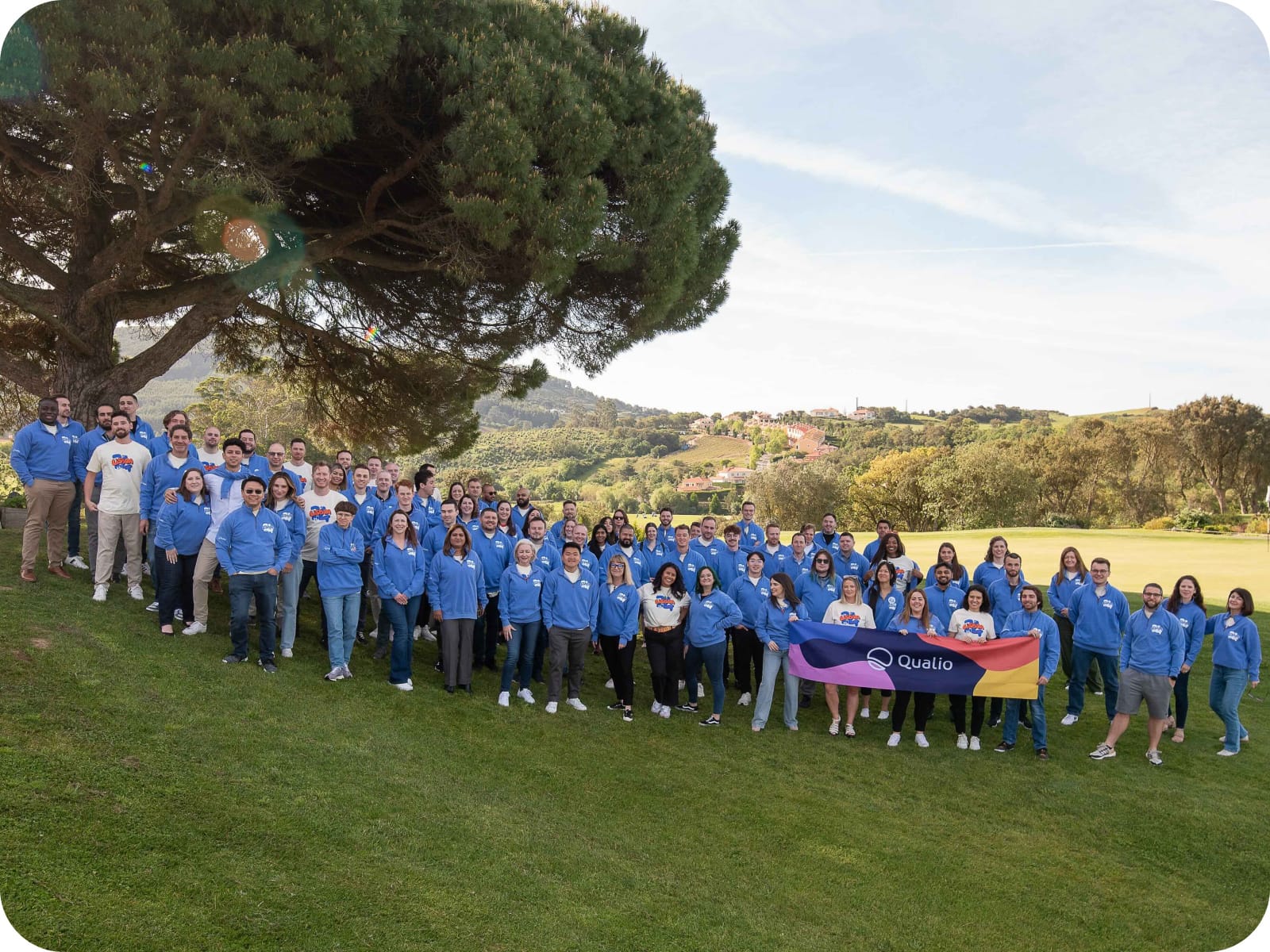
Today, Qualio describes itself as “local everywhere.” Its careers offering includes support for a home office or coworking space, learning budgets, and gatherings. Those are concrete provisions behind an abstract promise. Freedom over location becomes more credible when a company also considers the desk, the tools, and the people on the other end of the call.
A little flamenco in the operating plan
In January 2022, Fenton described an employee gathering with a flamenco composer streaming from Madrid. The session combined a performance with the history of the art form. He connected it to curiosity, a value Qualio considered in hiring and reviews. A company value had acquired a soundtrack.
There was an organizational decision behind the entertainment. Qualio hired a people experience manager to create ways for colleagues to connect. Activities included a talent show and pie baking. Employees could decide how much to participate. The intention was to offer several ways in, rather than expect everyone to enjoy the same compulsory good time.
It is a revealing choice for a founder whose business deals with process. He was willing to assign responsibility for the experience of working together, and to spend time on activities outside the product. A gathering could give colleagues something to talk about beyond their next deadline.
Fenton has musical interests of his own. In 2022, he set himself a goal: join a band and play at least one gig that year. He plays guitar. The ambition offers a pleasingly modest counterpoint to the scale of his professional plans. One audience, one performance, and a reason to rehearse.
The first customer, then the capital
Asked about rewarding moments in his career, Fenton singled out the first customer who used Qualio and loved it. So much work had preceded that response. The satisfaction came from discovering that the product was useful to another person. It is a milestone that needs no valuation attached.
The later numbers were substantial. On May 25, 2021, Qualio announced a $50 million Series B led by Tiger Global, with Menlo Ventures and existing investors participating. Fenton’s announcement counted 250 customers and 100 teammates. These were figures from that moment in the company’s history, with a larger operation still to build.
250 customers · 100 teammates
A dated milestone in Qualio’s growth.In his December 2022 reflection, Fenton wrote about a company that had passed its tenth birthday and reached more than 500 organizations. He also described its first customer and partner advisory sessions. Executives took questions and feedback, then put those voices into the product roadmap. Growth had brought a more formal way to listen.
He has approached his own learning through books and conversations as well. His publicly discussed influences include Steve Blank’s work on building startups and Kim Scott’s Radical Candor. Reading is also how he says he relaxes. The founder’s book habit crosses the border between time off and preparation for the next management problem.
Fenton has admitted that looking backward does not come naturally. His attention goes to the next step. The early customer, the advisory meetings, and the reading suggest useful checks on that forward motion: other people can tell him whether the company is solving the problem he thinks it is.
Software that does the work
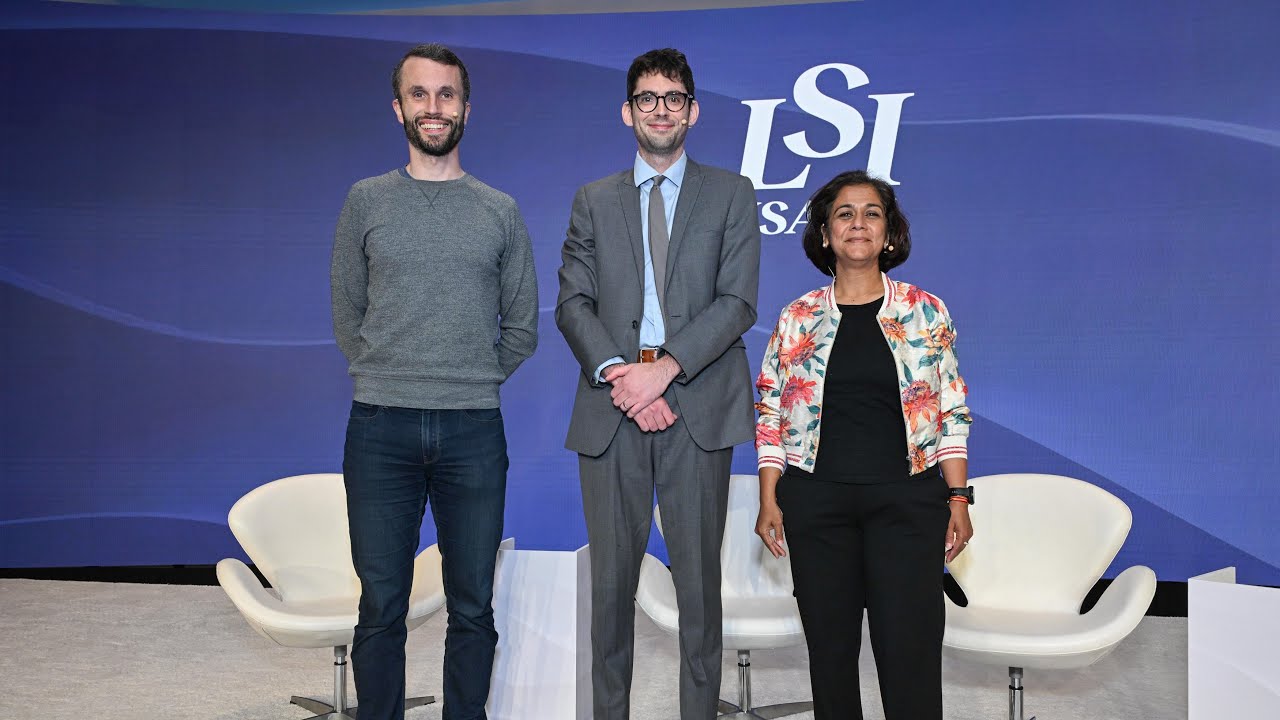
At LSI USA in 2025, Fenton moderated a discussion with Jim Schwoebel and Rachna Dayal about AI and building businesses. He introduced Qualio as having supported more than 1,000 customers. His opening request was to get beyond the excitement surrounding AI and discuss practical uses and effects.
 ▶ Watch the conversation
His August 2026 essay takes that interest into Qualio’s strategy. He describes enterprise software moving from storing records, through making those records easier to work with, toward performing tasks. Compliance, in his argument, offers room for that third stage. AI agents would carry work that currently depends on repeated human coordination.
He pairs the ambition with people retaining control at regulated decision points. That boundary matters to the proposal. Fenton is describing a direction for the product and the market; the essay is an argument about what should come next. Its promised effects remain something a product must demonstrate in use.
The thread back to his earlier career is easy to follow. He once stood between a team and a cumbersome system. He then built software to bring work and information closer together. Now he wants the software to shoulder more of the work itself. The question has survived several changes in vocabulary.
His own move remains another part of the story: a decision to go where he thought he could learn, followed by a company policy that gives colleagues more latitude about staying put. Fenton went west to build. He has kept the invitation open to people facing in other directions.
Follow the conversation
More from Fenton, and the conversations behind this profile.
- Qualio website · LinkedIn · X / Twitter
- The early journey and distributed teams: Format One interview
- From Cork to California: ThinkBusiness interview
- Fenton on flamenco and remote team building
- His reflections on Qualio’s tenth year
- The Agentic Compliance Era: his August 2026 essay
- Watch the LSI USA 2025 panel on YouTube ↗
- Qualio blog · News and interviews