Profile / Founder & CEO
He built a 100-person engineering team in Argentina. Then he built a company around the insight. Terminal now connects elite remote engineers to some of the fastest-growing tech companies on the planet - and Dylan is just getting started.
Dylan Serota - Terminal // ELC Speaker Archive
Somewhere around 2014, Dylan Serota was deep inside a scaling problem at Eventbrite that most San Francisco operators would've solved the same way everyone did: hire more engineers in the Bay. He didn't. Instead, he built a team of over 100 developers in Mendoza, Argentina - a mid-sized city at the foot of the Andes, better known for Malbec than machine learning. It worked. Spectacularly.
That experience - watching world-class engineers thrive in places the talent market had ignored - didn't leave him when he left Eventbrite. It sharpened into a conviction: global talent was abundant, structurally undervalued, and waiting for someone to build the plumbing. In 2017, Serota co-founded Terminal inside the Atomic venture studio, alongside Palantir co-founder Joe Lonsdale, Atomic's Jack Abraham, and former Navy SEAL Luke Finney.
Terminal's premise was simple and stubborn: companies should be able to hire elite engineers anywhere on earth, without the compliance nightmares, payroll gymnastics, and onboarding chaos that typically come with it. Terminal would handle all of that - screening, matching, employment, HR support - while the client company got what they actually wanted: great engineers, fast.
"We're living in this exciting time where all of these technologies are now available that enable remote teams to be more successful than ever before."- Dylan Serota, Terminal Co-Founder
The model resonated. Terminal raised $13M in a Series A, then a $17M Series B led by 8VC - Joe Lonsdale's fund, which meant one of the co-founders was writing the check. Lightspeed and Thiel Capital joined in. The client list grew to 100+ companies, including Hims&Hers, iCapital, and Grindr. By 2024, the company was tracking toward nearly $50M in gross revenue.
Then came the harder chapter. In 2024, Serota stepped up from Chief Strategy Officer to CEO during what he has described openly as a period of significant operational reset - workforce reductions, salary cuts, the kind of turbulence that ends some companies and clarifies others. His first move as CEO wasn't a press release. It was one-on-one meetings with every single employee. Every one.
"You have to show up," is how people who know him describe the philosophy. Not a mantra - a method. High-trust governance through direct communication, pre-read board memos condensed to two pages, skip-level conversations built into the operating rhythm. The kind of leadership that treats transparency not as a risk to manage but as the fastest route to traction.
Serota grew up with a different kind of teacher. His mother's career spanned social work and teaching - two professions that require you to meet people where they are, without ego or impatience. He credits her influence directly with his approach to business hospitality: the idea that how you treat people is a strategic variable, not a soft skill. "The most important thing she taught me," he's said, "was how to deal with people and how to treat them with respect." Applied at the CEO level, that's not a personality trait. It's a compounding advantage.
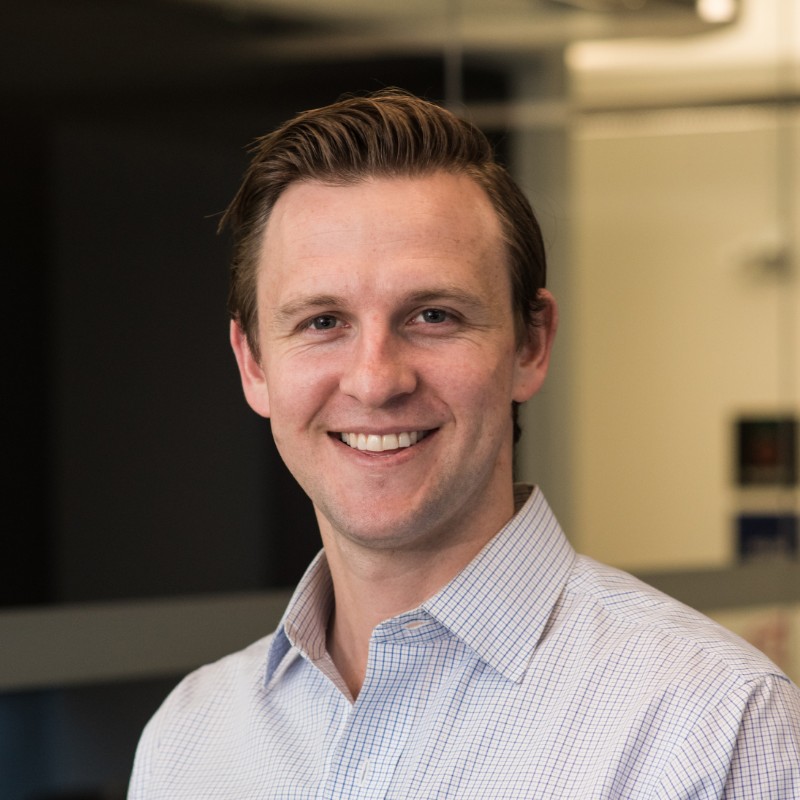
Serota runs monthly dinners with CTOs from across the startup ecosystem. No agenda, no slides - just a standing conversation about what AI is actually doing to engineering teams in the real world. He's been tracking it in real time since before it became a board-deck topic.
His read is contrarian to the mainstream anxiety. AI, in his view, is following the same arc as every productivity tool that came before it - from spell-checkers to IDEs to version control. Engineers didn't disappear when GitHub made collaboration effortless. They became more productive, tackled larger problems, and became more indispensable.
"If we want to build competitive teams and enduring products, we have to think differently about how we hire, lead, and support our engineers. We need to give them flexibility, invest in their growth, and provide tools and autonomy. We also need to evolve with the technology they're already embracing."- Dylan Serota, 2025 State of Remote Engineering
The nuance he keeps returning to: current AI generates code that is "confident but wrong." It produces output that looks correct, compiles fine, and fails in ways that take experienced engineers to catch. That's not a bug in the product - it's a structural feature of the current generation of models. Humans aren't debugging AI; they're governing it. And governance at scale requires engineers with strong judgment, not just strong syntax knowledge.
Where he does see real displacement risk: mid-level implementation roles in markets like India that have historically competed on executing well-defined tasks at volume. As AI handles more of that layer, the premium shifts to engineers who can define the problems worth solving - not just implement the solutions. It's a skills transition, not a headcount cliff. But Terminal is positioned either way.
"Taking a step back to evaluate what you actually need from a team, from a process, and from a tools perspective can get you over the mental hurdle - because it's most likely all there in front of you."- Dylan Serota
Studied Philosophy, Politics, and Economics (PPE) at Penn - the same degree that has produced prime ministers, policy architects, and a disproportionate number of people who end up running things.
Long before "global talent" was a buzzword, he was building 100-person engineering teams in Mendoza. Better known for wine. Now also known for world-class developers, partly thanks to him.
One of Terminal's original co-founders, Luke Finney, is a former Navy SEAL. The kind of international team-building expertise that's hard to fake and harder to hire.
He hosts regular dinners with CTOs from across the startup world - not to pitch Terminal, but to understand in real time how AI is reshaping engineering teams. Primary research as a leadership practice.
He credits his kids directly with shaping his approach to listening, humility, and managing time and energy at work. Parenthood as a management class.
Board meetings run on pre-distributed two-page memos. Concise enough to read, dense enough to matter. The kind of governance discipline that signals respect for everyone's time.
"AI generates code that is often confident but wrong, requiring human oversight."On AI & Engineering Talent
"We need to give engineers flexibility, invest in their growth, and provide tools and autonomy. We also need to evolve with the technology they're already embracing."2025 State of Remote Engineering Report
"We're living in this exciting time where all of these technologies are now available that enable remote teams to be more successful than ever before."On the Future of Distributed Work
"We have great potential to thrive and innovate - I'm excited for what's to come, even in the face of the unknown."Terminal CEO Address, 2025
Selected interviews, podcasts, and appearances where Dylan Serota unpacks his thinking on talent, AI, and distributed teams.