The lunch came before the software. Alix de Sagazan had finished business school and was working in online advertising when she reconnected with Rémi Aubert, a childhood friend. They had each been considering starting something. Over a meal, the separate ambitions acquired a joint future. Aubert helped recruit her to Keyade in January 2009. Before the year was out, they had decided to leave.
What followed would require rather more than a good lunch. Their first business sold advice. Their next sold a way of finding out whether advice was any good. Along the way, de Sagazan would have to reconsider who could run a website experiment, who might join a French company in America, and what job a founder should do after sixteen years of building.
In 2026, that last question acquired a new answer. AB Tasty joined forces with VWO, and the combined business adopted the Wingify name in September. De Sagazan became Chief Revenue Officer. The company name she had spent years taking abroad was giving way to another one. She stayed to help sell the next chapter.
A business hiding next door
At Keyade, she and Aubert worked on traffic acquisition. Nearby, the analytics team studied what visitors actually did after arriving on a website. The distinction was commercially useful: bringing someone to a shop and persuading them to buy are different skills. The internet had become very good at charging for the first.
In December 2009, they created Liwio, a consultancy focused on web analytics and conversion. Working with customers put them close to a recurring frustration. Marketers wanted to compare ideas on their sites, yet making the changes could require technical help. A hypothesis might be easy to describe and surprisingly awkward to try.
The founders used consulting income to hire their first developer. By April 2012, Photobox had become AB Tasty's first paying customer. The team then numbered five, with one developer. By the end of that year, they had chosen to concentrate entirely on software. The agency had financed its own successor.
There is something pleasingly unromantic about that sequence. Customers paid for useful work; the useful work exposed another problem; the proceeds helped build a product. The future arrived by invoice. De Sagazan's career began with an advertising role after graduating from Sup de Co Reims, now part of NEOMA, in 2007. The commercial education continued on the job.
Selling permission to find out
An A/B test gives different visitors different versions of an experience and compares what happens. The question could concern a page layout, wording, or a buying journey. Its charm is that the most senior person in the room does not automatically get the deciding vote. Visitors, who have declined to attend the meeting, contribute the evidence.
De Sagazan and Aubert admired the experimentation practiced by Amazon. They wanted other companies to have access to that way of working. Giving marketers greater independence mattered as much as the mechanics of comparison. A tool becomes more useful when the person with an idea can actually use it.
Explaining that proposition was part of the early job. Prospects did not instantly embrace the concept. The founders published material, attended events and stayed close to customers. Bouygues Telecom, Etam and Cdiscount were among the early companies to place their trust in them. Selling required education as well as conviction.
That helps explain why de Sagazan's account of software is so populated by people. A platform needs someone willing to try it, someone able to operate it, and someone prepared to keep learning when an experiment is disappointing. Technology can shorten a process. It still needs a customer willing to change a habit.
Two chief executives, with separate jobs
The co-founder relationship came with a history, then acquired a division of labor. Aubert handled technology, product and customer service. De Sagazan led sales, partnerships and marketing. Sharing the chief executive title meant sharing responsibility for the business while making the daily assignments fairly clear.
They also made time to work on the partnership itself. During a period of rapid growth, they used a coach and set aside a day each month to put matters on the table. Friendship is a fine beginning for a company. Apparently, it also benefits from a recurring calendar invitation.
Her view of leadership was becoming more explicit. In 2018, she described it as serving the team and said conversations with employees gave her energy. Confidence, she explained, had come with experience. Growth demanded quick recruiting and continued innovation, but also the slower work of creating a culture in which people could function together.
Recognition eventually caught up with the operating work. NEOMA Alumni gave her its entrepreneurship prize in 2020. Later, she appeared among Pavilion's 50 CEOs to Watch in 2024. The school connection had come full circle: a graduate once headed toward a large company was now being recognized for building her own.
New York, with Europe still on the line
In September 2018, de Sagazan moved with her family to New York to develop the American business. AB Tasty already had a small local commercial team. She arrived with responsibility for a substantial part of the company back in Europe, where the working day was already well under way.
Her mornings went to European matters; afternoons went to American recruitment. Leaving had unsettled the organization she was leaving behind. She later spoke candidly about how badly she remembered that first year. The opportunity was real. So was the cost of trying to be available on both sides of an ocean.
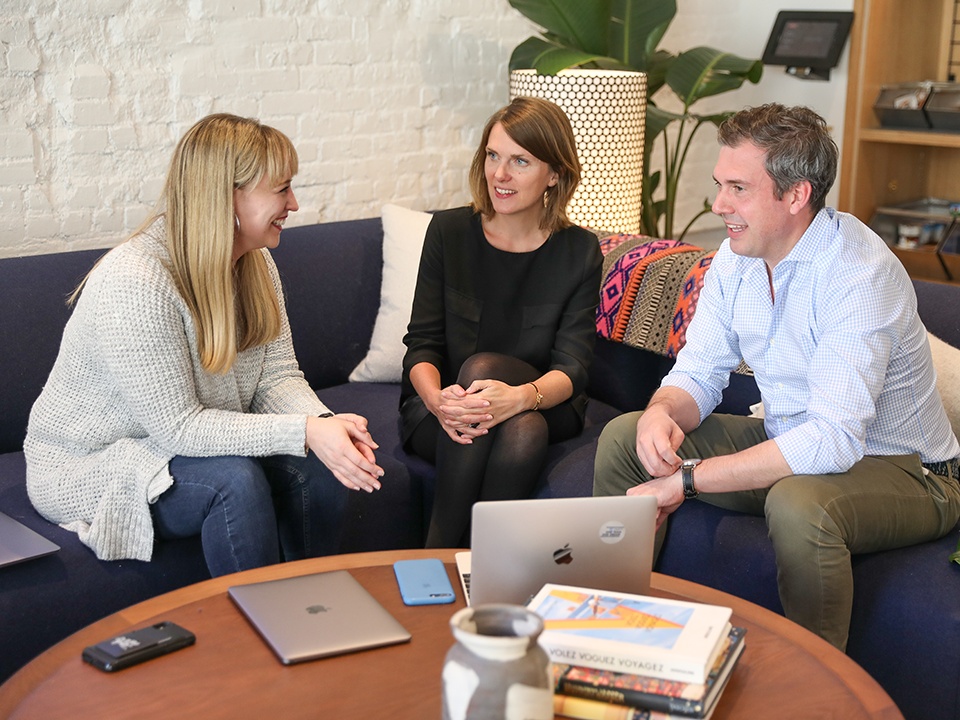
Initially, she concentrated on hiring Europeans already living in the United States. She doubted that a French startup would attract American candidates. Experience changed her assessment. The team grew to around forty and became overwhelmingly American. She came to appreciate the local business culture's pragmatism, attention to goals, and skill at marketing.
She also resisted the suggestion that she had to become American herself. The company could draw on French and European ways of working while learning from its new colleagues. International growth involved choosing what to carry along, as well as discovering what to change. A one-way lesson would have missed half the opportunity.
By July 2020, AB Tasty was announcing a $40 million Series C. At that point, sixty percent of revenue came from outside France, and the company had more than nine hundred international clients. Those figures describe a business whose center of gravity had shifted. A company established in Paris was now answering to customers across several regions.
The experiment goes inside the office
De Sagazan's management language gives experimentation a human counterpart. She speaks about helping employees identify their “magic power”: the ability they can develop and put to work. Collaboration, asking colleagues for their views, and allowing people to think for themselves feature prominently in her account of how she leads.
“We never lose; we either win or learn.”
A company mantra described by Alix de Sagazan, 2023
Permission to try ideas was part of that culture. Employees helped create a fresh set of company values following acquisitions. Curiosity and kindness mattered alongside commercial results. In a business selling the benefits of trying things, giving the staff some room to do so seems a reasonable internal demonstration.
There were practical expressions of the same concern. At the New York operation, prospective employees could be interviewed by colleagues from other countries. Local outings and visits between offices helped keep people connected. Expansion could produce several offices with one logo. Maintaining a shared company required more deliberate arrangements.
Her leisure pursuits permit a less corporate illustration. She has described skiing in winter and kitesurfing in summer, and compared the business experience to falling or veering off course, then getting up again. Either sport supplies an efficient reminder that confidence does not exempt anyone from gravity.
A bigger company, a different chair
The product grew beyond its original testing brief. AB Tasty acquired Epoq in 2022 and Dotaki in 2023, adding capabilities in recommendations, search and audience segmentation. Potions followed in 2024, extending the merchandising offering. In November 2025, Wandz.ai brought another approach to adapting experiences in real time, including for anonymous visitors.
De Sagazan was also attentive to the limits of growth for its own sake. In 2024, with the company profitable, she described the danger of raising so much money that hiring becomes the preoccupation and a business loses some of its character. Customer attention, she argued, had helped produce more sustainable growth. The caution came from someone who had lived through expansion.
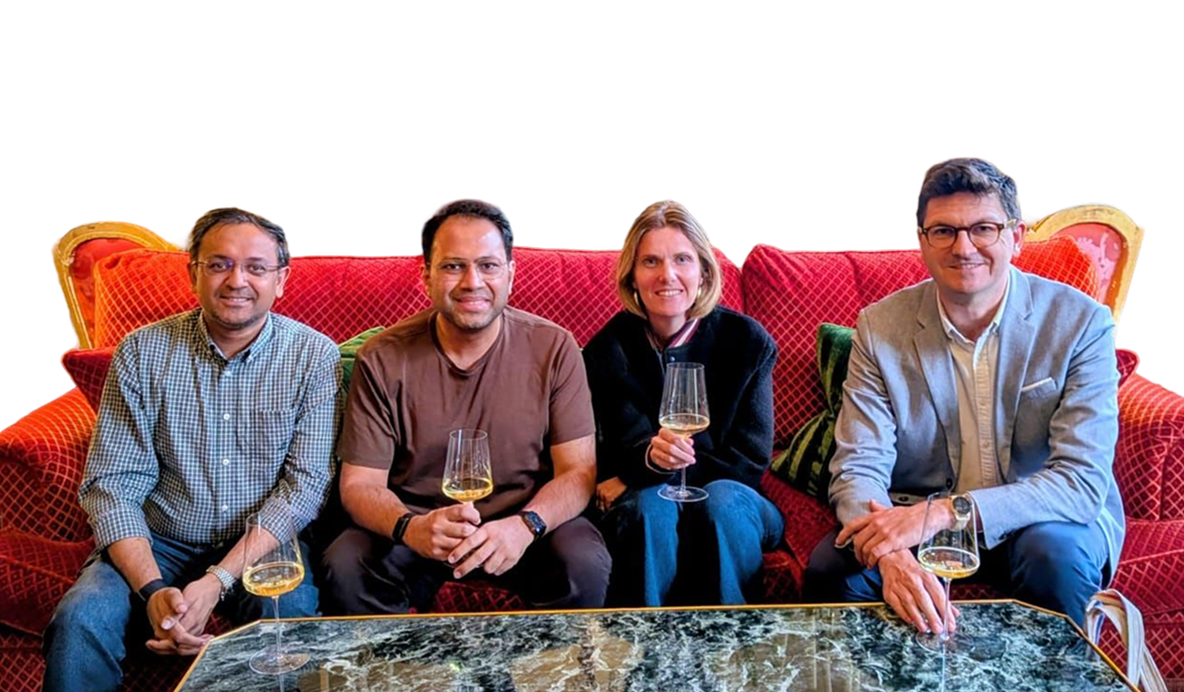
In January 2026, the AB Tasty and VWO combination introduced a four-founder leadership team. Sparsh Gupta became CEO; Ankit Jain took product and technology; Aubert took customer and strategy responsibilities; de Sagazan took revenue. The founders remained invested. Her new title made the commercial thread through her career more visible.
a business
the focus
become Wingify
September brought the Wingify identity and a return to France for de Sagazan, where she would build a new commercial team. The platform's ambition was broader, bringing experimentation, personalization and customer understanding closer together. Her description of the problem remained quite concrete: disconnected tools force teams to reconstruct work and lose time between insight and action.
For a founder who began near an analytics department, that is familiar territory. There is information on one side, a useful change on the other, and organizational work in between. Her job has repeatedly been to persuade people to cross that distance. The people now include colleagues from two companies, customers with established routines, and a new team to build.
The next results will have to be earned. Meanwhile, the route from Liwio to Wingify offers an unusually practical account of a founder's education. De Sagazan learned to sell a method that makes assumptions answerable to experience. She has had plenty of experience applying it to her own.