She took the job the week restaurants were shutting down. Five years later, OpenTable has quadrupled its share price and she has rewritten every assumption the company had about who it was actually serving.
"Restaurants are the ones who pay us. That's where the flywheel starts."
- Debby Soo
August 2020. Restaurants across the world are boarded up. Debby Soo is handed the CEO keys at OpenTable - a platform built on the very industry that just collapsed. It was, by any reasonable measure, the worst possible time to take the job.
She did it anyway. And she got to work the only way she knows how: by listening. Sitting in her basement in Hillsborough, California, opening Zoom call after Zoom call with desperate restaurant owners, taking notes on everything that made her spidey sense go off. Two-year lock-in contracts. Pricing that treated a 20-seat omakase the same as a 400-cover brasserie. A consumer app that looked like it was built in 1998 - because it was.
Five years later: double-digit revenue growth, a quadrupled share price, 65,000 restaurant partners across 110+ countries, and partnerships with Visa, JPMorgan Chase, and OpenAI. The basement listening tour turned into a complete reinvention of the business.
The pivot was clear in her mind from the start: stop treating diners as the primary customer. Restaurants write the checks. Build for them first.
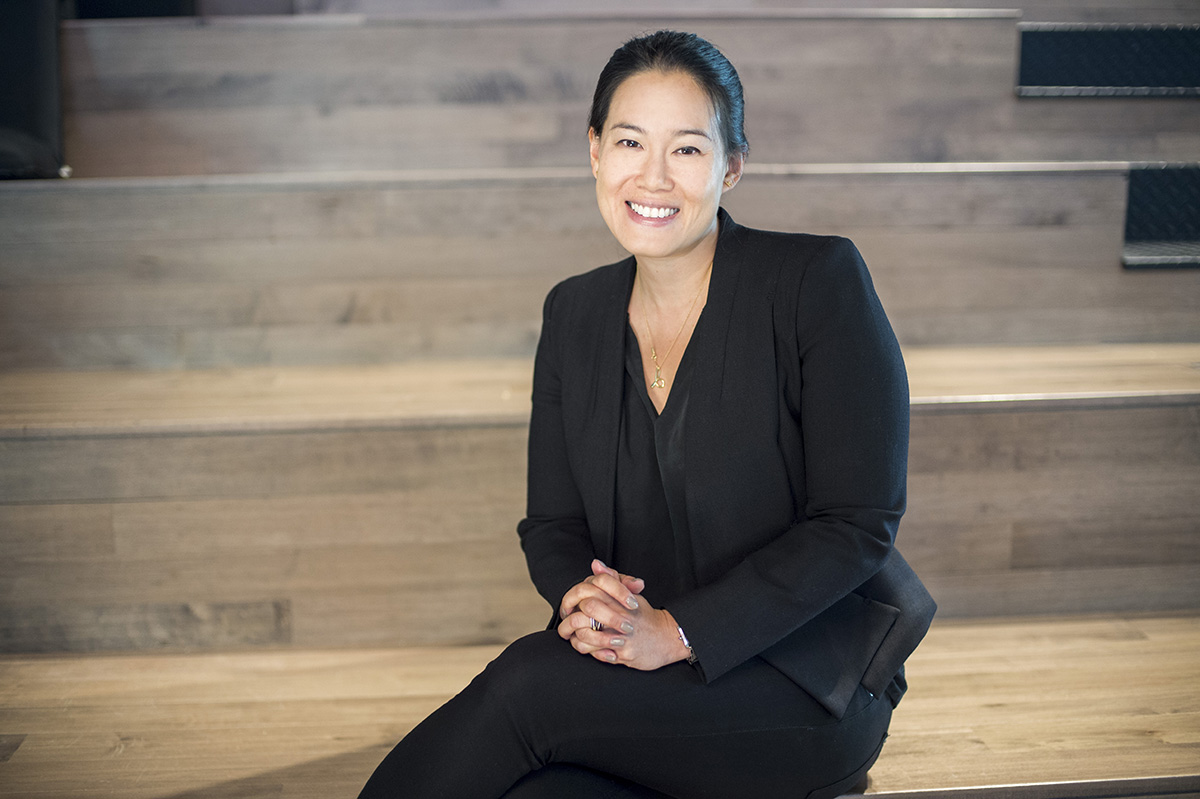
Ken and Carol Soo arrived in California in the early 1980s on a lottery visa from Taiwan. They moved into a two-bedroom apartment in Daly City with Debby's maternal grandparents, aunt, and uncle. Her father worked as a group tour guide for Taiwanese tourists before the family opened a travel agency of their own.
Debby was the only child in a house full of adults. She grew up code-switching between languages and social registers before she had a word for it. Her afternoons were spent in San Francisco's Chinatown with her grandmother - grocery shopping, visiting the Mahjong Hall, learning to read rooms.
She went to Nueva School, then Lick-Wilmerding High School, where she was waking up at 4:30 AM to study. Stanford came next: East Asian Studies major, Economics minor, and a semester at Deutsche Bank in Hong Kong during undergrad. Then MIT Sloan for her MBA - this time interning at Estée Lauder in 2010, working multiple jobs to fund it.
She speaks Mandarin Chinese. She knows what it means to work before the sun comes up. And she is, by her own admission, "impatient by nature."
"What you don't see is behind each one of those bullet points, there's a grave."- Debby Soo, on her curated resume vs. her actual path
"Going to a restaurant was in some ways an escape."- Debby Soo
"I'm impatient by nature and I like to go fast."
- Debby Soo
Investment banking analyst at Citigroup, covering the technology sector. The numbers-first grounding that would inform every commercial decision later.
Strategic partnerships at Google - focusing on Google Maps and Google Transit. First taste of platform businesses at scale.
Joins KAYAK as an intern while finishing her MIT Sloan MBA. Finds her operating heartbeat in a fast-moving travel marketplace.
Named Senior Director of New Markets at KAYAK. Starts building the international playbook.
Heads Asia Pacific at KAYAK - establishing the region from the ground up across product, marketing, sales, and business development.
Chief Commercial Officer at KAYAK; oversees global business development across both KAYAK and OpenTable under Booking Holdings.
Appointed CEO of OpenTable in the middle of the pandemic. Immediately scraps two-year lock-in contracts and restructures the pricing model to match restaurant reality.
Secures partnership with Visa to compete directly with Resy; consumer app redesigned; ChatGPT restaurant recommendation integration announced with OpenAI.
OpenTable posts double-digit revenue growth; Bloomberg Businessweek reports the company has quadrupled its share price since Soo joined.
Honored with the Hospitality ICON Award by Boston University School of Hospitality Administration. Named to board of EverCommerce.
OpenTable had a one-size-fits-all model that charged a 20-seat omakase the same as a 400-cover brasserie. Soo broke that apart and rebuilt pricing around restaurant scale and economics.
"We were expensive. We had a one-size-fits-all model, and that didn't make sense."
OpenTable pioneered online reservations 27 years ago - and had not kept pace with faster-moving competitors. The consumer app got a full redesign. The restaurant-facing tools got rebuilt around real operational needs.
"We pioneered the category 27 years ago, but our competitors had started iterating faster."
The fundamental pivot: stop treating diners as the primary customer. Restaurants pay the bills. The whole company reorganized around restaurant success - with diners following naturally from healthier restaurant partners.
"Restaurants are the ones who pay us. That's where the flywheel starts."
Soo has a sharp filter for technology: it has to make the restaurant more money without making the team work harder. That criterion, stated plainly to Fast Company, cuts through most of the AI hype in about ten seconds.
OpenTable's integration with ChatGPT - announced in 2023 - was one of the first restaurant reservation platforms to plug into a major AI assistant. The partnership with OpenAI means diners can ask ChatGPT for restaurant recommendations and book directly through OpenTable. A concrete flywheel: AI surfaces the restaurant, OpenTable closes the booking.
On the restaurant side, features like table reflow - using data to optimize seating across a service - have generated a 30% revenue increase for some partners. That is the kind of statistic that does not require a press release to land.
Her decision framework is simple and she applies it consistently: "The way that we decide what to deploy, what to invest in, is: Is it helping our restaurants and is it helping our diners?"
"If I'm going to be doing something, it has to be something that I love."On why she took the OpenTable role
"What you don't see is behind each one of those bullet points, there's a grave of professional setbacks and learning experiences."On the invisible cost of a polished resume
"Going to a restaurant was in some ways an escape."On restaurants as more than transactions
"Hospitality runs on heart - it drives chefs and restaurateurs to share their craft despite challenges. Restaurants are the heartbeat of our communities."BU Hospitality ICON Award acceptance, 2026
"I want to make the best reservations system on the planet."On The Pass podcast, October 2024
"We're here to help restaurants thrive, to be more productive, to be more efficient."OpenTable mission framing
Soo describes her evolution in the CEO role as moving from problem-solver to system-builder. The instinct to fix every issue personally - efficient in the short term, disabling at scale. The work at the top is developing people who can fix things without you.
She is unapologetic about the composition of her executive team. A strong presence of Asian women at the top of OpenTable is not an accident - it is intentional, and she says so without qualification. As founding member and co-head of Booking Holdings' Diversity and Inclusion Steering Committee, she has institutionalized that commitment across the broader organization.
The listening-first instinct runs deep. During COVID, when the standard CEO playbook would have called for a 100-day plan with polished slides, she opened Zoom. She talked to restaurant owners who were terrified. She filled notebooks. She prioritized understanding the problem over announcing solutions. That discipline - resisting the CEO impulse to project confidence before earning it - is what made the turnaround credible.
The hour she woke up to study in high school. The work ethic pre-dates the credentials.
Interned at Deutsche Bank in Hong Kong during her Stanford undergraduate years.
Years spent building KAYAK's commercial team before taking the OpenTable CEO seat.
Her parents arrived from Taiwan on a lottery visa. She speaks Mandarin Chinese fluently.
Sons at home in Hillsborough, California. CEO, mother, and reportedly still dining out.
Spent childhood afternoons in Chinatown visiting the local Mahjong Hall with her grandmother.
Eliminated OpenTable's 2-year restaurant lock-in contracts on day one of the pandemic pivot.
Prefers "elevated everyday food - hearty, ingredient-driven" over fine dining. Despite running the world's largest fine-dining reservation platform.
Listen to Debby Soo on the On The Pass Podcast (October 2024) and the HerMoney How She Does It series to hear her unpack the full pandemic-to-comeback arc in her own voice.